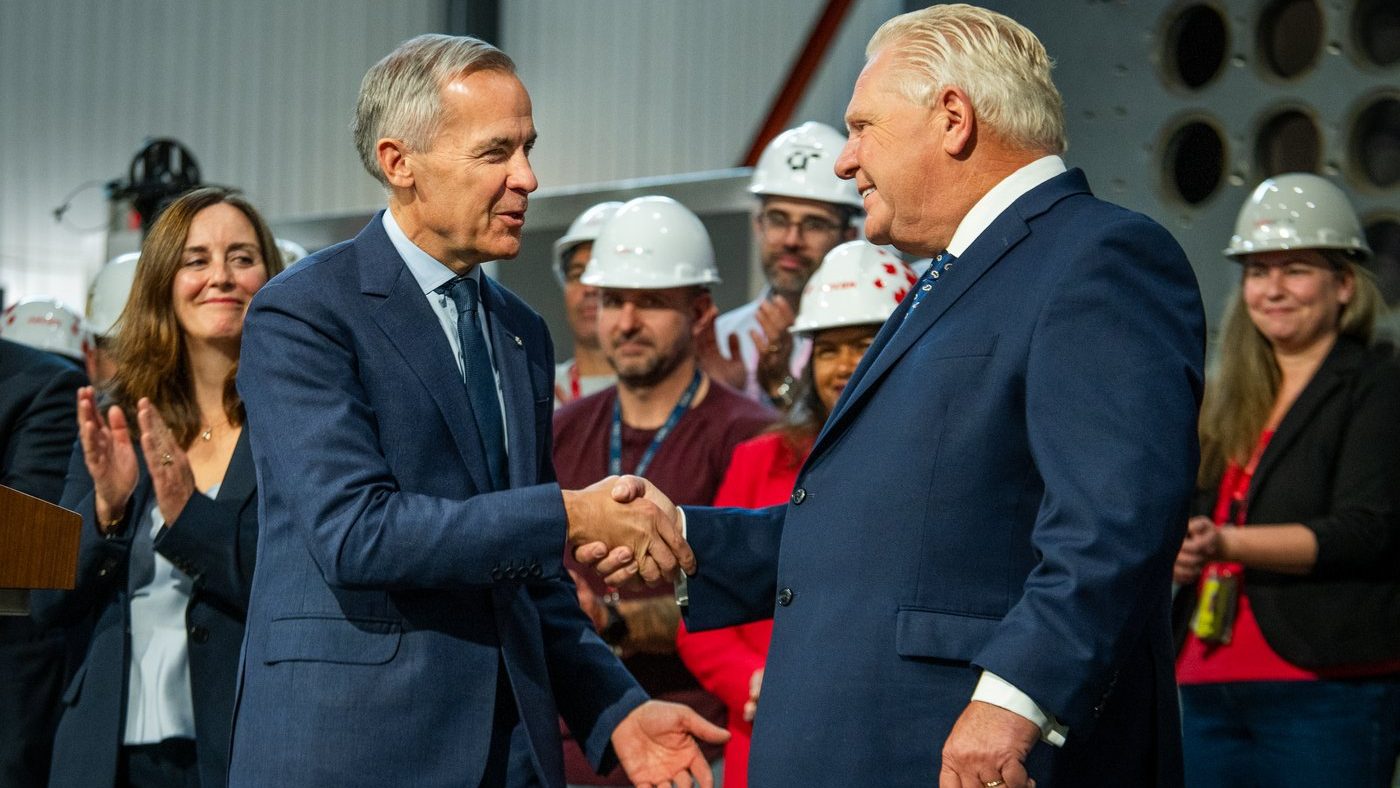
Premier Doug Ford and Prime Minister Mark Carney shake hands in Courtice, Ontario.
Image: CityNews Toronto
Ontario Premier Doug Ford has expressed serious concerns about a new trade agreement between Canada and China, which could allow up to 49,000 Chinese electric vehicles (EVs) into the Canadian market under reduced tariffs. Announced by Prime Minister Mark Carney, this deal is intended to improve Canada-China relations but has drawn criticism for potentially undermining Ontario's auto industry. Ford, speaking from Courtice, Ont., warns that such an agreement might jeopardize the jobs of workers across key manufacturing hubs like Brampton and Oshawa, and could even impact access to the U.S. market, a critical destination for Ontario-made vehicles. The Premier is urging the federal government to reconsider the agreement to protect local jobs and investments in Ontario’s auto sector.
"The influx of low-cost Chinese EVs could destabilize Ontario's auto sector, posing risks to job security and economic stability."
Legal Perspective: This highlights the importance of balancing international trade agreements with local industry protections.
Key Takeaways
The Canada-China EV deal could introduce 49,000 Chinese-made EVs to Canada.
Premier Ford warns this could harm Ontario's auto industry and jobs.
Ontario's access to the U.S. market might be at risk, affecting exports.
What This Means for Ontario Residents
For Ontario residents, this development could have significant implications. The influx of low-cost Chinese EVs may threaten local manufacturing jobs, particularly in cities such as Brampton and Oshawa, where auto plants are integral to the local economy. Furthermore, if American regulators perceive this deal as a backdoor for Chinese imports, it could result in stricter trade barriers for vehicles exported to the U.S., impacting the province's economic stability. Understanding these potential risks can help Ontario residents and workers make informed decisions about their industry involvement and employment rights.
What You Should Do
Review employment contracts for termination clauses
Understand your rights in case of layoffs.
Monitor local industry news
Stay informed about changes that may affect your job.
Consult with an employment lawyer Urgent
Get legal advice if you face potential job loss.
Explore job retraining programs
Consider upskilling if the industry is shifting.
Understand your severance entitlements Urgent
Calculate potential compensation if terminated.
Your Rights and Options
Ontario workers in the auto industry should be aware of their rights if job security becomes uncertain due to this trade deal. It's vital to understand employment contracts, severance entitlements, and potential wrongful dismissal claims. If you face job loss or changes in employment conditions, consulting with employment law professionals can provide clarity on your rights and options.
Common Questions Answered
How UL Lawyers Can Help
Facing potential industry shifts can be daunting, especially when your livelihood is at stake. At UL Lawyers, we understand the complexity of employment law and the impact of international trade deals on local jobs. Our team is here to guide you through understanding your rights, reviewing employment contracts, and advocating for fair treatment in the workplace. Reach out for a free consultation to discuss how these changes might affect your job security and what steps you can take to protect your future. Our legal team will make space to hear what happened, answer your questions in plain language, and offer a free consultation when you feel ready.
Concerned about your job security in Ontario's auto sector? Let's discuss your rights and options.
Important Legal Disclaimer
This article provides general information only and does not constitute legal advice. For specific advice about your situation, please consult with a qualified employment lawyer.
Source: CityNews Toronto
Named in this article? Request content removal