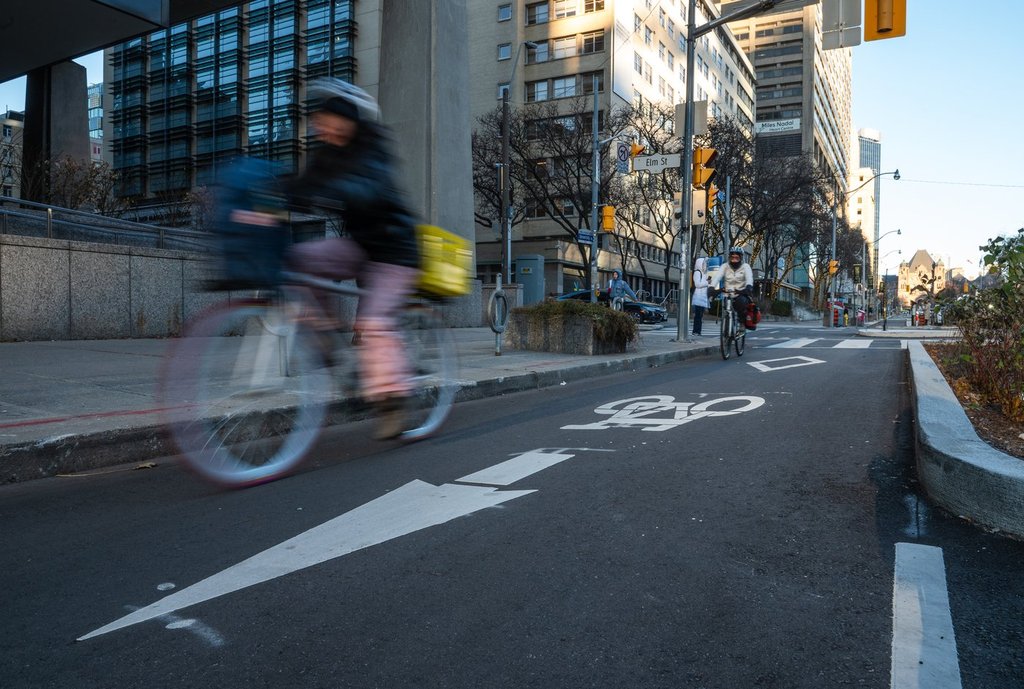
A cyclist rides in a bike lane on University Avenue in Toronto, highlighting the court case about bike lane removal.
Image: Global News
In Toronto, a group of cyclists, including a bike courier and university student, are defending their successful challenge against the Ontario government's plan to remove bike lanes on University Avenue and other parts of the city. This plan, aimed at reducing traffic congestion, has been criticized for potentially compromising cyclist safety and not achieving its intended traffic goals. The case will now be heard by the Court of Appeal for Ontario, highlighting the ongoing debate between cyclist safety and traffic management. Motor Vehicle Accident Lawyers are closely watching how this case could set important precedents for cyclist rights.
"This case highlights the ongoing tension between traffic management and cyclist safety, potentially redefining legal protections for urban infrastructure."
Legal Perspective: The decision could influence how cities balance the needs of motorists and cyclists, setting a precedent for future infrastructure planning.
Key Takeaways
Cyclists challenge bike lane removals on University Avenue.
Safety concerns versus traffic management is a legal focus.
Court decision may set precedents for urban infrastructure rights.
What This Means for Ontario Residents
For Ontario residents, particularly in the Greater Toronto Area, this court case underscores the importance of balancing urban planning with safety concerns. The outcome could influence future infrastructure decisions and set legal precedents regarding the rights of cyclists versus motorists. If the government is allowed to proceed with its plan, cyclists may find themselves at greater risk without dedicated lanes, potentially leading to increased personal injury claims. Legal experts argue that the case could establish whether there is a 'right to bike lanes' under constitutional safety protections.
What You Should Do
Attend public meetings on local infrastructure changes
Engage in community discussions to express concerns about safety.
Document any unsafe conditions or incidents Urgent
Keep a record of any hazardous situations resulting from infrastructure changes.
Consult with personal injury lawyers if injured Urgent
Seek legal advice to understand your rights and potential compensation.
Stay informed about the court's decision
Monitor the case outcome as it may affect future rights and infrastructure.
Advocate for cyclist safety in your community
Join local advocacy groups to promote safer bike lane policies.
Your Rights and Options
Ontario residents have the right to seek legal recourse if infrastructure changes compromise their safety. Cyclists, in particular, should be aware of their rights regarding road safety and the legal avenues available to challenge government decisions that could endanger them. If you're concerned about how infrastructure changes might impact you, reaching out to experienced personal injury lawyers can offer guidance on how to protect your rights and ensure safety on the roads.
Common Questions Answered
How UL Lawyers Can Help
At UL Lawyers, we understand the stress and uncertainty that legal battles over safety and infrastructure can bring. Our experienced team is here to help you navigate these complex issues, ensuring your rights are protected and your voice is heard. Whether you're a cyclist concerned about safety or a resident affected by these changes, we're here to provide the support and guidance you need. Contact us for a free consultation to discuss your concerns and explore your legal options. Our legal team will make space to hear what happened, answer your questions in plain language, and offer a free consultation when you feel ready.
Concerned about how infrastructure changes might impact your safety? Contact us for a free consultation to discuss your options.
Important Legal Disclaimer
This article provides general information and should not be construed as legal advice. For specific concerns, consult a qualified lawyer.
Source: Global News : Canada
Named in this article? Request content removal