
When you start searching for an “immigration lawyer near me,” you’re not just looking for a nearby office. You’re looking for a partner—a qualified, licensed professional who can navigate the complexities of your specific situation, whether that’s an Express Entry profile, a spousal sponsorship, or a Provincial Nominee Program (PNP) application.
Why Your Search Must Go Beyond Proximity

It’s natural to want help close to home. The immigration process can feel overwhelming, and convenience is a comfort. But here’s the thing: proximity is just one small piece of a much larger puzzle.
The single most important factor is finding a representative with the right credentials and expertise to handle your unique case within Canada’s legal system.
Canadian immigration law is a highly specialized field, governed by the Immigration and Refugee Protection Act (IRPA) and its dense regulations. Your lawyer absolutely must be a member in good standing with the Law Society of Ontario. This isn’t just a suggestion—it’s your assurance that they are licensed, insured, and accountable.
What Does “Near Me” Really Mean Anymore?
In our connected world, “near me” isn’t just about a postal code. A lawyer based in Burlington who serves clients across the Greater Toronto Area—from Mississauga to Toronto and beyond—offers the best of both worlds. You get the accessibility of a local professional combined with a deep understanding of the region’s specific needs.
While many steps can be managed remotely through video calls and secure portals, knowing you can meet your lawyer in person provides incredible peace of mind.
To help you move from a broad search to a shortlist of real contenders, I’ve put together a quick checklist for your initial vetting process. This is the first pass to weed out anyone who isn’t a good fit right from the start.
Initial Lawyer Vetting Checklist
| Evaluation Criteria | What to Look For | Why It Matters in Canada |
|---|---|---|
| Licensing | Member in good standing with the Law Society of Ontario. | This is non-negotiable. It proves they are legally authorized to practice immigration law in the province. |
| Relevant Experience | A experience with similar matters with cases like yours (e.g., family sponsorships, skilled worker applications). | Immigration law has many streams. You need an expert in your stream, not a generalist. |
| Clear Fee Structure | Transparency about costs—either flat-rate fees for standard applications or a clear hourly billing policy. | Surprises are the last thing you want. A reputable lawyer is upfront about all potential costs. |
| Communication Style | A team that is responsive, patient, and can explain complex legal issues in plain language. | You need to feel comfortable asking questions and confident you understand every step of your case. |
This checklist isn’t about finding the perfect lawyer on the first try; it’s about creating a strong list of candidates who are worth a deeper look.
Your goal isn’t just to hire any lawyer—it’s to find an advocate who will act as your guide through every step of the process with Immigration, Refugees and Citizenship Canada (IRCC). The right representative builds confidence, not confusion.
Moving from a general online search to a focused evaluation requires a clear strategy. To dig deeper, check out our guide on what to look for when seeking lawyers for immigration near me. Getting prepared now ensures you walk into your first consultation with the right questions and expectations.
Where to Find Credible Ontario Immigration Lawyers
Typing “immigration lawyer near me” into Google is a decent starting point, but it’s just that—a start. If you want to build a solid list of potential lawyers in Ontario, you need to dig deeper than the first page of search results. A smart search combines online tools with official verification and real-world community knowledge.
This approach helps you find someone who isn’t just qualified on paper, but has also earned the trust of people who’ve been in your shoes.
Your absolute first move, before you even think about booking a consultation, is to check a lawyer’s credentials. This is a deal-breaker. Anyone practicing law in Ontario must be a licensed member in good standing with the Law Society of Ontario (LSO).
The LSO has a public online directory that makes this incredibly easy. Just enter the lawyer’s name and you can instantly see if they’re actively licensed. The directory also lists any public disciplinary history, giving you a transparent look at their professional record. Don’t skip this step.
Tapping Into Client Experiences
Once you’ve confirmed a lawyer is licensed and in good standing, it’s time to see what past clients have to say. A single glowing review or one angry comment doesn’t tell you much, but patterns in the feedback are incredibly revealing.
You’re looking for detailed stories, not just a five-star rating. Do the reviews talk about specific situations, like a tricky permanent residency application or a complex spousal sponsorship? That’s the kind of insight you need.
Here’s where to look for genuine feedback:
- Google Reviews: Read past the star rating. A review that says, “They helped me with my Express Entry profile and were always quick to answer my questions,” is far more useful than one that just says, “Great lawyer.”
- Legal-Specific Directories: Websites that specialize in listing legal professionals often have more robust, verified review systems, which can add a layer of credibility.
- Community Forums and Groups: This is where you can find unfiltered advice. Online communities for newcomers to Canada or specific cultural groups in the GTA can be a goldmine for honest recommendations and personal referrals.
A lawyer’s online presence can tell you a lot. Look for a professional who not only has positive reviews but also provides valuable information through articles or resources on their website. It demonstrates a commitment to client education, not just client acquisition.
Leveraging Community Intelligence
Don’t underestimate the power of your local community. Sometimes the best recommendations don’t come from the internet at all.
Organizations dedicated to helping newcomers often have a list of trusted professionals they’ve worked with over the years. Think about settlement service agencies—they frequently refer clients to lawyers they know are reputable and effective.
Cultural and community associations are another fantastic resource. Getting a word-of-mouth referral from someone who has already been through the Canadian immigration process is invaluable. These recommendations are built on shared experience and trust.
By blending official LSO verification with the real-world feedback you get from reviews and community referrals, you can build a shortlist of lawyers you can actually have confidence in. For more guidance on choosing the right professional in the GTA, learn about what to look for in an immigration lawyer in Toronto and surrounding areas.
How to Properly Vet and Compare Lawyers
You’ve got a shortlist. Now the real work begins. It’s time to shift from just finding lawyers to meticulously choosing the right one for your future in Canada. This isn’t about picking the closest office on a map; it’s about finding a strategic partner whose experience directly matches your unique immigration needs.
Think about it this way: a lawyer who excels at family sponsorships might not have the specific, nuanced knowledge needed for a complex Provincial Nominee Program (PNP) application or a difficult inadmissibility case. You need to confirm they have direct, hands-on experience with cases just like yours. Don’t hesitate to ask them for specific examples of similar situations they’ve successfully navigated.
This whole process—from checking credentials to getting community feedback—is about building a complete picture of your potential legal counsel.
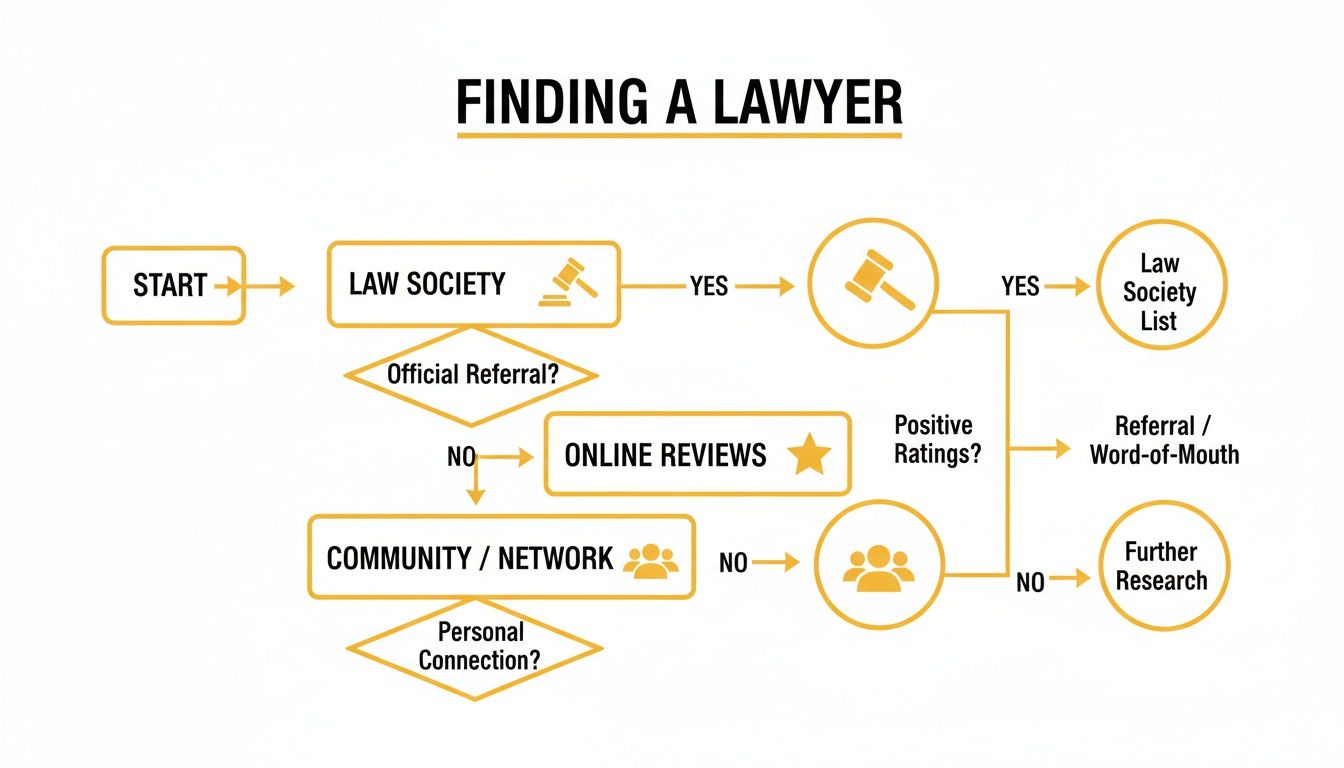
Starting with official verification, then layering on real-world client reviews and trusted referrals, helps you make a confident, well-rounded decision.
Decoding the Financial Commitment
Let’s talk about money. Understanding the costs is a crucial step, and you need to know exactly what you’re signing up for. In Ontario, immigration lawyers generally use a couple of different fee structures.
It helps to see them side-by-side.
Comparing Lawyer Fee Structures in Ontario
| Fee Type | How It Works | Best For |
|---|---|---|
| Flat Fees | A single, all-inclusive price for a specific service (e.g., a spousal sponsorship application). | Standard, predictable applications where you want cost certainty from the start. |
| Hourly Rates | You are billed for the actual time the lawyer spends working on your file. | Complex or unpredictable cases, like appeals or situations with unique legal hurdles. |
Regardless of the model, you absolutely must receive a retainer agreement before any work starts. This is a legal requirement in Ontario. The document should clearly spell out the scope of work, the exact fee structure, any other potential costs, and how your money will be handled. If a potential lawyer is vague about this or hesitant to provide a detailed agreement, that’s a serious red flag.
Beyond Credentials: The Importance of Communication
Legal expertise is essential, but it’s only half the equation. Your relationship with your lawyer is a partnership, sometimes a long one, and good communication is what holds it all together.
Pay close attention during your initial talks. Do they break down complex IRCC rules into plain English you can actually understand? Or are you left more confused by a wall of legal jargon? A good lawyer should make things clearer, not more complicated. Their responsiveness is another tell-tale sign of what you can expect down the road.
A truly effective lawyer doesn’t just file paperwork. They act as your translator, guide, and advocate, ensuring you feel informed and confident at every stage. You’re hiring a partner, not just a service provider.
This deeper vetting process ensures you’re looking beyond a fancy website or a long list of qualifications. If you’re in Peel Region, our guide on what to look for in an immigration lawyer in Brampton offers more localized advice.
Your goal is to find a professional who is not only technically brilliant but is also the right personal fit to guide you on this life-changing journey.
Making the Most of Your Initial Consultation
Think of the initial consultation as your opportunity to interview a potential lawyer. It’s not just a sales pitch; this is your chance to really see if they have the expertise, strategic thinking, and communication style that fits your needs. To get the most out of it, you absolutely have to show up prepared. Doing so transforms the meeting from a simple introduction into a critical step toward finding a real advocate for your future in Canada.
When you’re prepared, it signals to the lawyer that you’re serious about your case. More importantly, it gives you the clarity you need to make a confident hiring decision.

Arrive with Your Documents Ready
If you walk into a consultation empty-handed, the lawyer can only give you general advice. For specific, actionable insights, you need to bring the right paperwork. Having everything organized allows the lawyer to get a quick grasp of your situation and offer a far more accurate initial assessment.
Your job is to paint a clear picture of your immigration history. This simple step makes the meeting incredibly efficient and valuable for everyone involved.
Here’s a quick checklist of essential documents to bring:
- Identification: Your passport and passports for any family members on the application.
- Current Status Documents: Copies of your work permit, study permit, visitor record, or permanent resident card.
- IRCC Correspondence: Any letters, emails, or official forms you’ve received from Immigration, Refugees and Citizenship Canada (IRCC). This is crucial—bring any refusal letters, information requests, or Acknowledgement of Receipt (AOR) notices.
- Supporting Evidence: Other key documents relevant to your case, like a Labour Market Impact Assessment (LMIA), proof of funds, or your language test results.
Treat your consultation like you’re the one doing the hiring—because you are. The more information you provide upfront, the better you can evaluate whether the candidate (the lawyer) is the right fit for the job.
Strategic Questions to Ask Your Potential Lawyer
After the lawyer has had a chance to look over your documents, it’s your turn to take the lead. This is where you dig deeper than just fees and discover if their approach actually makes sense for you. The quality of your questions will shape the quality of the answers you get.
You’re trying to understand their game plan for your specific case, not just their general background.
Go beyond “What are your fees?” and ask more strategic questions like these:
- What is your proposed strategy for my case? Get them to outline the exact immigration stream they recommend and, more importantly, why. For instance, if you’re a skilled worker, are they suggesting Express Entry or a particular Provincial Nominee Program (PNP)? What’s the reasoning?
- What are the realistic timelines and potential challenges? A good lawyer won’t just tell you what you want to hear. They should provide an honest estimate based on current IRCC processing times and flag any potential hurdles they see in your application.
- How will you keep me updated on my case? This is huge. Clarify their communication process right away. Will you get regular email updates? Is your main point of contact the lawyer themselves, or a paralegal?
- What are the total estimated costs, including government fees? Ask for a complete breakdown to avoid any surprises down the road. This should include their legal fees, disbursements (like courier costs), and all government filing fees.
Coming to this meeting prepared is a game-changer. For more guidance, check out our resource on what to expect from a free immigration lawyer consultation to learn how you can maximize its value. A little prep work ensures you walk away with a clear path forward.
Critical Red Flags to Avoid When Hiring
Protecting your future in Canada means being sharp and knowing what to look out for. When you’re searching for an “immigration lawyer near me,” being able to spot the warning signs is just as crucial as knowing what makes a good lawyer.

The single biggest red flag? A guarantee of success. Let me be clear: no reputable Canadian lawyer can ever promise a specific outcome for your case. It’s impossible.
The final decision always rests with an officer at Immigration, Refugees and Citizenship Canada (IRCC). A lawyer can promise to build the strongest case possible based on their expertise, but they simply cannot guarantee it will be approved. This kind of promise is often a tactic used by unauthorized practitioners who are more interested in your money than your future.
Unprofessional Practices and Pressure Tactics
Beyond impossible guarantees, there are other behaviours that should immediately set off alarm bells. A professional and ethical lawyer will be transparent, patient, and will never make you feel rushed or confused.
Keep an eye out for these common warning signs:
- Vague Fee Structures: If they can’t clearly explain their fees or are hesitant to give you a detailed written retainer agreement, that’s a problem. In Ontario, a clear, written agreement isn’t just good practice; it’s a professional requirement.
- High-Pressure Sales Tactics: A lawyer should be a trusted advisor, not a salesperson. If you feel pressured to sign a contract and pay a fee on the spot during your initial chat, that’s a huge red flag. You should have time to think.
- Poor Communication: Are they unresponsive? Dismissive of your questions? Do they use confusing legal jargon without explaining it? This behaviour is unlikely to get better once they have your money.
The integrity of your application is paramount. A lawyer who cuts corners or makes unrealistic promises isn’t just risking your money—they are risking your entire future in Canada.
The Danger of Unauthorized Consultants
A serious issue in Canadian immigration is the prevalence of unauthorized representatives, often called “ghost consultants.” These individuals are not licensed lawyers or registered consultants with the College of Immigration and Citizenship Consultants (CICC), which means they have no legal authority to represent you.
They operate outside the law and have zero accountability. To protect yourself, always verify credentials. As we covered earlier, you can easily confirm if a lawyer is a licensed member in good standing with the Law Society of Ontario.
For more specific guidance on finding qualified legal help in the GTA, learn more about what to look for when choosing an immigration lawyer in Mississauga or your local community. Recognizing these red flags from the start will save you an incredible amount of time, money, and stress down the road.
Your Questions About Finding a Lawyer Answered
Searching for an “immigration lawyer near me” can feel like opening a can of worms—suddenly, you have more questions than answers. It’s a common feeling, and we hear these same concerns from people all over the Greater Toronto Area. Let’s clear up some of the most frequent questions to help you move forward with a bit more confidence.
Many people also get tangled up in the language of moving abroad. If you’re wondering where you fit in, understanding the key differences between expats and immigrants can add some useful context to your journey.
What Is the Difference Between a Lawyer and a Consultant in Canada?
This is a big one. In Canada, both lawyers and consultants can help with your immigration file, but there are crucial differences in their training and what they’re allowed to do.
An immigration lawyer is a licensed professional who is a member of a provincial law society, like the Law Society of Ontario. They’ve been through law school, passed their bar examinations, and can represent you on any legal matter, which is especially important for complex cases or appeals at the Federal Court of Canada.
An immigration consultant, on the other hand, is registered with the College of Immigration and Citizenship Consultants (CICC). They are authorized to handle many application types, but their scope is narrower. If you run into serious issues like inadmissibility, or if your case gets denied and needs an appeal, a lawyer is essential.
Is a Downtown Toronto Lawyer Better Than One in Burlington?
Absolutely not. A prestigious Bay Street address doesn’t guarantee better legal service. I’ve seen brilliant lawyers in Burlington, Mississauga, and all across the GTA achieve incredible results for their clients.
What really matters is the lawyer’s expertise, their direct experience with cases just like yours, and whether their communication style makes you feel heard and understood. Focus on their track record and credentials, not their postal code.
Your legal partner’s effectiveness is measured by their ability to manage your case and communicate clearly—not by their proximity to Bay Street. The right fit is about skill, not location.
How Much Should I Expect to Pay a Lawyer in the GTA?
Legal fees for immigration services can be all over the map, depending entirely on how complicated your situation is. While there’s no single price tag, here’s a rough idea of what you might see in the GTA:
- Straightforward Applications: For something like a visitor visa extension or a simple work permit renewal, you might be looking at $500 to $2,000.
- Complex Cases: More involved applications, such as a spousal sponsorship, an Express Entry profile, or a Provincial Nominee Program (PNP) submission, can easily range from $4,000 to $10,000+.
Before you sign anything, make sure you get a detailed retainer agreement. This written contract should clearly lay out all the fees and costs. It’s a professional standard for licensed lawyers in Ontario and your best protection against surprise bills down the road.
Can I Switch Lawyers Mid-Case?
Yes, you can. You always have the right to choose who represents you. But you need to be strategic about it to avoid causing problems with your application at IRCC.
If you decide to switch, you’ll need to formally end the relationship with your current lawyer, pay them for the work they’ve already done, and have your entire case file transferred to your new legal counsel. It’s definitely possible, but it can introduce delays. My advice is to always try resolving any issues with your current lawyer first before making the jump.
Navigating the maze of Canadian immigration law is much easier with a dedicated and knowledgeable partner by your side. At UL Lawyers, we offer clear guidance and strong advocacy for clients across Ontario. If you’re ready to take the next step, we invite you to book a free consultation to discuss your case. Contact us today.