
Understanding your legal rights during protests is crucial to avoid unintended legal consequences.
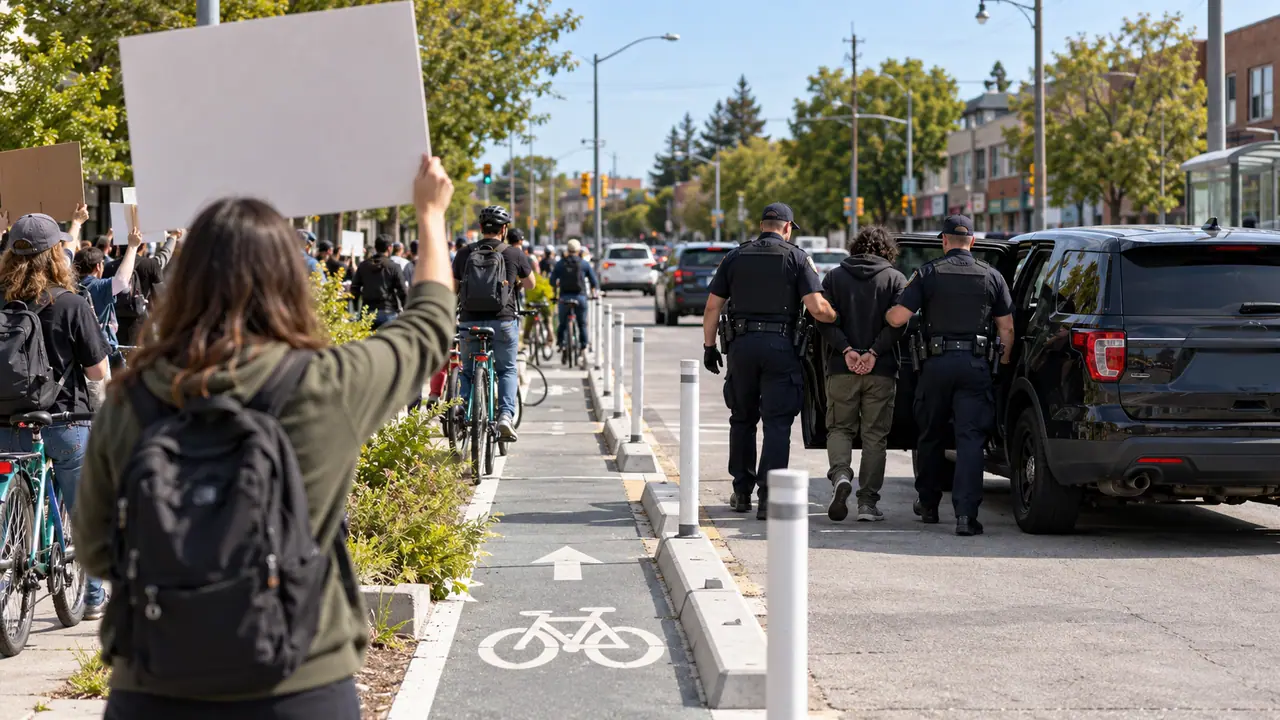
In Etobicoke, Toronto Police have arrested a fourth person during protests against the removal of bike lanes on Bloor Street West at Islington Avenue. On Monday, October 13, 2026, at around 1:15 p.m., Prajjwal Rajawat, a 29-year-old Toronto resident, was taken into custody after allegedly obstructing work crews by sitting on curb barriers designated for removal. Despite repeated warnings from police, Rajawat refused to leave, leading to charges of obstructing police and mischief interfering with property.
This arrest follows the detainment of three others in connection with the protests, which have been ongoing since the province announced the removal of the bike lanes along Bloor Street West. Tensions remain high as activists, including cycling advocate David Shellnut, vow to continue their demonstrations nightly until the construction plans are halted.
Key Takeaways
Four arrests have been made during Etobicoke bike lane protests.
Protestors face charges for obstructing public work.
Legal consequences highlight the need for understanding protest rights.
UL Lawyers Insight
The ongoing protests in Etobicoke highlight a critical issue for Ontario residents: the right to protest versus the legal implications of obstructing public works. While public demonstrations are a protected right under Canadian law, interfering with lawful work can lead to arrests and charges, as seen in this case. Understanding the legal boundaries of protest activities is essential for participants to avoid unintended legal consequences.
For those involved in or affected by these protests, consulting with legal professionals can provide clarity on your rights and responsibilities.
Action Checklist
What You Should Do
Know your rights to protest under the CharterUrgent
Understanding legal protections can help you protest responsibly.
Avoid obstructing legal workUrgent
Interfering with public operations can lead to charges.
Document any interactions with police
Keeping records can be crucial if legal issues arise.
Seek legal counsel if arrestedUrgent
A lawyer can provide guidance on navigating charges.
Stay informed about protest laws
Being aware of legal boundaries helps avoid conflicts.
Your Rights and Options
In Ontario, the right to protest is protected under the Canadian Charter of Rights and Freedoms, but this right is not absolute. Engaging in actions that obstruct legal operations, such as public construction work, can result in charges like mischief or obstruction of police. If you are arrested during a protest, you have the right to remain silent and seek legal counsel. Understanding the specific charges and potential penalties under the Criminal Code of Canada can help individuals navigate their legal situation effectively.
For those involved in protests or facing legal charges, seeking advice from a lawyer can provide crucial guidance on your next steps. Consulting with legal experts can help you understand the legal processes, potential defenses, and implications of your participation in such activities.
Common Questions Answered
How UL Lawyers Can Help
Facing legal challenges from participating in protests can be overwhelming, but you don't have to navigate it alone. At UL Lawyers, we understand the complexities of legal rights and are here to provide guidance. Our team can help you understand your legal standing, represent you in court, and ensure your rights are protected. Contact us for a free consultation to discuss how we can support you through this challenging time.
Ensure your protest actions respect legal boundaries by talking to a lawyer about your rights and obligations.
About this article:
Summary prepared with AI assistance from the linked source's reporting. Edited by UL Lawyers for Ontario context.
Accompanying images are AI-generated illustrations, not photographs of actual events or persons.
Important Legal Disclaimer
This page provides general information about legal rights related to public protests and is not intended as legal advice. Readers should consult with a lawyer for advice specific to their situation.
Source: Toronto Sun
Named in this article? Request content removal