
Public demonstrations are a fundamental right, but understanding the legal boundaries is crucial to avoid unintended legal consequences.
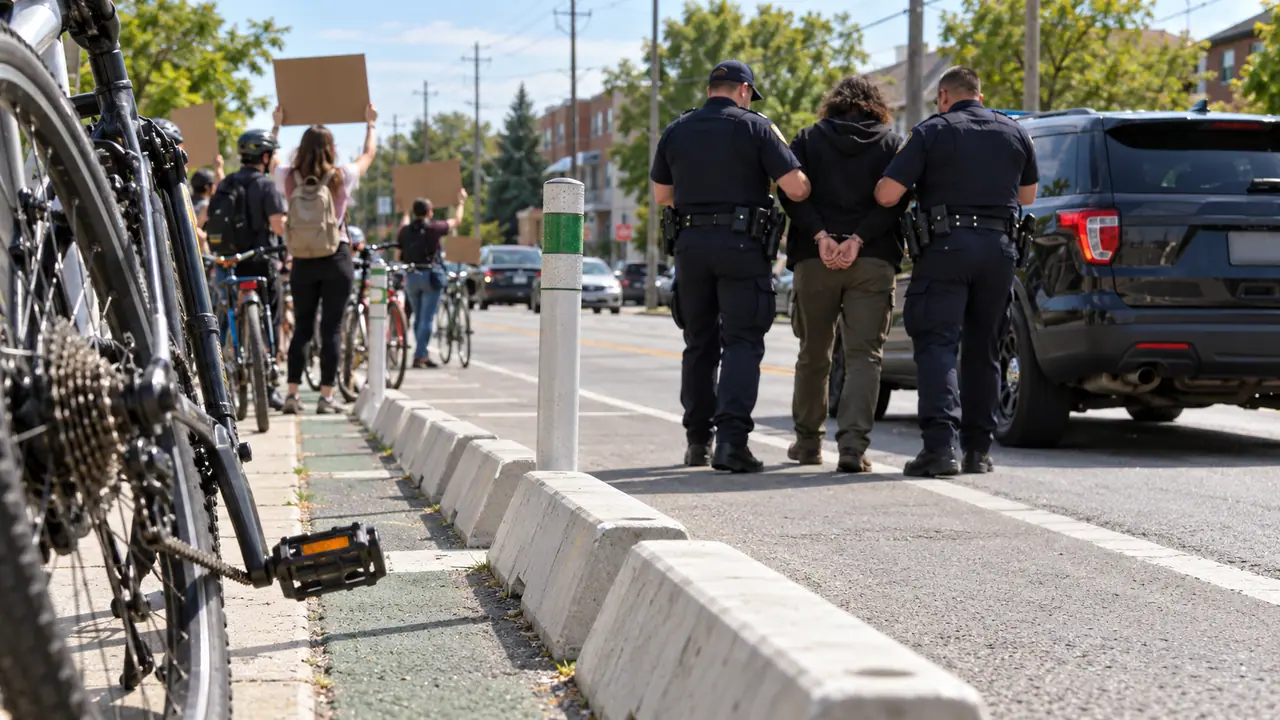
The removal of protected bike lanes on Bloor Street West in Etobicoke has ignited ongoing protests, resulting in four arrests for mischief and obstructing police. The most recent arrest occurred shortly after 1:15 p.m. on Monday as cycling advocates demonstrated against the dismantling of what they consider 'life-saving' cycling infrastructure. Demonstrators, including notable figures like two-time Canadian Paralympian Aly Van Wyck-Smart, have been actively trying to slow down work crews.
These events unfolded between Royal York Road and further down Bloor Street West, where protesters have positioned themselves to delay the removal of concrete curb barriers and other bike lane structures. The police have been actively managing these protests, leading to confrontations and subsequent arrests.
Key Takeaways
Four arrests made during Etobicoke bike lane protests.
Protesters charged with mischief and obstructing police.
Community divided over the removal of bike lanes.
UL Lawyers Insight
For residents of Ontario, particularly those in urban areas like Toronto, these protests highlight the ongoing tension between infrastructural development and community needs. The legal charges of mischief and obstructing police remind citizens that while public protests are a right, they must be conducted within the bounds of the law. Understanding these boundaries is crucial for those wishing to engage in civic activism.
It's also an essential reminder for communities to be aware of how such developments can impact local traffic, safety, and the environment. If you're involved in similar activism or face legal challenges from public demonstrations, understanding your rights and the potential legal implications is critical. UL Lawyers Legal Team can provide guidance on navigating such situations.
Action Checklist
What You Should Do
Understand your rights to peaceful assembly
Review the Canadian Charter of Rights and Freedoms for guidance.
Avoid blocking public roads during protestsUrgent
Such actions can lead to charges like mischief.
Stay informed about municipal regulations
Local bylaws can affect the legality of protest activities.
Consult a lawyer if facing chargesUrgent
Legal advice can help navigate charges and defenses.
Document your protest activities
Keeping a record can be useful if legal issues arise.
Your Rights and Options
Ontario residents have the right to peaceful assembly and protest, as protected under the Canadian Charter of Rights and Freedoms. However, these rights come with legal limitations. Engaging in protests that block public roadways or disrupt municipal operations may lead to charges such as mischief or obstructing police, as seen in these recent arrests in Etobicoke. It's important for those participating in or organizing protests to be aware of legal boundaries to avoid criminal charges.
Common Questions Answered
How UL Lawyers Can Help
Navigating the legal complexities of public demonstrations can be challenging. At UL Lawyers, we understand the importance of civic engagement and are here to offer support. Whether you're facing charges related to protest activities or need advice on your legal rights during public demonstrations, our experienced team is ready to assist. Reach out for a free consultation to discuss your rights and options.
Involved in a protest or facing related charges? Reach out to UL Lawyers for a free consultation.
About this article:
Summary prepared with AI assistance from the linked source's reporting. Edited by UL Lawyers for Ontario context.
Accompanying images are AI-generated illustrations, not photographs of actual events or persons.
Important Legal Disclaimer
This page provides general information related to legal news in Ontario and should not be considered as specific legal advice. For personalized legal guidance, please consult a qualified lawyer.
Source: CityNews Toronto
Named in this article? Request content removal