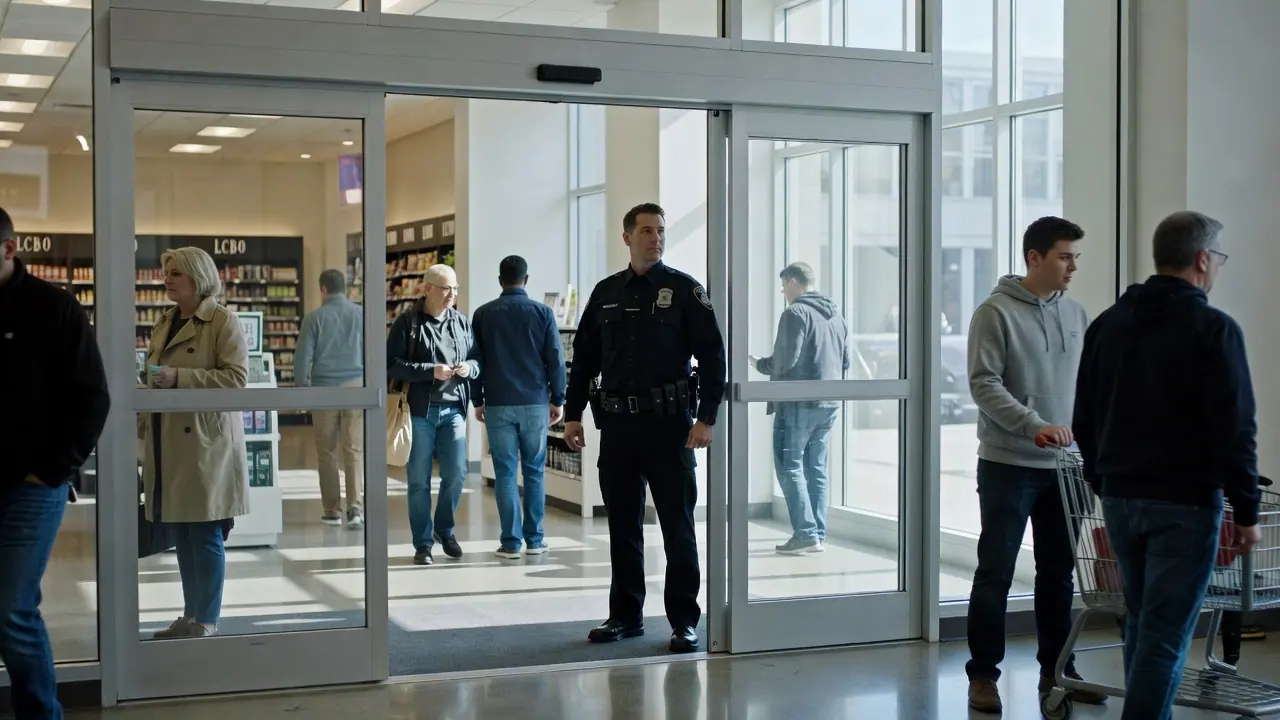

When more security staff with arrest powers are placed in public spaces, it becomes more important for everyday Ontarians to understand that a private citizen's arrest powers are narrow and come with real legal responsibilities. Knowing your rights in the moment, and documenting what happens, can make a meaningful difference later.
The Liquor Control Board of Ontario (LCBO) is preparing to roll out a new anti-theft campaign that will put significantly more uniformed police officers and plain-clothes security staff inside its stores, according to an exclusive report from 680 NewsRadio published by CityNews Toronto on November 25, 2026. The Crown corporation calls the effort "Operation Secure Stores," and it was expected to formally announce the plan later that Wednesday. For shoppers, retail workers and anyone following Ontario legal developments, the campaign raises practical questions about store security and personal rights.
Under the campaign, paid duty uniformed police officers will be posted at more than 40 LCBO locations that the corporation considers most at risk for theft. The report says this is believed to be a significant increase over the number of officers currently used in its stores. The report did not name which stores or communities will be included, so it is not yet clear which GTA locations, including those in Mississauga, Brampton or Toronto, may see officers on site.
The LCBO will also bring in more covert, plain-clothes security officers. According to the report, these officers will be able to step in while a theft is happening and make arrests, and they will focus on stores where repeat offenders are most active. More uniformed security guards will also be added at several of the busiest and most frequently targeted stores, where the LCBO hopes a visible presence will discourage theft. These guards will use what the LCBO calls "double guarding," in which they can try to stop repeat offenders from entering a store.
The campaign comes as the LCBO tries to get control of brazen thefts, which the report says often involve suspects filling bags with alcohol and leaving without paying. The LCBO says it believes organized crime groups are behind roughly 70 per cent of all theft at its stores. The report notes that uniformed security guards are not able to intervene in active robberies. As part of the campaign, the third-party guards will need to complete new mandatory refresher training, which the LCBO says will better prepare them to deter theft and manage tense situations.
Anti-theft measures already in place at LCBO stores are believed to have led to more than 2,000 arrests last year. An arrest is not a finding of guilt, and the report does not say how those cases were resolved. It is also not immediately clear how much the added police and security presence will cost.
The full details of Operation Secure Stores were expected to come from the LCBO's official announcement. Until then, the key points are more police in over 40 stores, more plain-clothes officers with arrest powers, more uniformed guards at the busiest locations, and new training for third-party security staff.
Key Takeaways
The LCBO's "Operation Secure Stores" will put paid duty uniformed police officers in more than 40 stores it considers most at risk for theft.
More plain-clothes security officers who can make arrests will target stores where repeat offenders are most active.
Uniformed guards at several of the busiest stores will use "double guarding" to try to stop repeat offenders from entering.
The LCBO says it believes organized crime groups are behind about 70 per cent of theft at its stores.
Third-party guards must complete new mandatory refresher training, and the cost of the campaign has not been disclosed.
UL Lawyers Insight
For most Ontario shoppers, the change will mean seeing more police officers and security guards while picking up a bottle of wine or a case of beer. It also means more people in stores with the power to stop and detain customers. In Ontario, security guards must be licensed under the Private Security and Investigative Services Act, 2005. Their arrest powers are generally limited to those of any private citizen under the Criminal Code. Paid duty police officers have full police powers while on assignment.
For LCBO staff and other retail workers across the GTA, more visible security may bring reassurance, but it also raises questions about workplace safety and what employees are expected to do during a theft. If you have concerns about violence or unsafe expectations at work, our employment law team can explain your rights. If you believe you were wrongly stopped, searched or detained in any store, a civil litigation lawyer can help you understand whether you may have a claim.
Action Checklist
What You Should Do
Stay calm and ask if you are under arrestUrgent
Knowing whether you are being detained helps you understand your rights, including the right to speak with a lawyer.
Ask to see the guard's security licenceUrgent
Licensed guards in Ontario must produce their licence on request under the Private Security and Investigative Services Act, 2005.
Write down what happened right awayUrgent
Record the store location, date, time, names, badge or licence numbers, and what was said while your memory is fresh.
Collect witness contact informationUrgent
Other shoppers or staff who saw the encounter can support your account later.
Ask a lawyer about preserving store video footageUrgent
Surveillance video may be overwritten, so acting quickly can help keep key evidence.
Retail workers: review your employer's workplace violence policy
The Occupational Health and Safety Act requires employers to have policies on workplace violence and how staff should respond.
Note the two-year limitation period
Most civil claims, such as false imprisonment or assault, must be started within two years under the Limitations Act, 2002.
Your Rights and Options
If a plain-clothes officer or guard at an LCBO stops you, you have rights. Section 494 of the Criminal Code allows a private citizen, including a security guard acting for a property owner, to arrest someone they find committing an offence on or in relation to that property. The person must then be handed over to police promptly. Licensed guards under Ontario's Private Security and Investigative Services Act, 2005 must carry their licence and show it when asked. You can calmly ask whether you are under arrest, and you have the right to speak with a lawyer if you are detained.
If you believe you were detained without good reason, injured, or singled out because of your race or another protected ground under the Ontario Human Rights Code, you may have legal options. Civil claims such as false imprisonment or assault are generally subject to the two-year limitation period under the Limitations Act, 2002. If this applies to you, request a consultation to review your situation.
Common Questions Answered
How UL Lawyers Can Help
Being stopped or questioned in a store can feel embarrassing and upsetting, especially if you did nothing wrong. Worrying about your safety at work is stressful too. At UL Lawyers, we listen to what happened and explain your rights in plain language. Then we help you decide on a next step that makes sense for you. That might be a claim for wrongful detention, a human rights complaint, or advice on workplace safety obligations. We serve clients across Mississauga, Brampton, Toronto and the GTA, and we offer a free consultation so you can get clear answers without any pressure.
Were you stopped or detained at a store and unsure whether it was handled properly? Our team can walk you through your rights and options in a free, no-pressure consultation.
Ontario Road Report
One email a week with the road and collision stories we covered in your city and across Ontario.
About this article:
Summary prepared with AI assistance from the linked source's reporting. Edited by UL Lawyers for Ontario context.
Accompanying images are AI-generated illustrations, not photographs of actual events or persons.
Important Legal Disclaimer
This page provides general information about the LCBO's announced anti-theft campaign and related Ontario law on security, arrest powers and workplace safety. It is based on media reports available at the time of publishing and is not legal advice. Every situation is different, and time limits may apply. If you have been stopped, detained or injured in a store, or have safety concerns at work, please consult a lawyer about your specific circumstances.
Source: CityNewsTO
Named in this article? Request content removal