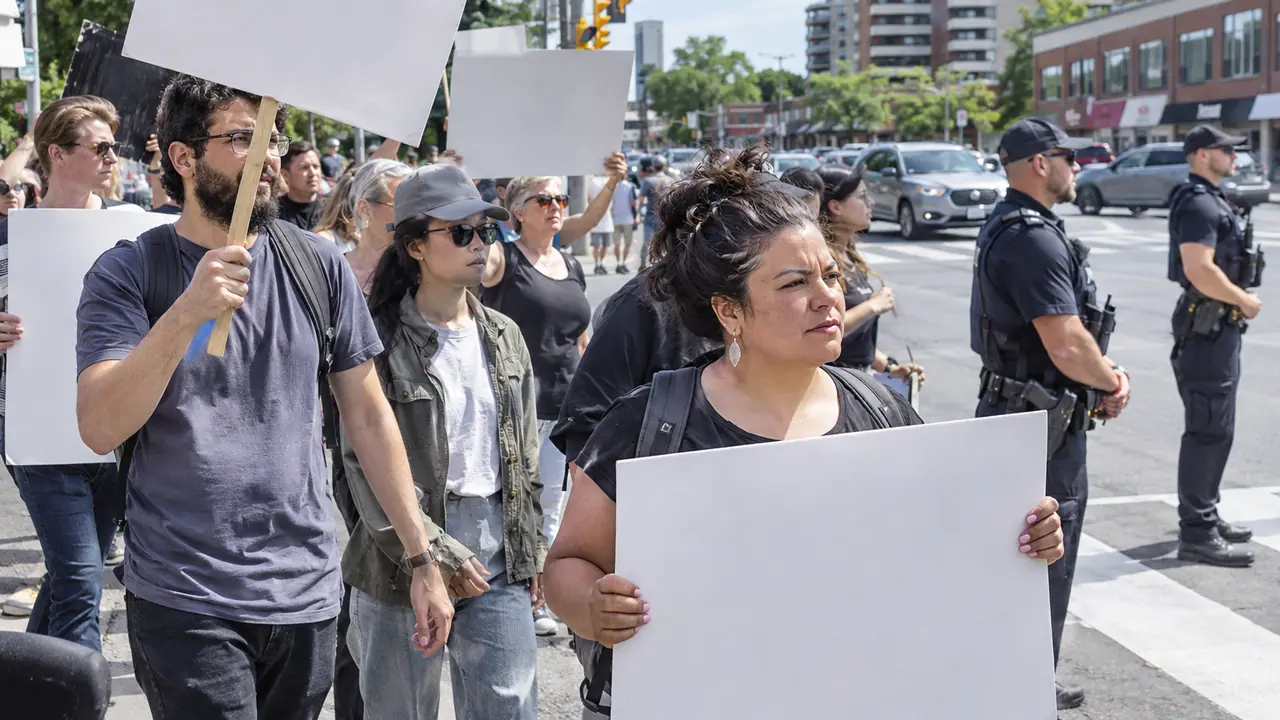

Understanding the legal boundaries of protest rights is essential for activists to avoid unintended legal consequences.
In North York, a demonstration at the intersection of Bathurst Street and Sheppard Avenue West led to the arrest of a 40-year-old Toronto woman named Diana Bosco. The incident occurred just after noon on Sunday when Toronto police, present at the scene, recognized Bosco from previous events. Bosco was charged with failing to comply with an undertaking, a legal obligation she was under following a prior arrest. This earlier charge was related to obstructing a peace officer during the Walk with Israel event in June, where she and others resisted police directives to return to a designated protest area.
The police action at the North York demonstration underscores the legal challenges and responsibilities that come with participating in public protests. UL Lawyers Legal Team provides insights into the legal ramifications of such incidents.
Key Takeaways
Diana Bosco arrested in North York for compliance failure
Prior charges related to obstruction at a June event
Highlights legal risks for protest participants
UL Lawyers Insight
For Ontario residents, especially those participating in demonstrations, this incident serves as a critical reminder of the legal obligations when engaging in public protests. Failing to comply with an undertaking can result in further legal consequences, including additional charges or stricter conditions. Understanding the boundaries of lawful protest and the importance of adhering to police directives can prevent legal complications.
If you're involved in activism, knowing your rights and obligations is crucial to avoid potential legal issues. Legal advice can be invaluable, especially when past incidents could affect your current situation.
Action Checklist
What You Should Do
Review any legal undertakings you are subject toUrgent
Ensure you understand all conditions to avoid breaches
Familiarize yourself with protest rights under the Charter
Know the scope of your rights to protest lawfully
Adhere to police directives during demonstrationsUrgent
Following lawful orders can prevent additional charges
Seek legal advice if charged during a protestUrgent
Professional guidance ensures informed legal responses
Document interactions with law enforcement
Keep records to support your case if needed
Your Rights and Options
In Ontario, participating in protests is a right protected under the Canadian Charter of Rights and Freedoms, which includes the freedom of expression and assembly. However, these rights are not absolute and come with responsibilities, such as complying with lawful police orders during demonstrations. Violating such orders can lead to charges like failing to comply with an undertaking, which can carry severe legal repercussions.
Understanding the specific conditions of any legal undertakings and the scope of your rights under the Charter is essential for anyone engaged in public protests. Consulting with legal professionals can help clarify these obligations and ensure that your actions remain within legal boundaries.
Common Questions Answered
How UL Lawyers Can Help
Navigating the legal landscape of public demonstrations can be challenging, especially when past incidents influence your current situation. At UL Lawyers, we understand the complexities involved in such cases and are here to help you understand your rights and obligations. Our team can provide guidance on the legal implications of your actions and assist in resolving any charges or disputes arising from protest activities. We offer free consultations to discuss your specific situation and explore your legal options without any pressure or obligation.
Have questions about your rights at protests? Contact us for a free consultation to discuss your legal options.
About this article:
Summary prepared with AI assistance from the linked source's reporting. Edited by UL Lawyers for Ontario context.
Accompanying images are AI-generated illustrations, not photographs of actual events or persons.
Important Legal Disclaimer
This page provides general information and does not constitute legal advice. For advice specific to your situation, please consult with a qualified legal professional.
Source: CityNewsTO
Named in this article? Request content removal