
When the government makes a decision about public health funding, it generally has to be fair, explain its reasons, and deal properly with the evidence in front of it. Judicial review gives Ontarians a way to ask a court to check that, but the deadlines are short, so acting early matters.
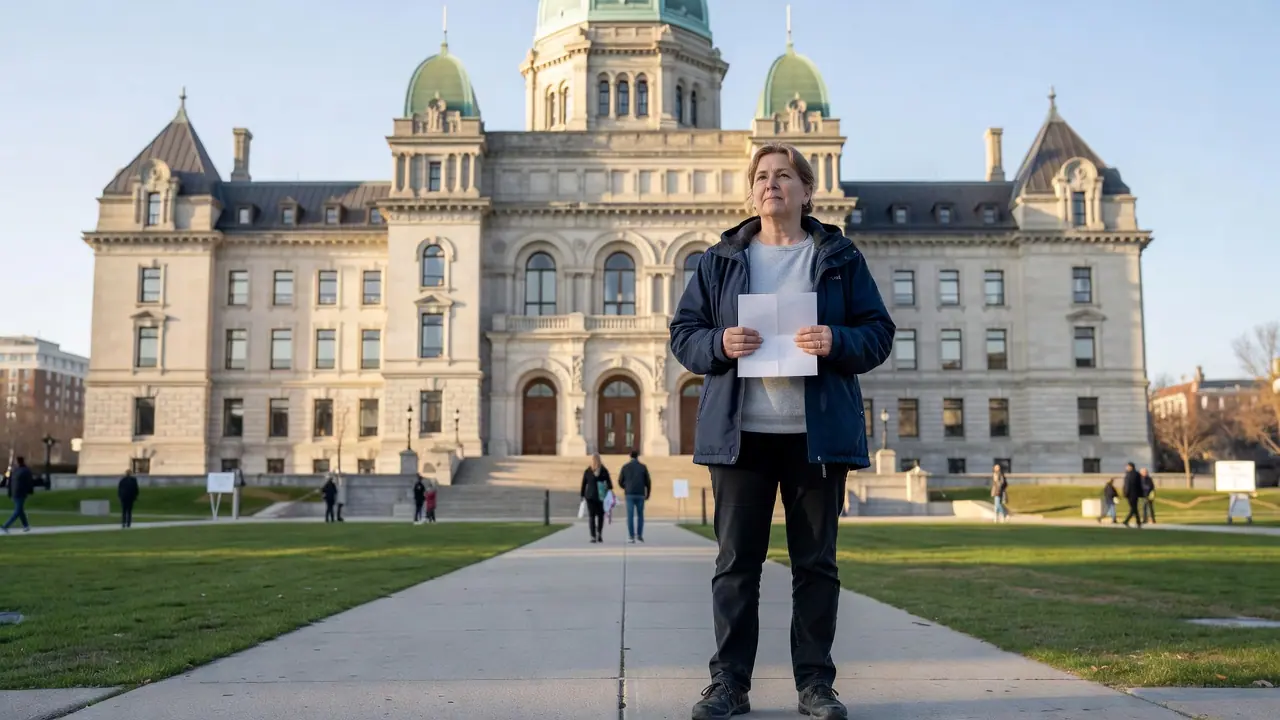
Over the past week, three Ontarians living with cancer have come to Queen's Park, the Ontario Legislature in Toronto. They want to draw attention to the province's refusal to fund new cancer drug treatments that are available in the United States, according to a Toronto Sun report by Alan S. Hale published Nov. 25, 2026. Each patient has a different rare form of cancer. Each was turned down for provincial funding to get specialized drug treatment in the U.S. that their own doctors recommended. The Sun's coverage describes the province as having made it harder for people to reach these new treatments.
Ontario Health Minister Sylvia Jones has defended the government's position. She has said the refusals to pay for these treatments, which are not available in Canada, were "not political decisions." She has also accused the opposition of exploiting the patients' stories.
One of the three patients, a woman, found a way to start treatment anyway. She spent about $500,000 of her own money and raised nearly $150,000 through online crowdfunding. She told reporters the drug is extremely expensive, but it is working for her and she does not want to stop. She worries the GoFundMe money will eventually run out. She said her family's savings are already spent and her parents cannot afford to pay for more doses.
The other two patients have not started treatment. They are fighting the provincial government in court and asking judges to review the decisions to deny them coverage. This legal process is known as judicial review, and it is a core part of civil litigation in Ontario. One of them is a woman who spoke to reporters at Queen's Park on Nov. 23, 2026. Her lawyers say the Ministry of Health's own medical experts reviewed her application and agreed with her doctor that she needs a treatment available in the U.S. According to her lawyers, the government did not disclose that agreement when it rejected her application. She told reporters these decisions are meant to be based on expert opinion, and she wants to see that happen.
A fourth patient has not appeared at the Legislature. He has already gone to court over his own case. In September, he successfully challenged the rejection of his request for out-of-country cancer treatment. The Ontario Superior Court of Justice quashed, or set aside, the government's decision to deny him public funding. The report does not say when the two pending court challenges will be heard.
Key Takeaways
Three Ontarians with rare cancers came to Queen's Park over the past week after the province refused to fund U.S. treatments their doctors recommended
Health Minister Sylvia Jones says the refusals were not political decisions and has accused the opposition of exploiting the patients' stories
One patient has paid about $500,000 herself and raised nearly $150,000 online to keep receiving treatment
Two patients have asked the courts to review the government's decisions; one patient's lawyers say ministry experts agreed with her doctor but this was not disclosed
In September, the Ontario Superior Court of Justice quashed the province's denial of out-of-country cancer treatment funding for another patient
UL Lawyers Insight
This story shows that a government decision about your health coverage is not always the final word. Ontario courts can review whether a decision by the province or one of its ministries was made fairly and reasonably. In one case described here, the Ontario Superior Court of Justice set aside a funding denial for out-of-country cancer treatment. That does not mean every challenge will succeed. It does show that judicial review is a real option.
The allegation from one patient's lawyers raises a key point. They say the ministry's own experts agreed with her doctor but the government did not disclose this. If you are applying for coverage, the evidence in your file matters. So does whether the decision-maker dealt with it openly. Asking for your full file and written reasons can help you see how a decision was reached. Our legal resource library has more plain-language guides on dealing with government and insurance decisions.
The financial strain described here is heavy. One patient has spent her savings and relied on crowdfunding. That is why it helps to understand your legal options early, ideally before you take on major out-of-pocket costs.
Action Checklist
What You Should Do
Request the written decision and reasons for the funding denialUrgent
The reasons show what the decision-maker relied on and help identify grounds for a challenge
Note the deadline to challenge the decision right awayUrgent
Judicial review applications generally must be started within 30 days, and appeal routes have their own time limits
Ask for a copy of your complete application file, including any expert reviewsUrgent
Records such as ministry medical opinions can be key evidence in an appeal or court review
Get a detailed letter from your treating doctorUrgent
Clear medical evidence explaining why the U.S. treatment is needed, and why no Canadian option fits, strengthens your case
Find out whether your decision can be appealed to the Health Services Appeal and Review Board
Some OHIP decisions go to this tribunal, while others may need to go to court through judicial review
Keep records of all treatment costs and fundraising
Detailed receipts and records document your financial situation and may matter if a decision is revisited
Speak with a litigation lawyer before taking major next stepsUrgent
A lawyer can help you choose the right process and meet strict filing requirements
Your Rights and Options
If Ontario denies funding for treatment outside Canada, you may have more than one way to challenge it. Many OHIP decisions under the Health Insurance Act, including some out-of-country prior approval decisions, can be appealed to the Health Services Appeal and Review Board. Other decisions may be challenged through judicial review under Ontario's Judicial Review Procedure Act. These applications are generally heard by the Divisional Court, a branch of the Ontario Superior Court of Justice.
Timing is critical. Under the Judicial Review Procedure Act, an application generally must be started within 30 days of the decision, unless another law sets a different deadline. A court can extend this only in limited circumstances. You can also ask for written reasons and a copy of the records the decision-maker relied on, including any expert reviews. If you are facing a denial like the ones in this story, you can request a consultation to learn which route fits your situation.
Common Questions Answered
How UL Lawyers Can Help
A serious diagnosis is hard enough. Being told the province will not pay for the treatment your doctor recommends can feel crushing. You may be worried about money, about time, and about whether anyone will listen. At UL Lawyers, we help Ontario residents understand government and insurance decisions, review the reasons and records behind a denial, and explain the options, deadlines and possible outcomes in plain language. If a legal challenge makes sense, we can guide you through the process so you can focus on your health and your family. We offer a free consultation to talk through your situation.
If Ontario has refused to fund treatment your doctor recommended, you may have only a short time to act. Reach out to our team, and we can review your denial and explain your options.
Ontario Road Report
One email a week with the road and collision stories we covered in your city and across Ontario.
About this article:
Summary prepared with AI assistance from the linked source's reporting. Edited by UL Lawyers for Ontario context.
Accompanying images are AI-generated illustrations, not photographs of actual events or persons.
Important Legal Disclaimer
This page provides general information about news reports of Ontario's denials of funding for out-of-country cancer treatment and related court challenges. It is not legal or medical advice. The court challenges described are based on media reports, and the claims made in them have not been tested in court. The right process, deadlines and possible outcomes depend on your specific decision and circumstances. Please consult a qualified Ontario lawyer about your situation.
Source: TheTorontoSun
Named in this article? Request content removal