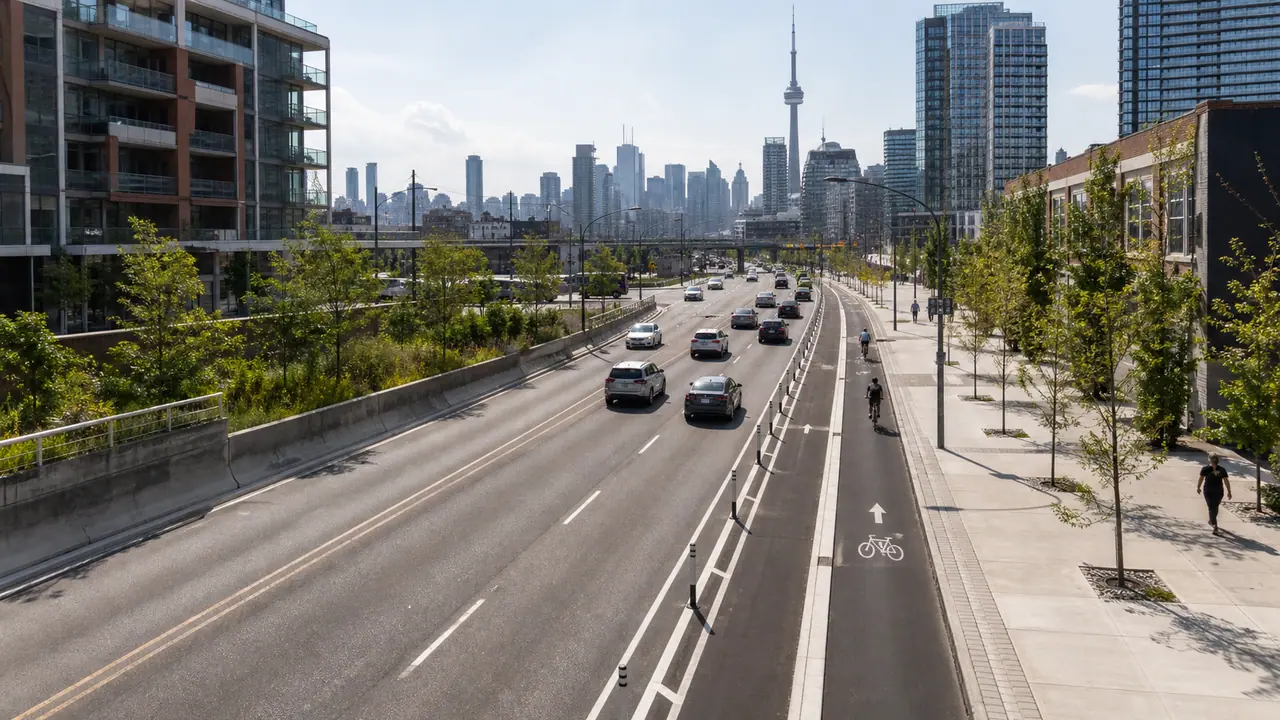

This ruling from the Ontario Court of Appeal is a significant affirmation of legislative supremacy, reminding us that policy decisions, even on local infrastructure like bike lanes, ultimately rest with elected governments, not the judiciary. It clarifies the boundaries of judicial review, ensuring courts interpret law rather than create it.
In a significant ruling published on August 15, 2026, the Ontario Court of Appeal unanimously overturned a lower court's decision that had controversially created an 'imaginary' Charter right for bicycle lanes in Toronto. This decision, widely lauded by critics of what they termed 'judicial activism,' clarifies the jurisdictional boundaries between provincial and municipal governments regarding urban infrastructure.
The case specifically addressed the Ontario government's authority to remove bike lanes that had been established by the municipal government in Toronto, a move that had been challenged by bicycle activists and political opponents of Premier Doug Ford. This development is crucial for understanding legal developments in Ontario, and how they impact residents, as our UL Lawyers Legal Team closely follows such cases.
Key Takeaways
Ontario Court of Appeal confirmed provincial power to remove Toronto bike lanes.
Lower court's 'Charter right for bicycle lanes' ruling was overturned.
Decision emphasizes judicial role is to interpret, not create, policy or Charter rights.
UL Lawyers Insight
For Ontario residents, particularly those in Toronto, Mississauga, Brampton, and the Greater Toronto Area, this ruling has several important implications. First, it reinforces the provincial government's overarching power in matters that might affect municipal planning, even for local infrastructure like bike lanes along streets such as Bloor St. W., near Christie St. in Toronto. This means that decisions made by municipal councils regarding urban development could potentially be overridden by provincial directives.
Secondly, the appeal court's strong denunciation of 'judicial activism' emphasizes that courts are not meant to create new Charter rights or dictate government policy, but rather to interpret existing laws. This distinction affects how future legal challenges to government decisions might be approached, particularly those involving public policy and infrastructure.
Action Checklist
What You Should Do
Stay informed about local and provincial policy changes.
Understand how government decisions on infrastructure might affect your community.
Engage with municipal and provincial representatives.
Voice your concerns or support for urban planning decisions through political channels.
Understand the scope of judicial review.
Recognize that courts primarily interpret existing law, rather than creating new rights or policies.
Consult legal counsel for specific rights concerns.
If a government action impacts your individual legal rights or property, seek professional advice.
Document any personal impacts from infrastructure changes.
Keep records if you believe changes in infrastructure negatively affect your safety or property.
Your Rights and Options
While this particular ruling focuses on government powers rather than individual rights, it indirectly impacts how residents engage with urban planning and advocacy. If a provincial decision affects your community, such as the removal of infrastructure, understanding the legal framework governing these actions is vital. Although there is no Charter right to specific infrastructure like bike lanes, residents still have avenues to voice concerns through municipal and provincial political processes, and in some cases, through judicial review if governmental actions exceed legal authority.
The appeal court's emphasis on legislative authority means that the existence and removal of bike lanes depend on laws passed by elected officials. If you believe a government decision has directly impacted your rights or property in other areas, such as a personal injury due to unsafe conditions or an employment dispute, understanding your legal options is paramount. Consulting with legal professionals can help you navigate complex legal questions and ensure your voice is heard within the bounds of the law.
Common Questions Answered
How UL Lawyers Can Help
Navigating complex legal rulings and understanding their impact on your daily life can be overwhelming. At UL Lawyers, we are committed to keeping our clients in Mississauga, Brampton, Toronto, and the GTA informed about legal developments that affect them. If you have questions about how a government decision might impact your rights, or if you're dealing with a personal injury, employment issue, or other legal matter, our experienced team is here to provide clear, practical advice. We offer a free consultation to discuss your specific situation and explore your legal options.
Have questions about how this ruling or other legal developments might affect you? Contact UL Lawyers for a free consultation to discuss your concerns.
About this article:
Summary prepared with AI assistance from the linked source's reporting. Edited by UL Lawyers for Ontario context.
Accompanying images are AI-generated illustrations, not photographs of actual events or persons.
Important Legal Disclaimer
This page provides general information about a recent Ontario Court of Appeal ruling and is not intended as legal advice. The information discusses legal principles related to government powers and judicial review. It does not create a solicitor-client relationship. For advice on your specific situation, including any potential personal injury claims related to infrastructure or other legal matters, please consult with a qualified legal professional.
Source: TheTorontoSun
Named in this article? Request content removal