
The removal of bike lanes raises significant legal and safety concerns, especially for vulnerable road users.
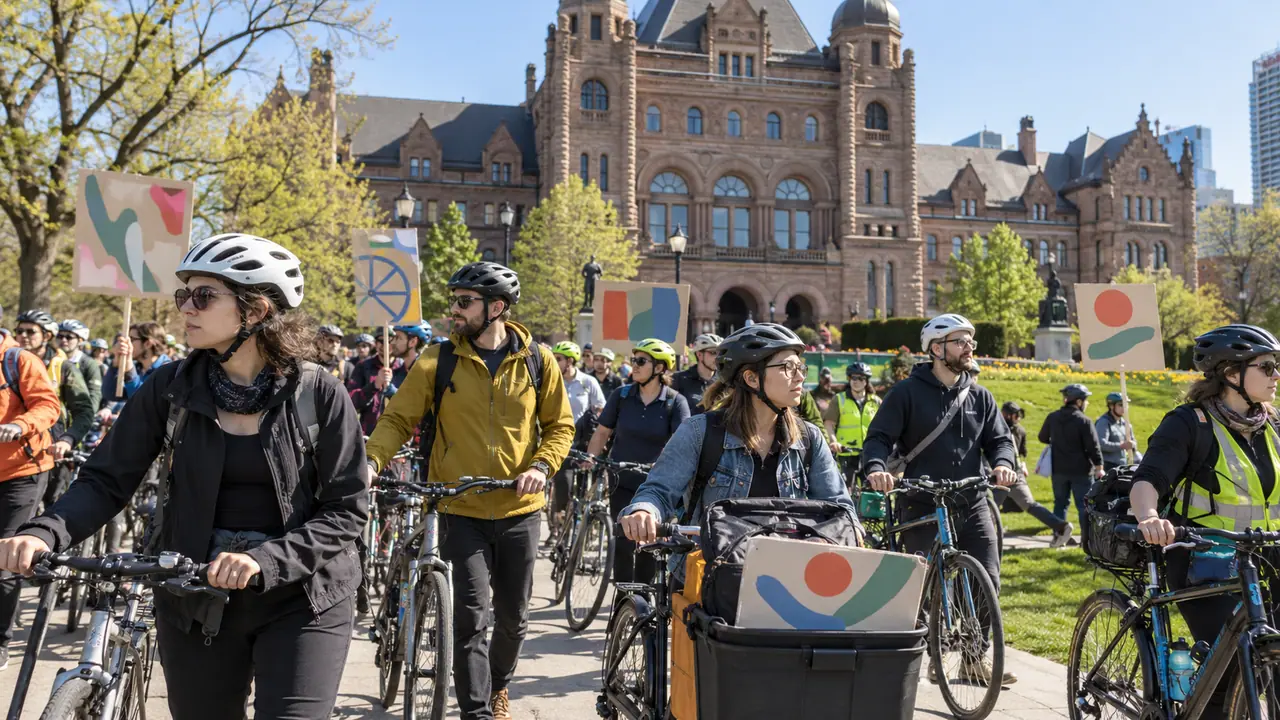
On Halloween, cycling advocates gathered at Queen’s Park in Toronto to protest Ontario’s decision to remove bike lanes across the city, starting with a 1.2-kilometre stretch on Bloor Street West in Etobicoke. This decision, announced by Ontario Transportation Minister Prabmeet Sarkaria, cited 'low usage' as the reason for the removal but has sparked significant community unrest. Protests at the site led to tensions, resulting in the arrest of four individuals for mischief.
Advocacy groups, including Cycle Toronto, are now seeking intervention from the Supreme Court of Canada to challenge the removal of these protected lanes. The debate over bike lanes has been a hot topic in local elections, with newly re-elected Mayor Olivia Chow supporting cycling infrastructure.
Key Takeaways
Bike lanes on Bloor Street West in Etobicoke have been removed.
Protests and legal challenges are underway against the provincial decision.
The issue of bike lanes is significant in local Toronto politics.
UL Lawyers Insight
For Ontario residents, especially those in urban areas like Toronto, the removal of bike lanes presents concerns about safety and accessibility. Bike lanes not only provide a safer route for cyclists but are also essential for those with mobility challenges, like Oda Al-anizi, who relies on bike lanes to navigate the city with his wheelchair attachment. The legal actions taken by advocacy groups highlight the importance of civic engagement and the role of the courts in addressing public infrastructure issues.
Residents concerned about similar changes in their communities may want to stay informed about legal developments and consider participating in local advocacy efforts.
Action Checklist
What You Should Do
Attend local city council meetings
Voice concerns and stay informed about infrastructure plans.
Join local advocacy groups
Collaborate with others to support safe infrastructure initiatives.
Document any incidents related to bike lane removalUrgent
Provide evidence of safety issues or accessibility challenges.
File a complaint with local authorities
Officially register opposition to the changes and suggest alternatives.
Consult with legal professionals
Get advice on potential legal actions or rights related to public infrastructure changes.
Your Rights and Options
Residents of Toronto and other Ontario cities have the right to advocate for safe and accessible infrastructure through public protests and by engaging with local governance. If you believe that changes to public infrastructure, like bike lanes, affect your safety or accessibility, you can file a formal complaint with your local city council or participate in public meetings to voice your concerns. Additionally, legal actions, such as those being pursued by groups like Cycle Toronto, can challenge government decisions in court.
If you are involved in such efforts, consulting with legal professionals who specialize in public policy and civic rights can provide valuable guidance.
Common Questions Answered
How UL Lawyers Can Help
Navigating changes in public infrastructure and understanding your rights can be complex and stressful. Our legal team at UL Lawyers is here to support you by offering insights into how these developments might impact your daily life and legal options. We can help assess the situation and provide guidance on how to effectively voice your concerns or pursue legal action if necessary. Reach out for a free consultation to discuss your concerns and explore your legal options.
Concerned about local infrastructure changes? Contact our legal team to understand your rights and options.
About this article:
Summary prepared with AI assistance from the linked source's reporting. Edited by UL Lawyers for Ontario context.
Accompanying images are AI-generated illustrations, not photographs of actual events or persons.
Important Legal Disclaimer
The information on this page is intended for general informational purposes and should not be construed as legal advice. For advice specific to your situation, please consult with a licensed legal professional.
Source: CP24
Named in this article? Request content removal