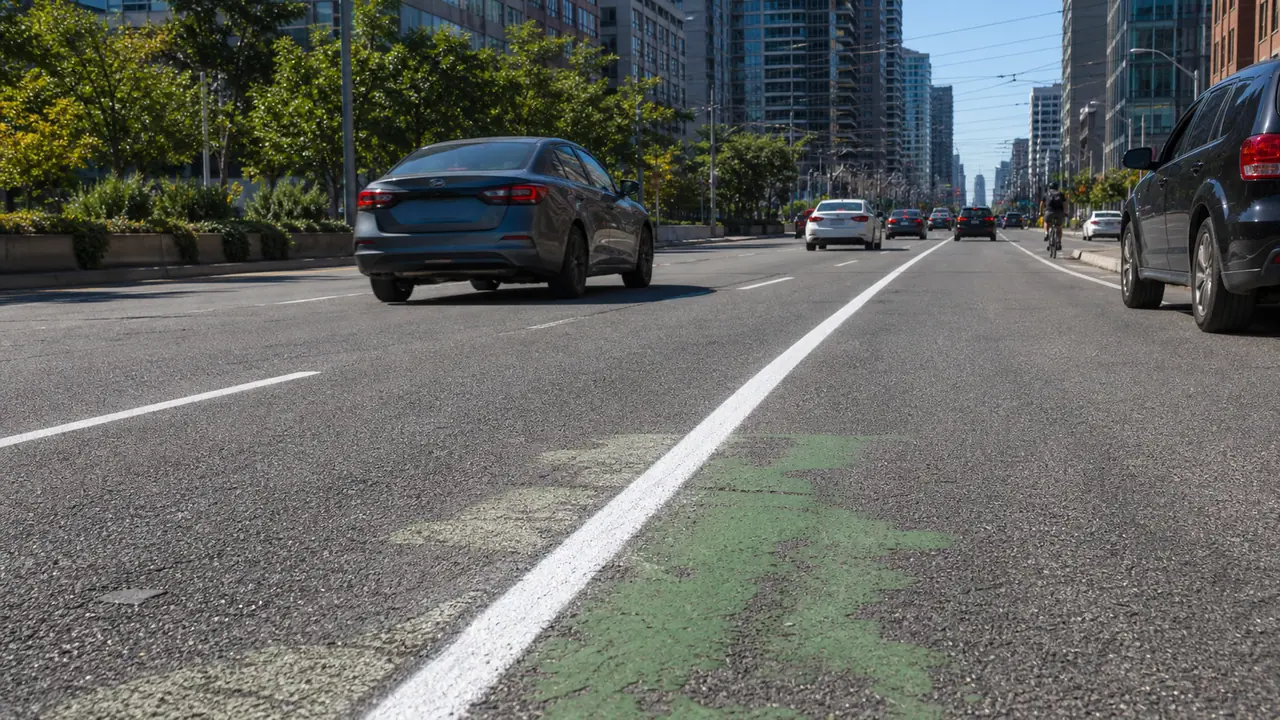

The removal of bike lanes raises significant concerns about commuter safety and urban planning priorities in Toronto.
Ontario has commenced the removal of bike lanes along key Toronto corridors such as Bloor Street West, Yonge Street, and University Avenue following a court ruling that backs the provincial authority over municipal road designs. Work has already started on Bloor Street West, specifically between Clissold Road and west of Islington Avenue, reinstating motor-vehicle lanes. This action is a result of the Ford government's 2024 legislation requiring cities to obtain provincial approval for bike lanes that reduce vehicle traffic lanes.
The law, which also allows the province to remove existing bike lanes, was upheld by the Ontario Court of Appeal, despite previous lower court rulings citing potential safety risks for cyclists.
Key Takeaways
Ontario is removing bike lanes on major Toronto streets.
The decision follows a court ruling supporting provincial authority.
Concerns over commuter safety and traffic congestion persist.
UL Lawyers Insight
For residents of Ontario, particularly those in Toronto, the removal of these bike lanes could have significant implications for daily commutes and safety. With gridlock cited as a $56 billion annual cost to Ontario's economy, the Ford government argues that restoring vehicle lanes will alleviate traffic congestion. However, cyclists and safety advocates are concerned about increased risks and the reversal of progress in creating safer cycling infrastructure.
This decision affects not only cyclists but also car commuters who may experience changes in traffic flow. For those affected, exploring their legal rights and understanding the municipal approval process will be crucial. Consulting litigation lawyers can provide insights into potential challenges to this policy.
Action Checklist
What You Should Do
Engage with local cycling advocacy groups
Support efforts to maintain safe cycling infrastructure.
Participate in public consultations
Voice your concerns about the impact of these changes.
Understand the Ontario Environmental Bill of Rights
Learn how it can support public participation in decisions.
Consult with a litigation lawyer
Explore legal actions if safety or rights are compromised.
Stay informed on municipal road design policies
Keep up-to-date with changes that affect your daily commute.
Your Rights and Options
Ontario residents have the right to voice their concerns and participate in public consultations regarding road infrastructure changes. The Ontario Environmental Bill of Rights may provide a platform for public participation in environmental and infrastructure decisions. Cyclists and other commuters concerned about safety or traffic implications can engage with local advocacy groups or legal professionals to explore options for challenging these changes. Understanding the legal framework and the avenues available to contest such government actions is essential.
Common Questions Answered
How UL Lawyers Can Help
Navigating changes to public infrastructure can be challenging, especially when safety and daily commutes are affected. At UL Lawyers, we understand the complexities involved in such developments and can provide guidance on your rights and options. Whether you're a cyclist concerned about safety or a commuter facing increased traffic, our team can help you understand the legal landscape and explore potential actions. Reach out for a free consultation to discuss how these changes might impact you and the steps you can take. Our legal team will make space to hear what happened, answer your questions in plain language, and offer a free consultation when you feel ready.
Concerned about the removal of bike lanes? Our legal experts can help you understand your rights and options.
About this article:
Summary prepared with AI assistance from the linked source's reporting. Edited by UL Lawyers for Ontario context.
Accompanying images are AI-generated illustrations, not photographs of actual events or persons.
Important Legal Disclaimer
This page is for informational purposes only and does not constitute legal advice. For specific legal concerns, please consult a qualified lawyer.
Source: CityNewsTO
Named in this article? Request content removal