
After a fatal collision, families are often contacted by insurers while they are still in shock. Knowing that no-fault benefits exist, and that legal deadlines start running right away, can help them protect their rights without rushing into decisions.
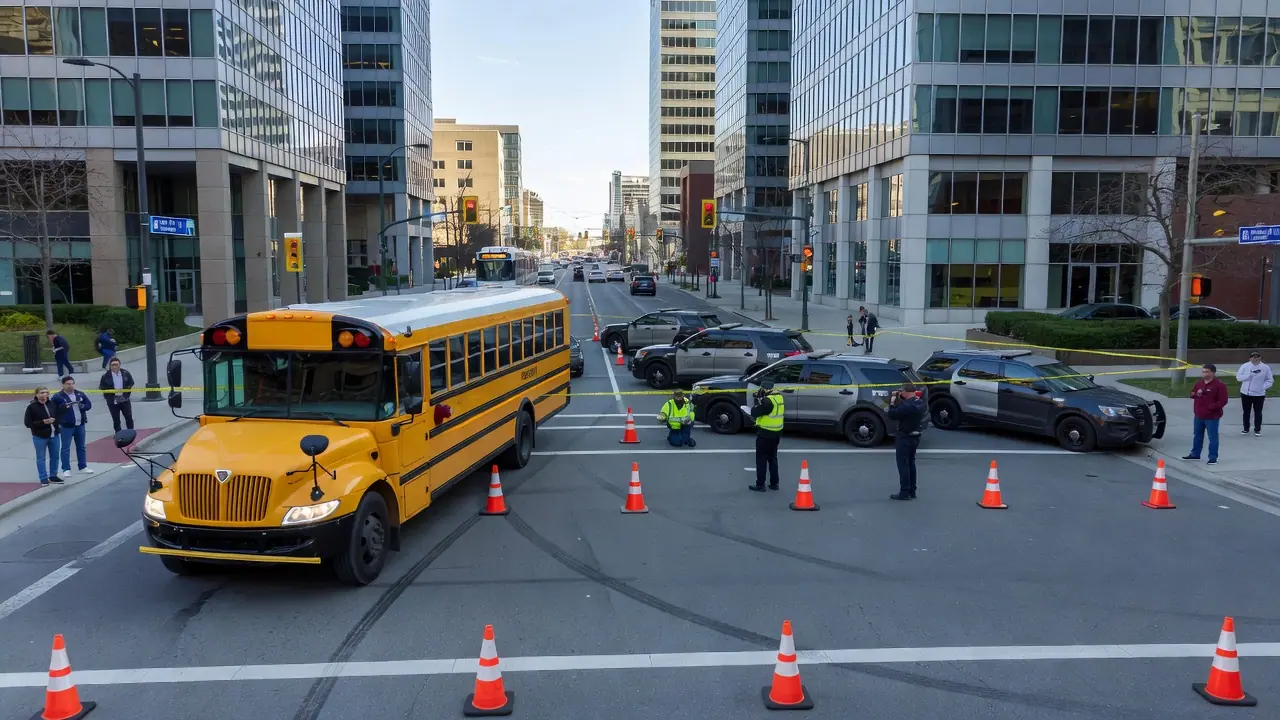
A man died after being struck by a school bus in downtown Toronto on the morning of Wednesday, November 25, 2026. According to CityNews Toronto, emergency crews were called to the intersection of University Avenue and Dundas Street at about 9:40 a.m. The man was pronounced dead at the scene.
Police shut down major roads around the intersection while they investigate. University Avenue was closed in both directions between Elm Street and Dundas Street. Dundas Street was closed between St. Patrick Street and University Avenue. Anyone travelling through the downtown core that morning would likely have run into these closures and detours.
Many details are still unknown. The early report does not identify the man or give his age. It does not say whether he was walking, cycling or travelling some other way when he was struck. It also does not say whether any students were on the bus, whether anyone else was hurt, how the collision happened, or whether any charges have been laid. CityNews described the story as developing and said more information was expected. Until police release more, it is best not to draw conclusions about what led to this fatal collision.
Long road closures like these are common after serious crashes. They give investigators time to examine and document the scene, speak with witnesses and gather evidence. That work often shapes what is later learned about a collision, and it can matter a great deal to the people affected.
When a person dies after being struck by a large vehicle such as a school bus, their family is left with grief and many questions, often all at once. Those questions can include how the investigation will unfold, what insurance coverage may apply, and what support is available. Speaking with experienced motor vehicle accident lawyers can help families understand their options at their own pace, while police continue their work.
Our thoughts are with the man's family, friends and everyone affected by this loss, including those who were at or near the scene on Wednesday morning.
Key Takeaways
A man died after being struck by a school bus at University Avenue and Dundas Street around 9:40 a.m. on November 25, 2026
He was pronounced dead at the scene, and his name and age have not been released
University Avenue was closed between Elm and Dundas streets, and Dundas Street between St. Patrick Street and University Avenue
Police are investigating, and no details about how the collision happened or about any charges have been reported
Families of people killed in Ontario collisions may be eligible for accident benefits and may have other legal options
UL Lawyers Insight
For Ontario residents, this tragedy is a reminder that a motor vehicle accident involving a commercial vehicle can raise more complex legal questions than a typical crash. A school bus may be run by a private company, a contractor or another operator, and each may carry its own insurance. Sorting out which policies apply, and in what order, often takes careful review.
In Ontario, families of a person who dies in a collision may have two separate paths to support. The first is no-fault accident benefits, which can include death and funeral benefits, regardless of who is at fault. The second is a possible lawsuit, which depends on what the investigation and evidence later show about how the collision happened. Our legal resource library has plain-language guides that explain how these two paths work.
The police investigation is still underway, so no one should assume anything about fault right now. What families can do is protect their options by keeping records and learning about the deadlines that apply under Ontario law.
Action Checklist
What You Should Do
Share any information you have with Toronto PoliceUrgent
Witnesses to the University Avenue and Dundas Street collision can help investigators by reporting what they saw or recorded.
Notify the relevant auto insurer about the deathUrgent
Accident benefit rules generally require notice within 7 days and an application within 30 days where possible.
Keep all funeral and related expense receiptsUrgent
Funeral benefits under the SABS reimburse documented costs up to the policy limit.
Avoid signing releases or giving recorded statements to other insurers without adviceUrgent
Early documents or statements can affect a family's later options.
Request a copy of the police collision report once it is available
The investigation's findings will be central to understanding how the collision happened.
Gather documents showing family relationships and financial dependency
Proof of who relied on the deceased supports death benefit and Family Law Act claims.
Note the two-year limitation period
The Limitations Act, 2002 generally requires a lawsuit to be started within two years.
Your Rights and Options
When someone dies after being struck by a vehicle in Ontario, their family may be able to claim no-fault death and funeral benefits under the Statutory Accident Benefits Schedule (SABS). This can apply even if the person did not own a car. Under a standard policy, these benefits include $25,000 for an eligible spouse, $10,000 for each dependant, and up to $6,000 for funeral costs. Insurers should be notified quickly, generally within 7 days, with an application filed within 30 days where possible.
Separately, section 61 of Ontario's Family Law Act allows certain family members to seek compensation for losses such as guidance, care and companionship if a death resulted from someone's negligence. Whether that applies here depends on facts that are not yet known. The Limitations Act, 2002 generally sets a two-year deadline to start a lawsuit, so if you have questions, you can request a free consultation to get guidance early.
Common Questions Answered
How UL Lawyers Can Help
Losing someone suddenly in a collision is overwhelming, and the last thing you need is to sort through insurance forms and legal deadlines alone. We understand that grief comes first. When you are ready, we can explain your options in plain language, help you apply for death and funeral benefits, and handle communication with insurers so you don't have to. We can also review the police findings once they are available and tell you whether a further claim may be possible. We work on a contingency basis, so there is no fee unless we recover compensation. A free, no-pressure conversation is always available.
If someone you love was hurt or killed in a collision, you don't have to figure out the next steps alone. Reach out for a free, no-pressure conversation about your options.
Ontario Road Report
One email a week with the road and collision stories we covered in your city and across Ontario.
About this article:
Summary prepared with AI assistance from the linked source's reporting. Edited by UL Lawyers for Ontario context.
Accompanying images are AI-generated illustrations, not photographs of actual events or persons.
Important Legal Disclaimer
This page is based on early news reports of a developing police investigation, and details may change as more information is released. No findings have been made about how the collision happened. The information on this page is general and is not legal advice. Accident benefit amounts, deadlines and claim options depend on each person's circumstances and insurance policy. Please speak with a qualified Ontario lawyer about your specific situation.
Source: CityNewsTO
Named in this article? Request content removal