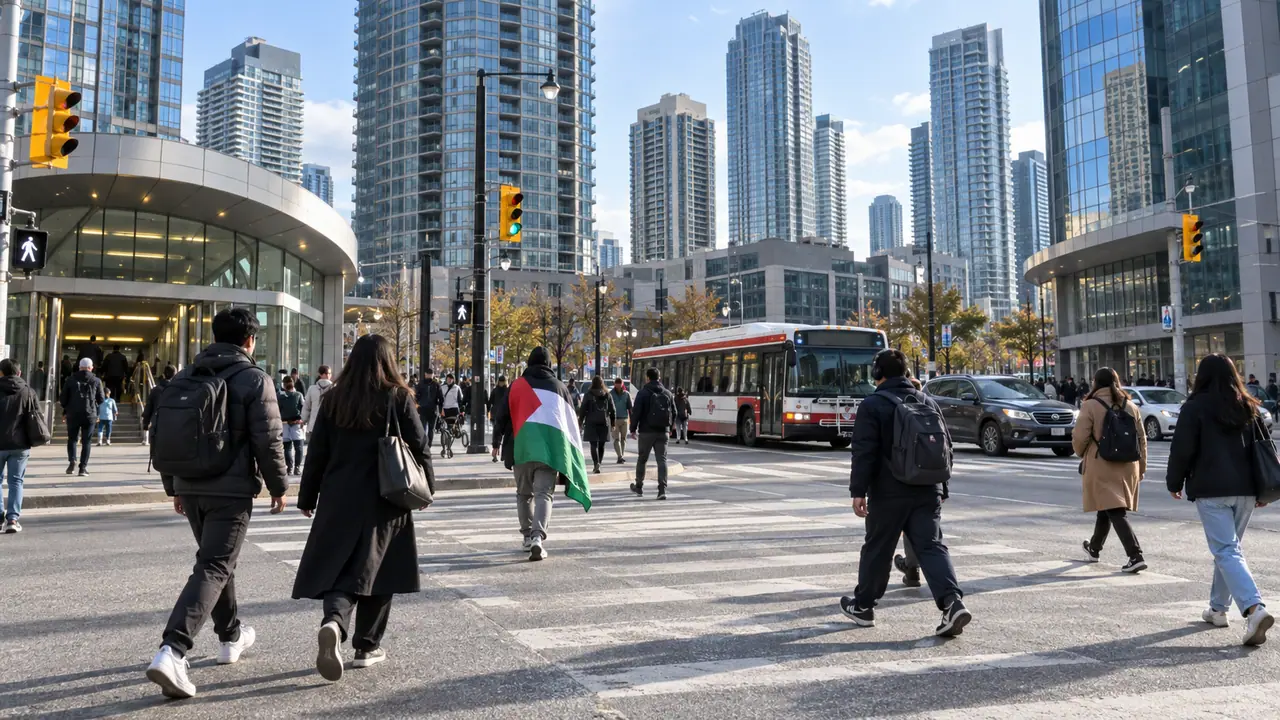

Hate crimes undermine community safety and require robust legal responses to ensure justice and protection for all individuals.
On September 5, 2026, a concerning incident occurred near the busy intersection of Yonge Street and Sheppard Avenue in Toronto. A man, wearing a Palestinian flag, was allegedly pushed by a suspect who made anti-immigrant remarks. This unprovoked attack has prompted the Toronto Police Service to launch a hate-motivated assault investigation. The suspect, described as a man between 55 and 60 years old, approximately six feet tall with a heavy build, was last seen heading south on Yonge Street.
He was wearing a grey Nike shirt with the slogan 'JUST DO IT', green shorts, a beige baseball hat, and grey running shoes. Authorities are urging anyone with information to come forward as they continue to search for the suspect. Such incidents remind us of the critical importance of community awareness and legal protections against hate crimes.
Key Takeaways
Incident occurred at Yonge Street and Sheppard Avenue in Toronto
Suspect made anti-immigrant remarks during the attack
Police have launched a hate-motivated assault investigation
UL Lawyers Insight
For residents of Ontario, especially those in diverse urban centers like Toronto, incidents like these underscore the importance of understanding and upholding hate crime laws. Such laws are designed to protect individuals from actions motivated by bias or prejudice. This case highlights the necessity for robust legal frameworks and community support systems to ensure safety and accountability. Moreover, it serves as a reminder that victims of hate crimes have specific rights and can seek legal support to navigate these challenging situations.
If you or someone you know is affected, consulting with legal professionals can be an essential step in addressing such incidents.
Action Checklist
What You Should Do
Document the details of the incidentUrgent
Include time, location, and descriptions of the suspect and events
Report the incident to Toronto PoliceUrgent
Contact local police to file a report and initiate an investigation
Seek medical attention if injuredUrgent
Ensure any physical harm is treated and documented
Gather witness statements and contact informationUrgent
Witnesses can provide critical evidence in your case
Consult with a legal professional
Understand your rights and options for pursuing justice
Consider counselling or support services
Address any emotional trauma resulting from the incident
Your Rights and Options
In Ontario, victims of hate-motivated assaults have the right to report incidents to the police who are obligated to investigate. The Criminal Code of Canada includes specific provisions for hate crimes, which can result in enhanced penalties for offenders. Victims are also entitled to seek civil remedies, such as compensation for damages, through the courts. These legal avenues ensure that perpetrators are held accountable and victims receive justice.
If you find yourself in a similar situation, it's crucial to document the incident thoroughly and seek legal counsel. Speaking with a lawyer can help you understand the full scope of your rights and the steps you can take to protect yourself.
Common Questions Answered
How UL Lawyers Can Help
If you're dealing with the aftermath of a hate crime, you're not alone. Our team at UL Lawyers understands the emotional and legal complexities involved in such cases. We are here to provide compassionate support and guide you through your legal options, ensuring you receive the justice and protection you deserve. Contact us for a free consultation where we can discuss your situation and help you decide on the best course of action.
If you're facing a similar situation, reach out to our legal team to discuss your rights and options.
About this article:
Summary prepared with AI assistance from the linked source's reporting. Edited by UL Lawyers for Ontario context.
Accompanying images are AI-generated illustrations, not photographs of actual events or persons.
Important Legal Disclaimer
This article is for informational purposes only and does not constitute legal advice. For specific legal concerns, please consult a lawyer.
Source: CityNews Toronto
Named in this article? Request content removal