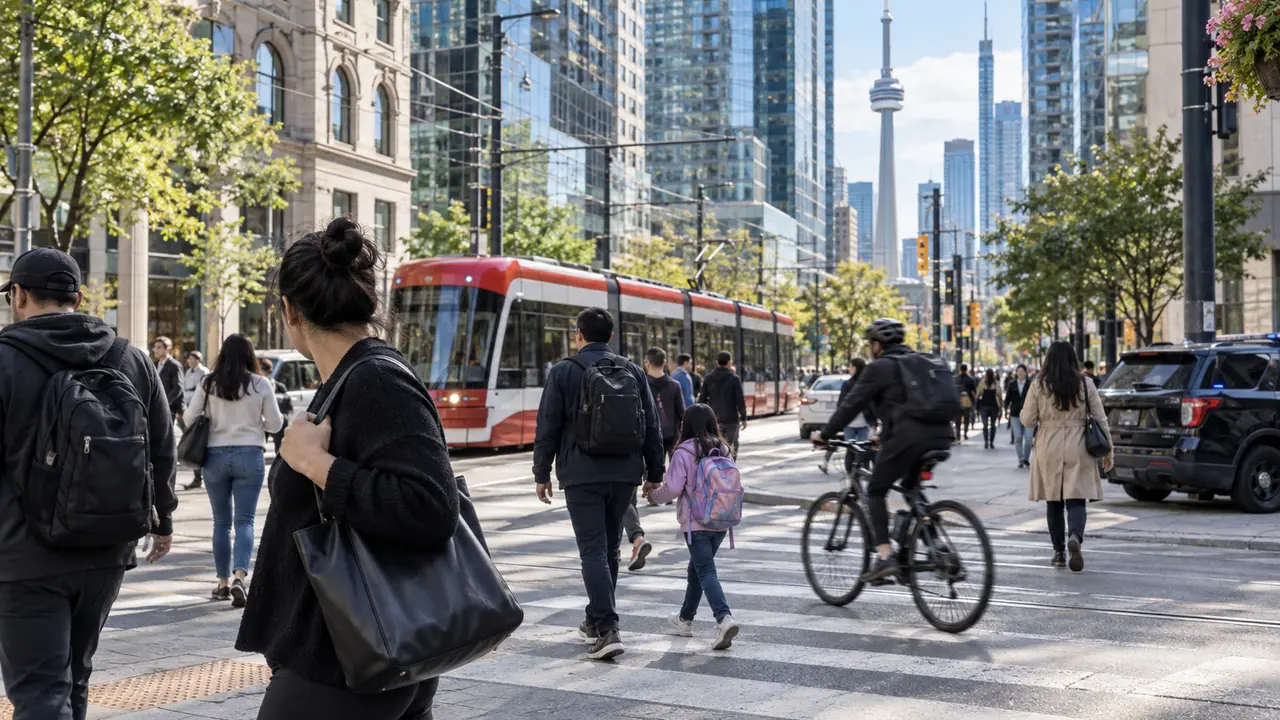

The acknowledged gap between crime statistics and public perception highlights the complex nature of 'safety.' It's not just about numbers; it's about how individuals experience and interpret their environment, which can significantly impact their quality of life and sense of security.
Toronto Police Chief Myron Demkiw recently addressed a significant disconnect between official crime statistics and the public's perception of safety across the city. During the launch of a new monthly segment called “Ask the Chief” on CP24 Breakfast, Chief Demkiw acknowledged that while police data indicates a downward trend in crime, many residents, particularly in areas like those across the Greater Toronto Area, still feel unsafe.
This discussion comes as part of a wider conversation on legal developments affecting daily life in Ontario.
Key Takeaways
Toronto crime data shows a decline in shootings by 20% in 2026.
Despite data, 15.9% of Torontonians cite public safety as a top concern.
Chief Demkiw acknowledges a disconnect between data and public perception.
Traffic congestion also impacts police response times to calls.
UL Lawyers Insight
For residents in Toronto, Mississauga, Brampton, and the wider GTA, this perceived disconnect between data and lived experience is important. A Nanos Research survey, conducted exclusively for CP24 and CTV News Toronto, revealed that 15.9 per cent of Torontonians identify public safety and crime as the biggest problems impacting their quality of life. This sentiment persists even though Toronto Police Services data shows 62 shootings so far in 2026, a 20 per cent decrease year-over-year.
The chief also noted a downward trend in young people acquiring firearms, a positive shift after a recent surge. However, the memory of incidents, such as gunshots at the crowded Salsa on St. Clair festival this past summer, continues to shake residents across the city, reinforcing feelings of insecurity despite the positive statistics. Understanding these dynamics is crucial for anyone living in or visiting the GTA, as it influences community planning, emergency services, and individual safety decisions. It also highlights the complex nature of public safety, which involves both statistical realities and subjective feelings.
Action Checklist
What You Should Do
Stay informed about local crime trends and safety initiatives
Understanding local data and police efforts can help contextualize your personal safety concerns.
Report suspicious activities or incidents promptlyUrgent
Timely reporting helps police respond and gather accurate data.
Familiarize yourself with emergency contact numbers
Knowing who to call in an emergency is crucial for quick assistance.
Understand the factors that may affect police response times
Awareness of issues like traffic congestion can manage expectations during an incident.
Document any personal experiences with crime or safety concerns
Keeping records can be important for future reports or legal consultations.
Seek legal advice if you are a victim of crime in OntarioUrgent
Consulting a lawyer can help you understand your rights and potential recourse under the law.
Your Rights and Options
While crime rates may be declining, your right to feel safe and access timely police response remains paramount in Ontario. If you are involved in an incident requiring police assistance, understanding the factors that can affect response times, such as heavy traffic in areas like downtown Toronto or busy intersections in Mississauga and Brampton, is important. The Limitations Act, 2002 sets out important deadlines for legal claims in Ontario, generally allowing two years from the date a claim is discovered. This means if you are affected by a crime or incident, acting promptly to gather information and seek advice is crucial to preserve your legal options.
Furthermore, Chief Demkiw emphasized that all officers must uphold the law on and off duty, reiterating that criminal offenses, regardless of rank, will not be tolerated. This commitment to accountability helps maintain public trust. If you or a loved one have been impacted by an incident and need to understand your rights or legal recourse, speaking with a legal professional can provide clarity on your specific situation and guide you through the next steps.
Common Questions Answered
How UL Lawyers Can Help
Navigating situations involving public safety concerns or legal incidents can be overwhelming. Our team at UL Lawyers understands the stress and uncertainty you might face. We stay informed on current legal developments, including those impacting public safety in communities like Mississauga, Brampton, and Toronto. If you've been affected by an incident and are unsure about your rights or legal options, we're here to help. We can provide clear, compassionate guidance and advocate on your behalf. Contact us for a free consultation to discuss how we can support you.
If you have concerns about public safety in your community or need legal guidance after an incident, our team is here to help. Contact us for a free consultation to discuss your situation.
About this article:
Summary prepared with AI assistance from the linked source's reporting. Edited by UL Lawyers for Ontario context.
Accompanying images are AI-generated illustrations, not photographs of actual events or persons.
Important Legal Disclaimer
The information provided on this page regarding Toronto's public safety and crime statistics is for general informational purposes only and does not constitute legal advice. While we strive to provide accurate and up-to-date content, legal developments and individual circumstances vary. If you have specific concerns about public safety, crime, or legal matters in Ontario, it is essential to consult with a qualified legal professional for advice tailored to your situation. Reliance on information from this page without professional consultation is at your own risk.
Source: CP24
Named in this article? Request content removal