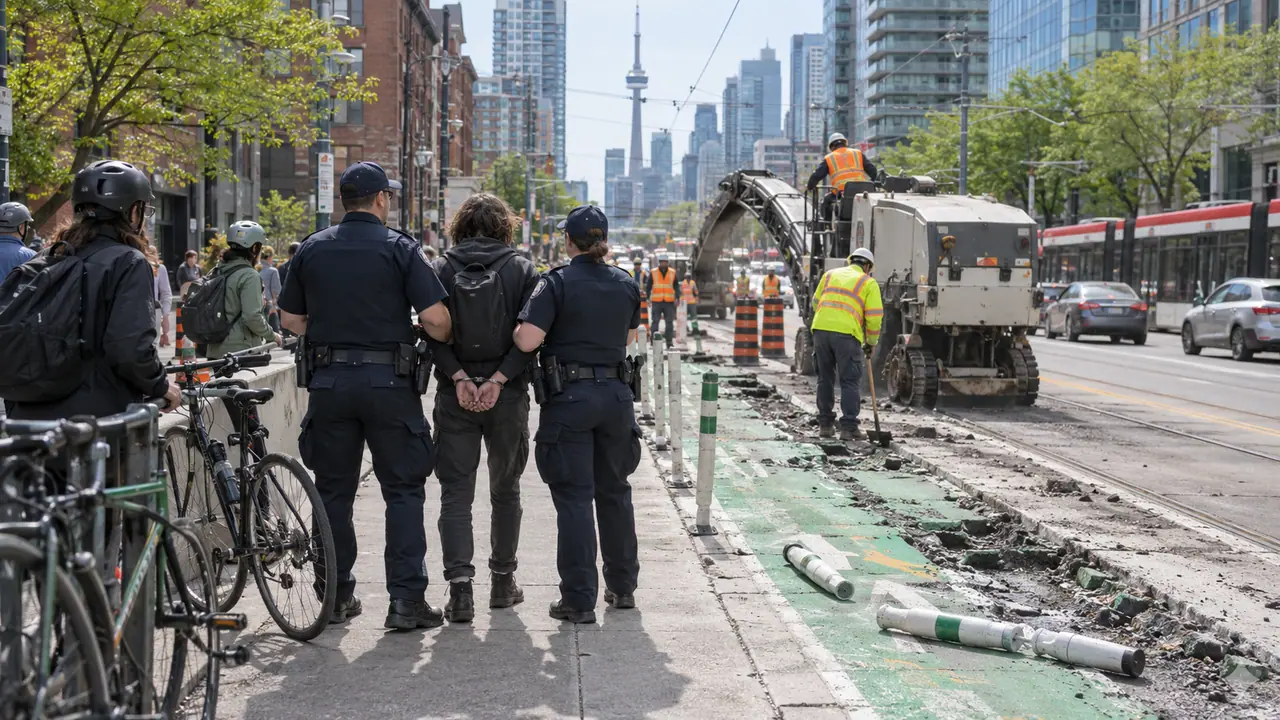

Participating in protests requires a careful understanding of legal boundaries to avoid unintended criminal charges.
Tensions are running high in Toronto as police have arrested a third individual in connection with protests against the removal of bike lanes in Etobicoke. The latest arrest occurred near Bloor Street West and Lothian Avenue, where a 20-year-old Toronto resident was detained around 8 p.m. on Wednesday. According to authorities, the individual was charged with theft under $5,000 and interfering with the lawful use of property after allegedly removing municipal signage and attempting to leave the scene.
Earlier, two other arrests were made—one in the morning and another later that evening—as protesters sought to halt the removal of approximately one kilometre of bike lanes along Bloor Street. The demonstrations temporarily disrupted the planned work, which began on Tuesday at Bloor Street West and Green Lanes. The protests come amid growing public debate over the city's transportation infrastructure and the rights of residents to oppose municipal decisions.
Key Takeaways
Three arrests made during bike lane removal protests in Etobicoke
Charges include theft under $5,000 and interfering with property
Protests highlight tensions over Toronto's transportation policies
UL Lawyers Insight
For Ontario residents, these arrests highlight the delicate balance between exercising rights to protest and adhering to the law. While public demonstrations are a vital part of democratic expression, they must be conducted within legal boundaries to avoid criminal charges. The charges in this case, theft under $5,000 and interfering with lawful use of property, underscore the legal risks associated with civil disobedience.
Protests involving the removal of public property or obstruction of municipal projects can lead to significant legal consequences, including fines and potential court appearances. Litigation experts can offer guidance on how to engage in lawful protests and understand the potential legal ramifications.
Action Checklist
What You Should Do
Understand your rights to peaceful assembly under the CharterUrgent
Knowing your rights helps you engage in legal protests.
Avoid actions that could be considered theft or mischiefUrgent
Such actions can lead to criminal charges and legal consequences.
Seek legal advice if charged during a protestUrgent
Immediate legal counsel can help you understand your situation and options.
Document the protest with photos and notes
Evidence can be crucial if legal issues arise.
Stay informed about municipal laws and regulations
Understanding relevant laws can prevent legal issues during protests.
Your Rights and Options
In Ontario, individuals have the right to engage in peaceful protests, but these rights come with responsibilities. The Charter of Rights and Freedoms protects peaceful assembly, yet actions that involve property damage or obstruction of public works can lead to criminal charges. If you are involved in protests, it's crucial to understand the boundaries of lawful conduct and the potential legal consequences of crossing those lines. Legal provisions such as the Criminal Code define offenses like theft and mischief, which can result in fines or imprisonment.
If you find yourself facing legal charges related to a protest, it is advisable to seek legal counsel immediately. A consultation with experienced litigation lawyers can provide clarity on your rights and help navigate the complexities of the legal system, ensuring your actions remain within legal limits and your rights are protected.
Common Questions Answered
How UL Lawyers Can Help
Navigating the legal complexities of protests and public demonstrations can be challenging. At UL Lawyers, we understand the stress and uncertainty that legal charges can bring. Our team can offer guidance on your rights, explain the implications of charges like theft and mischief, and represent you in court if necessary. We are here to help you understand your legal standing and work towards a favorable outcome. Reach out to us for a free consultation to discuss your situation and explore your legal options.
Facing legal challenges from protest activities? Our experienced legal team can provide guidance and support.
About this article:
Summary prepared with AI assistance from the linked source's reporting. Edited by UL Lawyers for Ontario context.
Accompanying images are AI-generated illustrations, not photographs of actual events or persons.
Important Legal Disclaimer
This page provides general information about recent legal events related to public protests in Toronto. It is not intended as legal advice. For assistance with specific legal issues, please consult a qualified lawyer.
Source: Toronto Star GTA
Named in this article? Request content removal