
Everyone in Ontario, whether a citizen, permanent resident or refugee, has the right to express their views peacefully without fear of threats or violence. When that right is interfered with, the criminal process and the civil courts are separate paths, and a victim may be able to use both.
Toronto police are searching for a 41-year-old man from China who is wanted in connection with an alleged assault during a protest outside the Consulate-General of the People's Republic of China in Toronto this past September. In a news release issued on Wednesday, Nov. 18, police publicly identified the man and said he is wanted on charges of mischief under $5,000, assault and uttering threats. The allegations have not been tested in court. Stories like this raise important questions about personal safety, the right to protest and Ontario legal developments that affect many communities across the GTA.
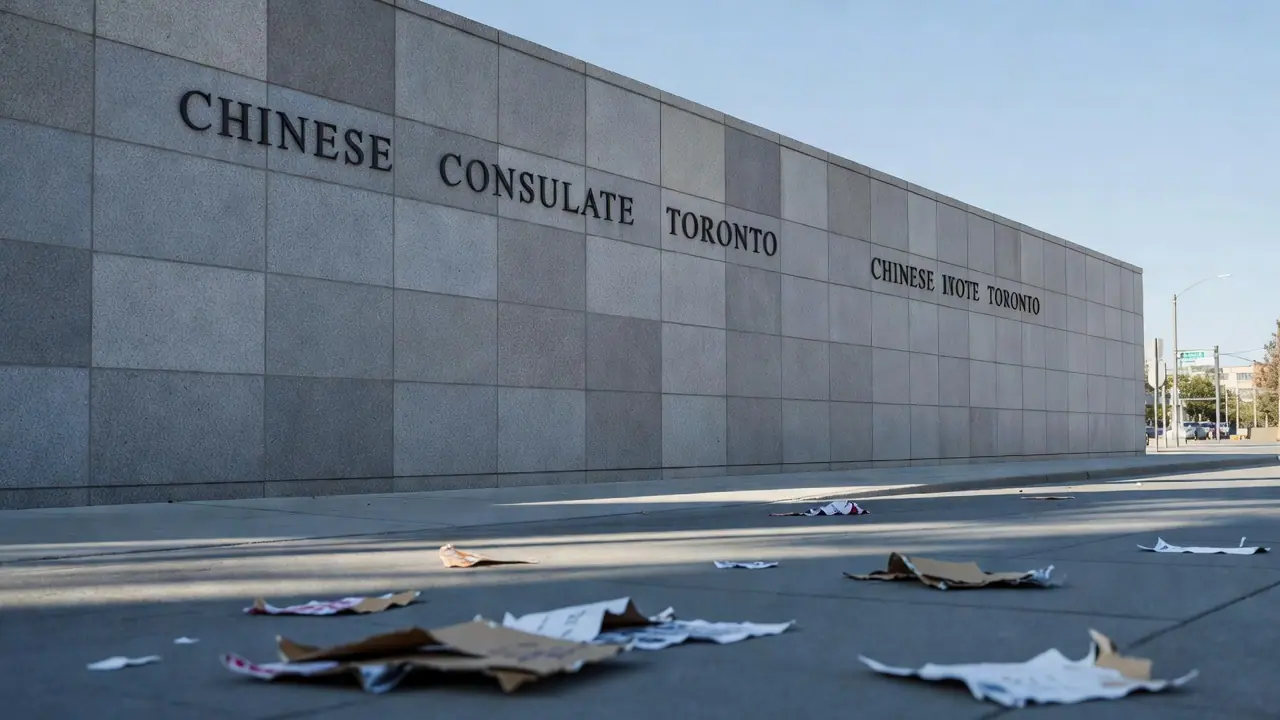
According to police, officers were called to the consulate on the morning of Sept. 22 after a report of an assault. Police say the man walked up to demonstrators outside the building and allegedly damaged their signs and banners. Police further allege that he assaulted a victim and made death threats. Police said the man boarded a flight to China that same afternoon.
CTV News obtained a video of the Sept. 22 altercation. According to CTV News, the footage shows a man tearing down Falun Gong banners that had been set up outside the consulate, threatening to "shoot dead" a female demonstrator, and kicking another woman who was filming the encounter. The two women are part of a rotating group of volunteers who stand outside the consulate every day to draw attention to the persecution of Falun Gong practitioners in China. Falun Gong is a spiritual movement that has attracted millions of followers in China and around the world. CTV News reported on the recently surfaced video while Prime Minister Carney was visiting China.
Joel Chipkar, a spokesperson for the Falun Dafa Association of Canada, told CTV News that one of the demonstrators is a Canadian citizen and the other is a refugee who fled to Canada in 2024.
Along with the man's name, police released images of him. They describe him as five-foot-seven with a medium build and short black hair, and say he wears prescription glasses.
In a statement to CTV News on Wednesday, Jessica Kingsbury, the RCMP's media relations director, said Toronto police are the lead investigators on this incident, but that the RCMP treats threats to the safety of people living in Canada very seriously. She explained that if criminal or illegal activity in Canada is found to be backed by a foreign state, investigating it falls within the RCMP's mandate. Kingsbury added that the RCMP generally does not confirm or deny whether a person or group is under investigation, does not comment on investigations led by other police services or other countries, and would only confirm an active probe once criminal charges are laid. CTV News also noted that the RCMP does not track how many foreign interference complaints come in through its national security hotline.
Key Takeaways
Toronto police have identified a 41-year-old man from China wanted on charges of mischief under $5,000, assault and uttering threats.
Police say the alleged incident happened on the morning of Sept. 22 outside the Chinese consulate in Toronto, and that the man flew to China that afternoon.
According to CTV News, video shows a man tearing down Falun Gong banners, threatening a demonstrator and kicking a woman who was filming.
One demonstrator is a Canadian citizen and the other is a refugee who came to Canada in 2024, according to a Falun Dafa Association of Canada spokesperson.
The RCMP says Toronto police are the lead investigators and that crimes backed by a foreign state fall within its mandate. The allegations have not been tested in court.
UL Lawyers Insight
For Ontario residents, this case is a reminder that the right to gather and speak out peacefully is protected in Canada, and that alleged threats, assaults or property damage at a protest can lead to criminal charges no matter where the accused person is from. Criminal cases are handled by police and the Crown. Those prosecutions do not pay victims back for injuries, lost income or damaged property.
That is where civil law comes in. Someone who is hurt or threatened may be able to bring a separate civil claim, and our litigation lawyers can explain how that process works, including the challenges that arise when the other party has left Canada.
The story also touches on newcomers. One of the demonstrators is a refugee who came to Canada in 2024. Many newcomers worry that reporting a crime could affect their status. If you have questions about how a police matter might interact with your status, speaking with someone experienced in Canadian immigration and refugee law can give you peace of mind before you take your next step.
Action Checklist
What You Should Do
Report the incident to police as soon as possibleUrgent
A prompt report creates an official record and allows police to begin investigating while witnesses and evidence are still available.
Preserve all video, photos and damaged propertyUrgent
Footage and damaged signs or banners can be key evidence in both a criminal case and a civil claim. Back up digital files in more than one place.
Get medical attention and document any injuriesUrgent
Medical records support a police report and any later claim for compensation, even if the injuries seem minor at first.
Write down what happened while it is freshUrgent
Note the date, time, location, exact words used and the names or contact details of any witnesses.
Report possible foreign state involvement to the RCMP
If you believe an incident may be linked to a foreign government, the RCMP's national security hotline accepts these reports.
Contact victim support services
Ontario's Victim Quick Response Program+ may offer short-term help, such as counselling, for victims of violent crime.
Note the two-year deadline for a civil claim
Under the Limitations Act, 2002, most civil claims must be started within two years, so getting legal advice early protects your options.
Speak with an immigration lawyer if you have status concerns
Newcomers and refugees can get confidential advice about how a police matter may relate to their immigration situation.
Your Rights and Options
If you are threatened, pushed or have your property damaged while peacefully protesting in Ontario, you have rights. The Canadian Charter of Rights and Freedoms protects freedom of expression and peaceful assembly. Alleged threats and assaults, like those police describe in this case, are offences under the Criminal Code. You can report them to police, and support may be available through Ontario's Victim Quick Response Program+.
Separately from any criminal case, you may be able to sue for injuries, emotional harm or damaged signs and equipment. Under Ontario's Limitations Act, 2002, you generally have two years to start a civil claim. Keep any video, photos and witness names, as footage like the video in this story can be important evidence. If you're unsure where to begin, you can request a free consultation to talk through your options.
Common Questions Answered
How UL Lawyers Can Help
Being threatened or attacked while standing up for what you believe in can leave you shaken, angry and unsure who to turn to. You don't have to figure it out alone. At UL Lawyers, we listen first. Then we explain your options in plain language, from working alongside a police investigation to exploring a civil claim for your injuries or losses. If you're a newcomer, we can also help you understand how a police matter might relate to your immigration situation. Reach out for a free, confidential consultation and we'll help you decide on the next step that feels right for you.
If you've been threatened or hurt while exercising your right to speak out, you don't have to navigate it alone. Our team is happy to talk through your options in a free, confidential consultation.
Ontario Road Report
One email a week with the road and collision stories we covered in your city and across Ontario.
About this article:
Summary prepared with AI assistance from the linked source's reporting. Edited by UL Lawyers for Ontario context.
Accompanying images are AI-generated illustrations, not photographs of actual events or persons.
Important Legal Disclaimer
This page provides general information about a news report involving criminal charges and alleged threats at a protest in Toronto. It is not legal advice. The charges described have not been tested in court, and the accused is presumed innocent unless proven otherwise in a court of law. Every situation involving assault, threats, civil claims or immigration status is different. Please consult a lawyer for advice about your specific circumstances.
Source: CTVToronto
Named in this article? Request content removal