
A criminal charge is the start of a court process, not the end of one, and anyone charged is presumed innocent. Drivers can still protect themselves today by knowing their rights under Ontario's towing law and keeping control over where their vehicle goes and who treats their injuries after a crash.
On Wednesday, November 18, 2026, Toronto Police announced the results of Project Swords, an investigation into what police describe as an organized crime network operating inside the GTA tow truck industry. Police say the network was a significant contributor to gun crime and violence in Toronto and across the GTA. They say they have disrupted it and arrested the man they allege was its ringleader, a 43-year-old from Whitby. Project Swords ran alongside a second investigation, Project Yankee. Police say the two probes targeted the two largest competing factions in the GTA towing industry. Project Yankee focused on a group known as "The Union," and Project Swords targeted the rival faction. Stories like this touch on criminal law, consumer protection and insurance, which is why our Ontario legal news team is following it closely.
On November 12, police executed multiple search warrants across the GTA. In total, 21 people were arrested. Together they face 112 criminal charges covering a wide range of alleged activity that police say went well beyond towing. Three of the accused face charges of conspiracy to commit murder, including the alleged ringleader. Six arrests are connected to what police describe as an organized auto theft operation. Two are connected to an arson investigation, and three are connected to physiotherapy clinics that police allege were fraudulent.
Separately, a correctional employee who worked at the Toronto East Detention Centre has been charged with breach of trust. Police allege the employee tried to help the alleged ringleader while he was in custody. Police also say they uncovered alleged stock fraud and disrupted a firearms trafficking network. Across the investigation, officers executed 24 search warrants. They seized multiple firearms, including a gun converted to fire fully automatically, along with 84 rounds of ammunition and about 250 grams of cocaine. The people charged range in age from 25 to 50. They are from Toronto, Vaughan, Markham, Caledon, Oshawa, Pickering, Whitby, Beaverton, Keswick and Whitchurch-Stouffville.
Police also allege the main accused was linked to several GTA businesses, including two towing companies. They allege that although those companies were registered under other people's names, he was the de facto leader who controlled their operations and finances. One of those companies had a contract with Toronto Police to provide towing in 41, 42, 43 and 55 Divisions. After the November 12 enforcement action, police ended that relationship and brought in temporary towing providers.
At a press conference, Chief Superintendent Joe Matthews said the arrest should have a very significant impact. He pointed to the level of control police believe the main target had over towing in Scarborough and the wider GTA. He stressed that only a very small share of tow operators are involved in criminal activity. He added that he expects the arrest to significantly reduce violence, arsons and other crime in Scarborough. Inspector Steve Matthews of the Integrated Gun and Gang Task Force said the project had significantly disrupted a network that police allege was behind serious criminal activity in local communities.
Police say tow-related shootings have dropped sharply since towing industry investigations began in 2023. In 2024, 62 shooting and firearm discharge incidents in Toronto were linked to tow truck disputes, nearly 13 per cent of all such incidents in the city. That number fell to 18 in 2025 and stands at five so far in 2026. None of the charges announced has been tested in court, and everyone charged is presumed innocent.
Key Takeaways
Toronto Police say Project Swords and Project Yankee targeted the two largest competing factions in the GTA towing industry
21 people were arrested after search warrants executed across the GTA on November 12 and face 112 charges between them
Three accused face conspiracy to commit murder charges, and a correctional employee at the Toronto East Detention Centre faces breach of trust charges
Police seized multiple firearms, including a converted fully automatic gun, plus 84 rounds of ammunition and about 250 grams of cocaine
Toronto Police ended a towing contract covering 41, 42, 43 and 55 Divisions and brought in temporary towing providers
The charges have not been tested in court and everyone charged is presumed innocent
UL Lawyers Insight
For most Ontario drivers, the towing industry only matters in the stressful minutes after a collision or breakdown. This investigation is a reminder that the tow operator who arrives at the scene can shape what happens next: where your car is stored, what you are charged, and sometimes which repair shop or clinic you are steered toward. Police stress that most tow operators are not involved in crime. Still, it pays to know the rules before you need a tow.
Ontario now licenses the industry under the Towing and Storage Safety and Enforcement Act, 2021. Tow operators, tow truck drivers and vehicle storage operators must hold provincial certificates and follow consumer protection rules. If you are dealing with a crash, speaking with motor vehicle accident lawyers can help you protect your accident benefits and repair claim while you sort out towing and storage.
For people in the east end who relied on police-arranged towing in 41, 42, 43 and 55 Divisions, temporary providers are now handling that work, according to police.
Action Checklist
What You Should Do
Ask to see the tow operator's provincial certificate and rate sheet before agreeing to a towUrgent
Ontario requires tow operators and drivers to be certified and to disclose their rates up front.
Decide where your vehicle will be taken and confirm it in writingUrgent
Unless police direct otherwise, you can generally choose the destination, such as your insurer's preferred facility or a shop you trust.
Notify your own insurance company within seven days of the collisionUrgent
Early notice under the Statutory Accident Benefits Schedule protects your access to accident benefits.
Choose your own health care providers
Be cautious of unsolicited referrals to clinics or repair shops at the scene; you are free to pick your own providers.
Get an itemized invoice and keep all receipts
Detailed records help you dispute overcharges for towing or storage.
Report towing or storage concerns to the Ministry of Transportation
The ministry oversees tow and storage certificates and can look into complaints.
Track the two-year limitation period for any civil claim
If you suffered losses from vehicle theft, fire or unfair charges, the Limitations Act, 2002 generally gives you two years to sue.
Your Rights and Options
If a tow truck arrives after a collision, you have rights under Ontario's Towing and Storage Safety and Enforcement Act, 2021. Operators must hold a valid provincial certificate. They must tell you their rates, get your consent before towing, and give you an itemized invoice. You can usually tell them where to take your vehicle unless police direct otherwise. Under the Statutory Accident Benefits Schedule (SABS), you are free to choose your own health care providers. You should notify your own insurer within seven days of the collision.
If you believe you lost money or property through vehicle theft, arson, or an unfair towing or storage bill, you may have civil options separate from any criminal case. Ontario's Limitations Act, 2002 generally gives you two years to start a lawsuit, so don't wait. You can request a free consultation to talk through your situation.
Common Questions Answered
How UL Lawyers Can Help
We know that a collision, a stolen car or a surprise towing bill can leave you anxious and unsure who to trust. At UL Lawyers, we help people across Mississauga, Brampton, Toronto and the GTA understand their rights after a crash. That includes accident benefits claims, insurer disputes, and recovering losses through the civil courts. We will listen to what happened, explain your options in plain language, and tell you honestly what steps make sense. If you're worried about how towing, storage or insurance issues are affecting your claim, we'd be glad to talk with you during a free, no-pressure consultation.
Dealing with a towing dispute, a storage bill or an accident benefits claim after a crash? Reach out to UL Lawyers for a free consultation and get clear answers about your options.
Ontario Road Report
One email a week with the road and collision stories we covered in your city and across Ontario.
About this article:
Summary prepared with AI assistance from the linked source's reporting. Edited by UL Lawyers for Ontario context.
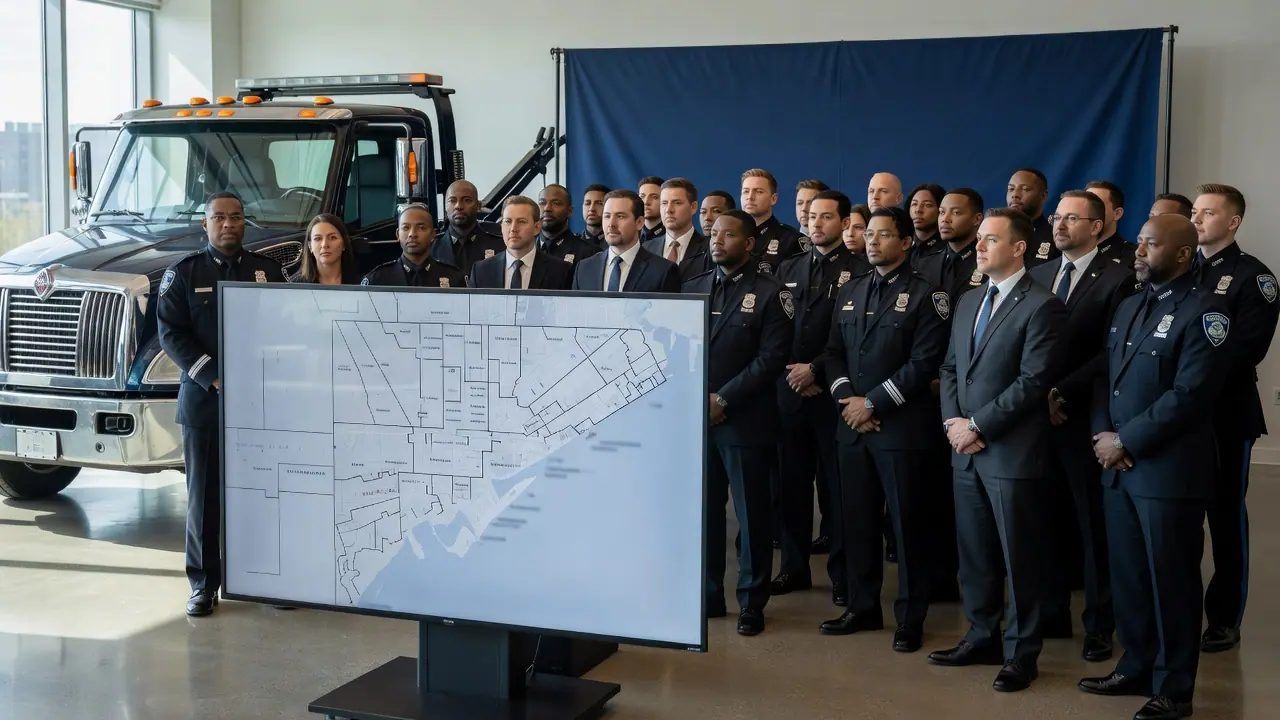
Accompanying images are AI-generated illustrations, not photographs of actual events or persons.
Important Legal Disclaimer
This page summarizes publicly reported allegations from a Toronto Police announcement. Charges have not been tested in court, and everyone charged is presumed innocent. The information on this page is general and is not legal advice about towing, insurance, accident benefits or civil claims. Your rights depend on your specific circumstances, so please consult a lawyer before taking action.
Source: CityNewsTO
Named in this article? Request content removal