How to Apply for CPP Disability: A Practical Guide for Ontarians
Before you even think about filling out the mountain of paperwork for Canada Pension Plan (CPP) disability benefits, you need to ask yourself two fundamental questions. Have I paid enough into the plan? And is my medical condition serious enough to qualify? Getting clear answers to these two questions right from the start can save you a world of frustration down the road.
First Steps: Confirming Your CPP Disability Eligibility

Think of this as your pre-application checklist. The entire CPP Disability program is built on two pillars, and if you don’t meet the requirements for both, your application simply won’t get off the ground.
The Contribution Requirement
First things first, let’s talk about the money. The CPP is essentially a social insurance program you contributed to throughout your working life. To draw from it now, you need to have made enough payments.
The general rule of thumb is that you must have contributed to the CPP in four of the last six years before your disability stopped you from working. There are a few other provisions, like one for people with more than 25 years of contributions, but that four-out-of-six-year window is the standard most people fall under.
The easiest way to verify this is by logging into your My Service Canada Account online. You can pull up your Statement of Contributions, which will tell you exactly where you stand.
The Medical Requirement
This is where things get more complex. Service Canada has a very specific definition for what counts as a qualifying disability. Your medical condition must be both “severe” and “prolonged.”
These aren’t just everyday words; they have precise legal meanings in this context:
- Severe: This means your condition prevents you from maintaining any kind of regular, paying job. It’s not about whether you can do your old job; it’s about whether you can do any job suited to your education and experience.
- Prolonged: This means your condition is long-term and the duration is indefinite, or it’s terminal. A temporary setback, even if serious, won’t meet this standard.
Meeting this definition is often the biggest hurdle for applicants. Having a diagnosis isn’t enough; you must prove how that diagnosis makes you incapable of working. It’s worth looking into what qualifies for long-term disability in Ontario, as it provides a good framework for how medical evidence is typically evaluated.
The numbers tell a stark story. While 28% of adults in Ontario reported a disability in 2022, a national study showed that only about 9% of people with disabilities actually receive CPP disability benefits. This gap shows just how tough the criteria can be.
The bar is set high for a reason. With hundreds of thousands of Canadians relying on these benefits, every application needs to be thoroughly documented to be successful. Getting these two eligibility points sorted out is the most important first step you can take.
Putting Together Your Application Evidence
Think of your CPP disability application less like filling out a form and more like building a case. Your job is to gather every piece of proof that tells the complete story of your disability and, crucially, how it stops you from working. This evidence isn’t just paperwork; it’s the very foundation of your claim.
Service Canada adjudicators aren’t just looking for a diagnosis on paper. They need to see the real-world impact. It’s one thing to state you have severe arthritis, but it’s far more powerful to show them medical reports explaining you can no longer grip tools, type for more than 10 minutes, or sit through a meeting. The functional limitations—what you can and can’t do—are what they’re really assessing.
Zero In on High-Impact Medical Records
Not all medical records carry the same weight. While your entire history is part of the story, some documents are absolute game-changers for your application. You need to focus on gathering the reports that paint the clearest possible picture of your daily struggles.
Here’s what you should prioritize:
- Specialist Reports: Notes and assessments from specialists like rheumatologists, psychiatrists, or neurologists are gold. They provide an expert-level view of your condition’s severity and prognosis.
- Diagnostic Imaging: Things like MRIs, CT scans, and X-rays provide objective, black-and-white proof of physical conditions. It’s hard to argue with a scan.
- Clinical Notes: These are the day-to-day notes from your family doctor’s appointments. A consistent record showing a history of symptoms, failed treatments, and a decline in your ability to function over time is incredibly persuasive.
For invisible disabilities like severe depression, detailed notes from a psychiatrist or psychologist are absolutely vital. We cover this in more depth in our guide on whether depression is considered a disability in Canada.
Key Takeaway: Your goal with the medical evidence is to connect the dots for the adjudicator—linking your diagnosis directly to your inability to work. A thick file isn’t nearly as effective as a well-organized one that clearly shows how your condition prevents you from maintaining any substantially gainful employment.
Looking Beyond the Doctor’s Office
Your medical file is the heart of your application, but it’s not the whole story. To give the adjudicator the full picture, you need to add non-medical evidence that shows what your life and work were like before your disability set in.
This supporting evidence helps build context. It should include:
- A Detailed Work History: You’ll need to list your jobs from the last 15 years. Be specific. Include your job titles, who you worked for, and—most importantly—the physical and mental demands of each role.
- Personal Statements: A letter from you can be incredibly powerful. A letter from a family member or even a former colleague can also add a compelling, human element. Describe a typical day, focusing on the tasks you struggle with now that you used to do with ease.
- Education and Training Records: This information helps Service Canada understand what other kinds of work you might be qualified for, which is a key factor in their decision-making process.
To help the reviewer make sense of everything, we strongly recommend crafting a medical record summary. It’s a great way to pull out the most important details from a potentially complex medical history and present them clearly.
Before you start pulling everything together, let’s look at a quick checklist of the documents you’ll need to gather. Having this ready will make the whole process feel much more manageable.
CPP Disability Application Document Checklist
Here’s a breakdown of the critical documents you’ll want to have on hand, organized by category to help you stay on track.
| Document Category | Specific Document Needed | Key Purpose |
|---|---|---|
| Medical Records | Specialist Reports (e.g., from neurologists, psychiatrists) | Provides expert assessment of the condition’s severity and prognosis. |
| Diagnostic Imaging (MRI, X-ray, CT scans) | Offers objective, visual proof of physical injuries or conditions. | |
| Family Doctor’s Clinical Notes | Shows a consistent history of symptoms, treatments, and functional decline. | |
| Prescription History | Documents the medications tried and their effectiveness (or lack thereof). | |
| Personal Records | Your Personal Statement/Letter | Gives a first-hand account of your daily struggles and limitations. |
| Statements from Family/Colleagues (Optional) | Corroborates your personal account from a third-party perspective. | |
| Proof of Age (e.g., Birth Certificate) | Confirms eligibility for CPP benefits. | |
| Employment Records | Detailed Work History (last 15 years) | Outlines the physical and mental demands of your past jobs. |
| Record of Employment (ROE) | Shows your employment history and earnings. | |
| Education & Training Certificates | Helps assess your qualifications for other types of work. |
By carefully gathering both the medical and non-medical evidence, you’re not just submitting forms—you’re building a comprehensive and convincing narrative that makes your case as clear as possible for the person on the other side.
Tackling the CPP Disability Application Forms
Okay, you’ve gathered your evidence. Now it’s time to deal with the official paperwork. The main forms—the Application for CPP Disability Benefits (ISP1151) and the Medical Report (ISP2519)—can look pretty daunting at first glance. Our advice? Don’t see them as a test. Think of them as the place where you officially tell the story you’ve been building with all your documents.
The name of the game here is meticulous attention to detail. Every single question is there for a reason, designed to see if your situation meets the government’s strict “severe and prolonged” definition of disability. If you skip a question or give a vague answer, you’re just inviting delays or, worse, a denial. Be thorough, be honest, and be crystal clear.
Navigating the Main Application Form (ISP1151)
The ISP1151 form is where you tell your side of the story. It will ask about your medical condition, your work history, and the real-world impact your disability has on your life. This is where we see a lot of people make a critical mistake: they get bogged down in their diagnosis and forget to explain their functional limitations.
Let’s talk about describing your old job. It’s not enough to just list your duties. You need to connect those duties to why you can’t do them anymore.
- Don’t just say: “I was a cashier and had to stand all day.”
- Instead, try something like: “As a cashier, my job required me to be on my feet for a full 8-hour shift. Because of my severe degenerative disc disease, I can’t stand for more than 15 minutes without debilitating pain, which makes performing this essential part of the job impossible.”
See the difference? That second example doesn’t just describe a job; it paints a clear picture for the Service Canada adjudicator of why you can’t work. It makes your reality impossible to ignore.
This flowchart shows how all the pieces of your application—medical, personal, and employment—need to fit together to tell one consistent, powerful story.
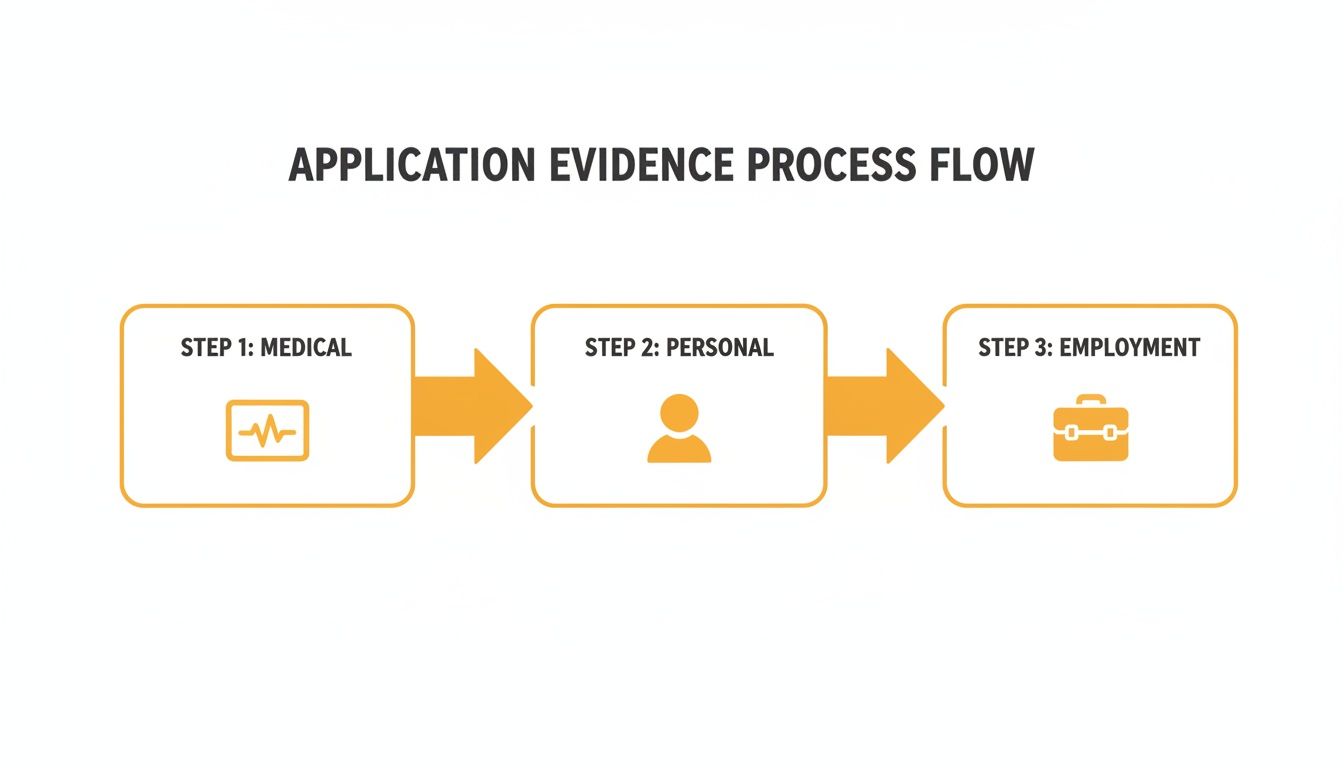
This process is all about making sure your medical records, personal statements, and work history all support each other across every form you submit.
The Crucial Role of the Medical Report (ISP2519)
While you’re working on your application, your doctor or nurse practitioner will be filling out the Medical Report (ISP2519). Honestly, this might be the single most important document in your entire file, and you don’t even get to write it. That’s why it’s so incredibly important to prepare your doctor.
Please, do not just drop the form off at the receptionist’s desk and hope for the best. Book a specific appointment to go over the report. We always tell our clients to bring a summary of their symptoms and a list of their old job duties. Explain to your doctor that the form needs to focus on your limitations—what you can and can’t do—not just list a diagnosis. For a deeper dive, check out our guide on how to apply for disability benefits.
A common pitfall we see is a medical report that’s just too brief. A doctor writing “Patient has chronic pain and cannot work” isn’t giving Service Canada enough to go on. A strong report offers objective medical findings and specific examples, like “Patient is unable to lift more than 5 kilograms or sit for longer than 20 minutes due to spinal stenosis.”
When you work with your doctor like this, you ensure their report lines up perfectly with the story you’re telling in your own application. It’s that consistency across all the documents that builds a persuasive case and makes it much harder for them to say no.
What Happens After You Submit Your Application
Once you’ve mailed that thick envelope or hit “submit” online, the waiting game officially begins. We know this part can be incredibly stressful, filled with a lot of uncertainty about what’s happening behind the scenes. But understanding the process can really help manage that anxiety and show you where you can still be proactive.
First things first, you should get a confirmation letter from Service Canada saying they’ve received your application. This usually shows up within a few weeks. If you don’t see anything after a month or so, it’s a good idea to call them just to make sure your file is actually in their system and didn’t get lost in the shuffle.
Once confirmed, your application gets handed over to a medical adjudicator. This is the person who will review all the evidence you’ve painstakingly gathered.
How Your Application Is Reviewed
The adjudicator’s main job is to figure out if your medical condition fits the strict “severe and prolonged” definition that CPP disability requires. They aren’t just ticking off boxes; they’re trying to build a complete picture of your disability using your application, your doctor’s report, and every other document you sent.
They’re looking closely at a few key things:
- Medical Consistency: Do your personal statements line up with what your doctor and any specialists have reported? A consistent story is a strong story.
- Functional Limitations: They need to see how your condition practically stops you from doing any kind of substantially gainful work.
- Work History: They’ll also consider your education and past jobs to see if there’s another type of work you might be able to do.
Service Canada tries to make a decision on complete applications within four months (120 days). But let’s be realistic—if they need more information or your case is particularly complex, it can definitely take longer.
A Quick Tip from Experience: The waiting period isn’t just about waiting. It’s a crucial time to continue showing that your disability is ongoing. What you do during this phase can make a real difference, especially if the adjudicator comes back with questions.
Don’t Just Wait—Strengthen Your Case
Instead of just staring at the calendar, you can use this time to reinforce your application. This demonstrates to the adjudicator that your condition isn’t getting better and is still preventing you from working. Your responsibility to manage your health and document your struggles doesn’t stop just because the application is in.
Here are three simple but vital things you should be doing:
- Keep Up with All Medical Treatments: This is non-negotiable. Don’t miss appointments with your doctor or specialists. Make sure you’re following through on all prescribed treatments, therapies, and medications. Any gaps in your treatment history can be misinterpreted as a sign that your condition isn’t as serious as you’ve claimed.
- Maintain a Simple Symptom Journal: You don’t need anything fancy. A basic calendar or a small notebook will do. Briefly jot down your symptoms, pain levels, and any challenges you face each day. This creates an invaluable, real-time record if Service Canada ever asks for more detail about your day-to-day life.
- Notify Service Canada of Any Changes Immediately: If your condition gets worse, you get a new diagnosis, or you start seeing a new specialist, let Service Canada know in writing right away. Sending in this new evidence ensures the adjudicator has the most up-to-date information when they’re making their decision.
By staying engaged, you’re not just passively waiting for an answer; you’re actively building a stronger file. For a complete rundown of the entire process, you can explore our detailed guide on how to apply for disability in Canada.
Responding to a Denied Application
Getting that denial letter from Service Canada can feel like a punch to the gut. It’s easy to feel like it’s the final word, but from our experience, it’s often just a predictable—and frustrating—part of the process.
A denial isn’t a dead end. Think of it as an invitation to build a much stronger, more detailed case.
The very first thing you need to do is sit down and read that letter, line by line. It will lay out the specific reasons your claim was rejected. Don’t let the bureaucratic language intimidate you; everything you do next will be aimed at directly challenging those points.
The First Appeal: Your Request for Reconsideration
Your first move is filing a Request for Reconsideration. This is your most critical opportunity to appeal the decision. It’s not a court hearing but an internal review by a different Service Canada staff member who had nothing to do with the first denial.
But you have to act fast. You have a firm deadline: you must submit your request in writing within 90 days of receiving the denial letter. Mark this on your calendar immediately. Missing this window can slam the door on your claim for good. This isn’t just about asking them to take a second look; it’s about giving them new information that forces them to say yes.
To make your request count, you need to approach it like a brand-new application that specifically fixes the weaknesses of your first one. A strong reconsideration package almost always includes:
- Fresh Medical Evidence: Go back to your doctors and specialists. You need updated reports that directly counter the reasons for denial. For instance, if they claimed your condition wasn’t “prolonged,” get a specialist’s report that clearly outlines a long-term prognosis.
- A Detailed Submission Letter: This is where you make your argument. Write a clear, organized letter that takes apart their reasons for denial one by one. We often advise clients to quote the denial letter directly and then provide a counter-argument supported by the new evidence you’ve gathered.
- More Supporting Documents: Anything that paints a clearer picture of your reality helps. This could be a detailed journal tracking your symptoms since you first applied, or even letters from family members who have seen your condition firsthand.
Strengthening Your Case with Data
If you’re feeling discouraged, it’s important to know that you are far from alone. Government statistics paint a very clear picture of just how common initial denials are.
Between 2014 and 2015, Service Canada denied a staggering 57% of all initial CPP disability applications. But here’s the crucial part: of the thousands who went on to request a reconsideration, 35% had the decision overturned and were approved. You can see the numbers yourself in the government’s report on these CPP disability application outcomes.
These numbers prove that providing stronger, more targeted evidence at this stage makes a huge difference.
The key takeaway is that a well-prepared reconsideration is your best opportunity to turn a “no” into a “yes” without needing a full tribunal hearing. It’s your chance to fill in the gaps and provide the overwhelming proof they need.
Because the stakes are so high at this stage, many people in the Greater Toronto Area and across Ontario decide to get professional help. The appeal process is complex, and knowing exactly what kind of evidence will be most persuasive takes experience. If you’re feeling overwhelmed, speaking with a CPP disability lawyer in Toronto can give you a clear strategy for structuring your appeal for the best chance of success.
Common Questions About Applying for CPP Disability
When you’re figuring out how to apply for CPP disability in Ontario, a lot of specific, practical questions are bound to come up. Getting straight answers can make the whole process feel less intimidating and help you know what to expect. Here are some of the most common queries we hear from our clients.
Can I Work While on CPP Disability?
The short answer is yes, but with some very strict limits. The key phrase Service Canada uses is “substantially gainful” work. Essentially, your disability has to prevent you from being able to hold down a job that earns you a decent living.
Service Canada sets a specific annual earnings amount. If you earn more than that, it’s a red flag for them that you might be capable of working, which could jeopardize your benefits.
It is absolutely crucial to report any income you earn. If you’re trying to ease back into the workforce, there are specific return-to-work provisions to help you. The most important thing is to keep the lines of communication with Service Canada wide open to avoid any issues.
How Long Does a CPP Disability Application Take?
Patience is a virtue in this process, unfortunately. For a perfectly filled-out application, Service Canada says they aim for a decision within four months (120 days). But that’s just a guideline.
If they need more medical records or if your case has some complex details, that timeline is going to stretch. If your first application gets denied, the reconsideration stage adds several more months to your wait. And if you have to appeal to the Social Security Tribunal of Canada, the whole thing can easily take more than a year. The best way to speed things up is to get it right the first time with a thorough, well-supported application.
Expert Insight: The single biggest delay we see is an incomplete application. A missing signature, a doctor’s report that’s too vague, or gaps in your work history can add months to your wait while Service Canada tracks down the missing pieces. Double-checking every single form before you send it in is time well spent.
What Is the Difference Between CPP Disability and ODSP?
This is a big point of confusion for many people. CPP Disability and the Ontario Disability Support Program (ODSP) are two completely different programs.
- CPP Disability is a federal benefit. You earned it by paying into the Canada Pension Plan while you were working. Your eligibility is based on those contributions and your medical condition.
- ODSP is a provincial social assistance program in Ontario. It’s based on your financial need, meaning your income, assets, and disability status are what determine if you qualify.
It’s possible to receive both at the same time. Just be aware that any money you get from CPP-D will almost always be subtracted from your ODSP payment.
Do I Need a Lawyer to Apply?
You don’t have to hire a lawyer for your initial application. However, with initial denial rates sitting at over 50%, having a seasoned professional on your side can make a huge difference, especially if you need to appeal.
A disability lawyer knows exactly how to present your medical evidence to satisfy the strict legal definitions of “severe and prolonged.” Many people come to us for help right after they get that first denial letter, so we can build the strongest possible case for their appeal.
Trying to manage a CPP disability claim, particularly after a denial, can feel like an uphill battle. At UL Lawyers, our team has years of experience helping clients across Ontario put together compelling appeals and get the benefits they’re entitled to. Our office is based in Burlington, but we proudly serve the entire Greater Toronto Area and all of Ontario. If you’re struggling with your application or have been denied, contact us for a free consultation to talk about your next steps. Learn more about our disability law services at ullaw.ca.
Related Resources
Taxable Long Term Disability Benefits Canada: Taxable Long
Continue reading Taxable Long Term Disability Benefits Canada: Taxable LongCritical Illness Insurance Claim Denied: Win Your Appeal
Continue reading Critical Illness Insurance Claim Denied: Win Your AppealRelevant next step
Talk to a CPP disability lawyer
If you are dealing with a denial or appeal, get help with the evidence and filing strategy.
View CPP disability servicesGET STARTED WITH A FREE CONSULTATION
Why Choose UL Lawyers
- Decades of combined experience
- Millions recovered for our clients
- No fee unless we win your case
- 24/7 client support
- Personalized legal strategies