Related service
AD&D claim review
When an insurer disputes whether a loss qualifies under an accidental death policy, we review the policy wording and evidence to clarify your rights.
Review an AD&D decisionLegal Guidance
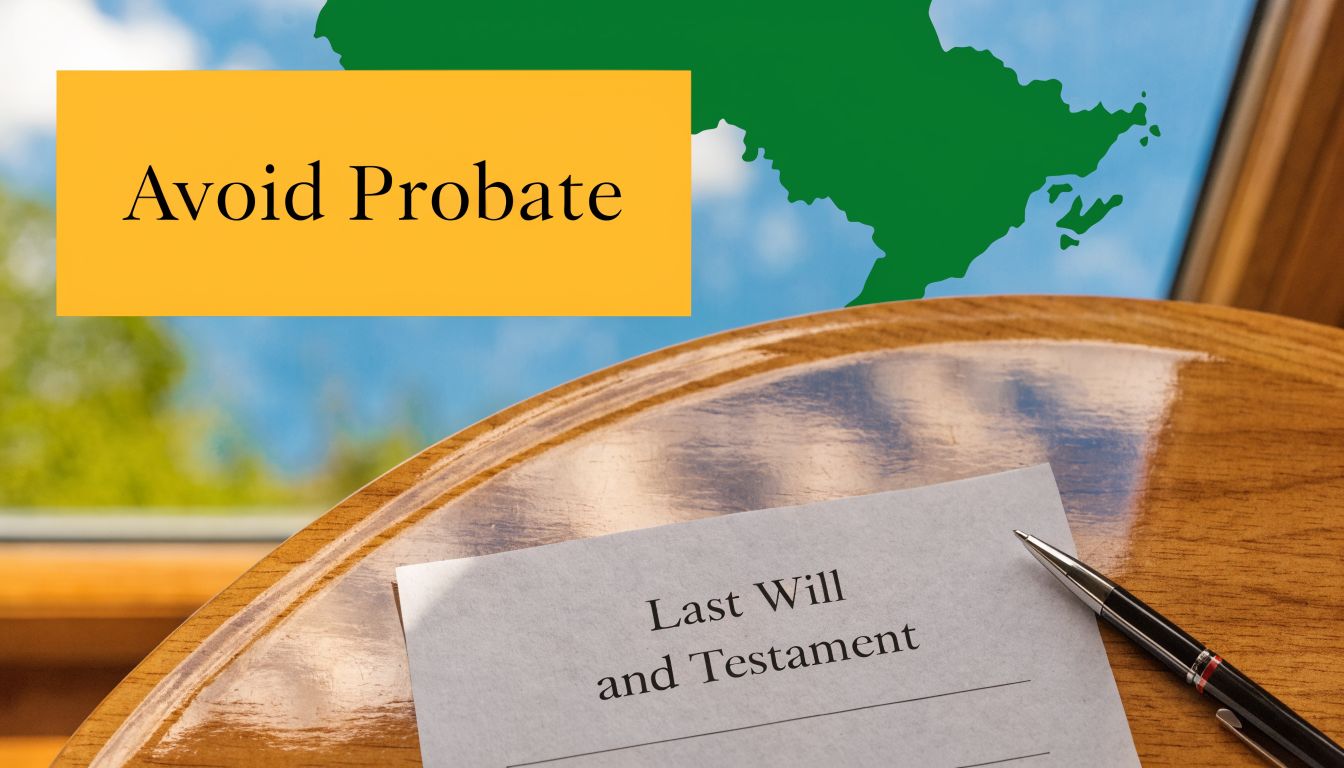
Quick answer: You may reduce probate exposure through beneficiary designations, joint ownership, trusts, or careful asset planning, but each option can create tax, control, creditor, or family-dispute risks. Do not avoid probate at the cost of creating a bigger estate problem.
Thinking about probate often begins with similar scenarios. A parent updates a will after retirement. A couple puts off estate planning because nothing feels urgent. An adult child starts helping with banking and hears the same advice from friends: just add someone to title, make things joint, and your family will avoid probate.
Sometimes that works. Sometimes it creates a bigger legal and family problem than the probate fee ever would.
When clients ask us how to avoid probate in Ontario, the question usually isn’t just about saving tax. It’s about protecting a spouse, reducing delay, keeping family peace, and making sure vulnerable beneficiaries don’t get hurt by a shortcut that looked simple on paper. That matters even more in blended families, disability contexts, and estates where one child is “helpful” and another already feels left out.
The good news is that Ontario law gives families several legitimate planning tools. The hard part is choosing the right one for the right asset.
A family loses a parent. The will names an executor. Everyone assumes the bank accounts can be closed, the house can be sold, and the money can be distributed. Then the bank asks for probate, the land transfer can’t move ahead without proof of authority, and the executor learns that court paperwork, waiting, and tax are all part of the process.
!A family of three sitting at a table looking stressed while reviewing legal probate documents together.
In Ontario, probate is the court process that confirms a will and the executor’s authority to act. The formal court document is commonly called a Certificate of Appointment of Estate Trustee. If you’re trying to understand the process itself before deciding whether it can be reduced or avoided, our guide on how to probate a will in Ontario explains the court side of the equation in plain language.
For many families, the biggest surprise is the Estate Administration Tax. In Ontario, probate fees are calculated at $15 per $1,000, or 1.5%, on the gross value of an estate exceeding $50,000. A $1 million estate incurs about $14,500, and a $1.5 million estate incurs about $21,750, according to Willful’s explanation of Ontario probate fees.
That number gets attention quickly because the tax is based on the gross value of the estate assets that require probate. Families often focus on debts, mortgages, or what beneficiaries will “really receive,” but probate tax is calculated before that practical reality feels comforting.
Practical rule: Probate isn’t always something to eliminate at all costs. It is something to plan for carefully so you don’t pay it unnecessarily.
Avoiding probate can reduce tax, but money isn’t the only issue. Probate can also slow estate administration and add stress at the exact time families are already grieving.
A clear overview like this Probate Guide can help families understand what executors face after a death. That broader context matters, because good estate planning isn’t just “How do I skip court?” It’s “Which assets should pass outside the estate, and which ones should stay inside a properly organised will?”
Here’s the practical takeaway:
That last point is where many DIY plans go wrong. People focus on one outcome, avoiding probate, and ignore the legal side effects.
Joint ownership is the most common shortcut people mention when they talk about how to avoid probate in Ontario. The idea sounds appealing. Put an adult child on the house or bank account, and when you die, the asset goes to them automatically.
Sometimes that structure, called joint tenancy with right of survivorship, is appropriate. It is often used between spouses for a home or account they own together. Problems start when a parent adds a child for convenience, without fully understanding what legal ownership means.
!An elderly person passing a silver house key to a younger person over legal documents
When you add an adult child as joint tenant, you may not just be helping with probate. You may be giving that child a present ownership interest. That can expose the property to the child’s creditors, divorce claims, and other legal trouble.
According to Lexpert’s discussion of avoiding probate on a house in Ontario, adding an adult child as a joint tenant exposes the property to their creditors, divorce settlements, or even government benefits clawbacks. The same source notes that joint tenancy challenges arise in 20-30% of contested probate cases, which is one reason these arrangements often lead to litigation instead of simplicity.
That risk is especially serious where the child is financially unstable, in a strained marriage, involved in a business with liabilities, or receiving disability-related support where asset ownership can affect entitlement.
Parents usually do this for practical reasons. One child lives nearby. One child helps with appointments. One child manages online banking. The parent thinks, “I trust her, so I’ll put her on title.”
The legal system may not see that arrangement the same way the family does.
After death, siblings may ask difficult questions:
Joint ownership can bypass probate. It can also bypass the fairness the parent thought the will would preserve.
For many families, that’s the trap. The paperwork says one thing. The parent’s spoken intention said another.
Joint tenancy changes control, not just what happens after death. The asset may be affected during the parent’s lifetime as well. Refinancing, selling, and dealing with the property can become more complicated once another owner is involved.
There can also be tax consequences, particularly if the asset has appreciated and the transfer is treated as creating a present interest. People often discover too late that they solved one problem and created another.
If you’re comparing title structures, our overview of tenants in common vs joint tenants is a useful starting point.
Joint ownership is not automatically wrong. It can be sensible in a narrower set of situations:
If a parent’s real goal is “help me pay bills if I become ill,” joint ownership may not be the right legal tool. A continuing power of attorney for property is often the cleaner answer.
If joint ownership is the strategy people overuse, beneficiary designations are the strategy many families underuse.
For certain assets, a direct beneficiary designation is often the cleaner route. Instead of changing ownership during your lifetime, you keep control of the asset and name who receives it on death. That usually fits the client’s intention much better.
In Ontario, this planning is often used for:
When a valid, non-estate beneficiary is named, those assets usually pass outside the estate. That means they don’t form part of the probate application in the usual way.
According to Canadian Estate Planning’s overview of probate avoidance tools, life insurance proceeds and registered accounts such as RRSPs and RRIFs with a named, non-estate beneficiary bypass probate and are protected from the deceased’s creditors. The same source states that funds are often disbursed within 30-60 days, compared with 6-18 months for probated estates.
This approach usually avoids the central problem of joint ownership. You don’t have to give away present ownership just to plan for death. You stay in control while you’re alive, and the account provider has clear instructions for what happens later.
That makes beneficiary designations particularly useful where:
A common drafting issue: A will can be perfectly valid and still be undermined by an outdated beneficiary form.
A designation is only as good as its last update. Marriage, separation, divorce, remarriage, the birth of a child, and the death of a named beneficiary can all change what you intended.
A short review checklist helps:
For a broader estate planning framework around wills, powers of attorney, and beneficiary coordination, our page on wills and estate law provides a practical overview.
Some estates need more than a basic will and a few account designations. Business owners, families with significant private assets, people in second marriages, and parents planning for a vulnerable beneficiary often need a more deliberate structure.
That’s where dual wills and trusts enter the conversation.
!A comparison infographic between dual wills and trusts for estate planning, highlighting their benefits and use cases.
Ontario allows a planning approach in which one will governs assets that require probate and another governs assets that can pass without it. This is especially important for owners of private corporations.
According to Ontario Probate’s explanation of avoiding probate tax, the dual wills strategy allows Ontario business owners to create a primary will for probatable assets and a secondary will for non-probated private assets like closely held corporation shares. The same source states that this can reduce probate exposure by 30-50% depending on asset composition, potentially saving thousands in Estate Administration Tax.
In practical terms:
That sounds simple. It isn’t DIY territory. Asset categorisation has to be correct, and the documents must work together.
A trust is a different tool. Instead of focusing only on whether an asset requires probate, a trust focuses on ownership and control. In an inter vivos trust, the trust is created during your lifetime. In a testamentary trust, the trust is created under the will after death.
Clients often consider trusts where they want:
A trust can be useful, but complexity alone doesn’t make it better. Trusts bring administration, drafting precision, and tax analysis. They should solve a real problem, not just make a plan seem impressive.
| Strategy | Assets Covered | Probate Avoidance | Key Risk/Consideration |
|---|---|---|---|
| Joint ownership with right of survivorship | Commonly used for real estate and bank accounts | Can allow the asset to pass outside the estate | Can trigger disputes, creditor exposure, and tax issues if used with adult children |
| Beneficiary designations | Registered accounts and life insurance | Usually passes directly to the named beneficiary | Must be kept current and coordinated with the will |
| Dual wills | Often used for probatable assets in one will and certain private assets in another | Can reduce probate exposure for suitable assets | Requires precise drafting and correct asset categorisation |
| Inter vivos trust | Assets transferred into the trust during lifetime | Trust-held assets generally do not pass through the estate in the same way | Ongoing administration and legal complexity |
| Testamentary trust | Assets directed into trust under a will | Does not function like a lifetime transfer tool in the same way as an inter vivos trust | Must fit the broader estate and family plan |
The people who benefit most from these structures are not always the wealthiest. They are often the people with the most legal moving parts.
That includes:
One practical option for clients in Ontario is working with firms that draft coordinated wills and estate plans, including UL Lawyers, where wills and estates form part of a broader legal practice. The key is not the brand name. The key is whether the lawyer understands how probate, tax, family conflict, and vulnerable beneficiaries intersect.
A probate-saving strategy is only successful if it still works when the family is under stress.
Probate avoidance is never just a probate question. It is also a tax question, a creditor question, and sometimes a control question.
People often focus on the visible cost, the probate fee, and miss the less obvious consequences of the method they used to avoid it.
A common example is the parent who adds an adult child to a property that is not straightforwardly sheltered by the parent’s own tax position. The family sees a title change. Tax law may see a disposition, or at minimum a transfer that needs careful analysis.
That is why “just add your child to title” is not legal advice. It is a shortcut that may ignore capital gains exposure, documentation problems, and uncertainty about whether the child became a real beneficial owner or was only added for convenience.
If you’re trying to estimate the probate side while weighing the broader consequences, a tool like our Ontario probate fees calculator can help frame one part of the decision. It should not be used in isolation from tax and ownership advice.
Not all probate-avoidance tools protect assets the same way.
A direct beneficiary designation on life insurance or certain registered plans may provide a cleaner path from asset to beneficiary. Joint ownership does not offer that same kind of certainty. Once another person is an owner, that person’s legal and financial problems can affect the asset.
Here are the questions families should ask before changing ownership:
A plan that saves probate but invites litigation is often a bad trade. Estate disputes consume time, money, and relationships. They also create uncertainty for executors, who may be forced to defend arrangements they did not design.
Bottom line: Avoiding probate is valuable. Avoiding a family lawsuit is often more valuable.
The right analysis asks a wider question: what happens to this asset if I die, if I lose capacity, if the named person has financial trouble, and if another beneficiary challenges the arrangement?
Not everyone needs every probate avoidance strategy. They need the right combination for their assets and family dynamics.
The first step is getting organised. Before any planning meeting, it helps to prepare a list of what you own, how it’s owned, and who you intend to benefit. A practical tool like a home inventory for estate planning can make those early conversations much more efficient, especially when personal property and household contents matter to the family.
!A person writing notes in a spiral notebook while reviewing an estate planning checklist on their laptop.
A lawyer is especially important if any of these apply:
A strong Ontario estate plan is usually boring in the best sense. It is clear. It is coordinated. It doesn’t rely on family members “understanding what you meant.” It matches legal title, beneficiary designations, will language, and your real-life wishes.
That is especially important for clients dealing with disability-related financial vulnerability in the family. A well-meant shortcut can affect benefits, expose assets to another person’s liabilities, or create pressure on a beneficiary who was never equipped to manage it.
If your situation involves any of those complications, speaking with estate planning lawyers near you in Ontario is not an unnecessary expense. It is often the step that prevents a much more expensive problem later.
Probate can often be reduced. Sometimes it can be avoided for part of the estate. The right answer depends on the asset, the family, and the risk you are trying to prevent.
If you want a probate avoidance plan that fits your family’s reality, not just a generic checklist, UL Lawyers can help you review your will, beneficiary designations, ownership structure, and risk areas under Ontario law. The goal is simple: protect your loved ones, reduce avoidable cost, and avoid creating a bigger problem than the one you were trying to solve.
Relevant next step
If this guide affects probate, wills, or estate planning, get advice before you act on it.
Call 905-744-8888 or email info@ullaw.ca. Free consultation.
Related services
Related service
When an insurer disputes whether a loss qualifies under an accidental death policy, we review the policy wording and evidence to clarify your rights.
Review an AD&D decisionRelated service
A denied or delayed critical illness benefit can place unexpected financial strain on a family. We help clients understand their coverage and options.
Review a critical illness claimRelated service
When long-term disability benefits are denied or terminated, we examine the policy wording and medical evidence to identify a practical next step.
Review an LTD decisionWhy Us
Keep Reading
Hi, I'm Mira, the virtual assistant for UL Lawyers. Tell me what's going on in plain language — I'll help you understand your options and connect you with our 24/7 intake line when you're ready.
General information only — not legal advice.
General information, not legal advice. Messages may be saved to improve our service — please don't share sensitive personal details. Privacy.