
When you hear the term “power of sale,” it’s natural to feel a knot in your stomach. But understanding what it actually is can be the first step to navigating the situation. Simply put, a power of sale is a clause written into most mortgage contracts in Ontario that gives your lender the right to sell your property if you fall behind on your payments.
It’s the most common route lenders take in the province, largely because it’s faster and more direct than a formal foreclosure.
What is a Power of Sale, Really?
Think of it this way: when you signed your mortgage, you gave the lender a “power” or permission slip. This permission slip allows them to step in and sell your home to recover the money they loaned you, but only if you break your side of the deal by missing payments.
The entire process is strictly regulated by Ontario’s Mortgages Act. This isn’t a free-for-all for the lender. Unlike a foreclosure, where the lender goes to court to take ownership of your home, a power of sale is different. The lender sells the property, but you technically remain the legal owner right up until the new buyer gets the keys.
The Defining Features of a Power of Sale
At its core, a power of sale is about settling a debt using the asset that secured it—your home. The lender is focused on getting its money back, not on taking your property. This is a critical distinction that shapes the whole process.
Here’s what you need to know about how it works in Ontario:
- It’s a Contractual Power: The lender’s right to sell comes directly from the mortgage agreement you signed. It isn’t granted by a judge in a courtroom.
- You Still Own the Property: Throughout the sale process, the title of the home remains in your name. The lender is essentially acting as an agent to get the property sold.
- You Get the Leftovers: If the house sells for more than what you owe—including the mortgage balance, legal fees, and other costs—that surplus cash comes back to you.
- It Moves Quickly: Because it mostly avoids the court system, a power of sale is significantly faster than a traditional foreclosure.
To help clarify, here’s a quick overview of the key points.
Power of Sale at a Glance
This table breaks down the essential characteristics of a power of sale proceeding in Ontario.
| Characteristic | Description |
|---|---|
| Legal Basis | A contractual right included in the mortgage agreement. |
| Ownership | The homeowner (mortgagor) retains legal title to the property until the sale is completed. |
| Court Involvement | Minimal to none, unless the homeowner challenges the process. It’s an “out-of-court” remedy. |
| Timeline | Typically much faster than a foreclosure, often taking a few months from start to finish. |
| Surplus Funds | If the sale price exceeds the total debt owed, the surplus money is paid to the homeowner. |
| Lender’s Obligation | The lender has a legal duty to sell the property for a fair market price and act in a commercially reasonable manner. |
Understanding these details gives you a much stronger footing when responding to a notice from your lender.
Power of sale is about debt recovery, not property seizure. The lender’s only goal is to recoup its loan. They are not trying to take ownership of your home or your equity.
This framework is also designed to protect you. Lenders have a legal duty to get a fair price for your home; they can’t just sell it to the first lowball offer to get it off their books. Grasping these fundamentals is crucial. If you’re dealing with a complicated property dispute, exploring real estate litigation law can offer deeper insight into your rights and options, empowering you to make sure the process is handled fairly.
Navigating The Power Of Sale Timeline
When you’re facing a power of sale, understanding the timeline isn’t just helpful—it’s the first step toward regaining control. This isn’t one single event but a methodical process with critical deadlines you simply can’t afford to miss. Knowing what’s coming, and when, lets you shift from a reactive state of panic to making proactive, informed decisions.
This entire sequence is strictly governed by Ontario’s Mortgages Act. It’s not some arbitrary process the bank made up; every step has a legal purpose and a defined timeframe. These rules are there to give you, the homeowner, clear opportunities to fix the situation. Let’s walk through that roadmap so you know exactly where you stand.
The Initial Default
It all starts the moment a mortgage payment is missed. A single late payment usually won’t trigger an immediate legal storm, but it does start the clock. In most cases, your lender will reach out first to see what’s going on and try to work things out.
But if the default isn’t corrected, the lender has the legal right to start the power of sale process after just 15 days of default. This initial two-week period is a crucial window for you to communicate with your lender before things escalate into a formal legal proceeding.
The Notice Of Sale Under Mortgage
This is the first official document you’ll receive, and it’s the most important one. The lender sends a Notice of Sale Under Mortgage directly to you and anyone else who has a registered interest in the property, like a second mortgage holder or a lien claimant. This isn’t a warning shot; it’s a formal declaration that the lender intends to sell your home.
This notice will clearly lay out a few key things:
- The exact amount of money needed to bring your mortgage back into good standing.
- A firm deadline by which you must pay this amount.
- A straightforward statement that if the default isn’t fixed by the deadline, the lender will sell the property.
The Redemption Period: A Crucial 35-Day Window As soon as that Notice of Sale is issued, a legally mandated clock starts ticking. In Ontario, you get a 35-day redemption period. This is your legal right to “redeem” the mortgage by paying the full arrears, plus any legal costs the lender has racked up so far. If you manage to do this, the power of sale process stops cold.
The infographic below breaks down the major phases of the process, from the first missed payment to the final sale.
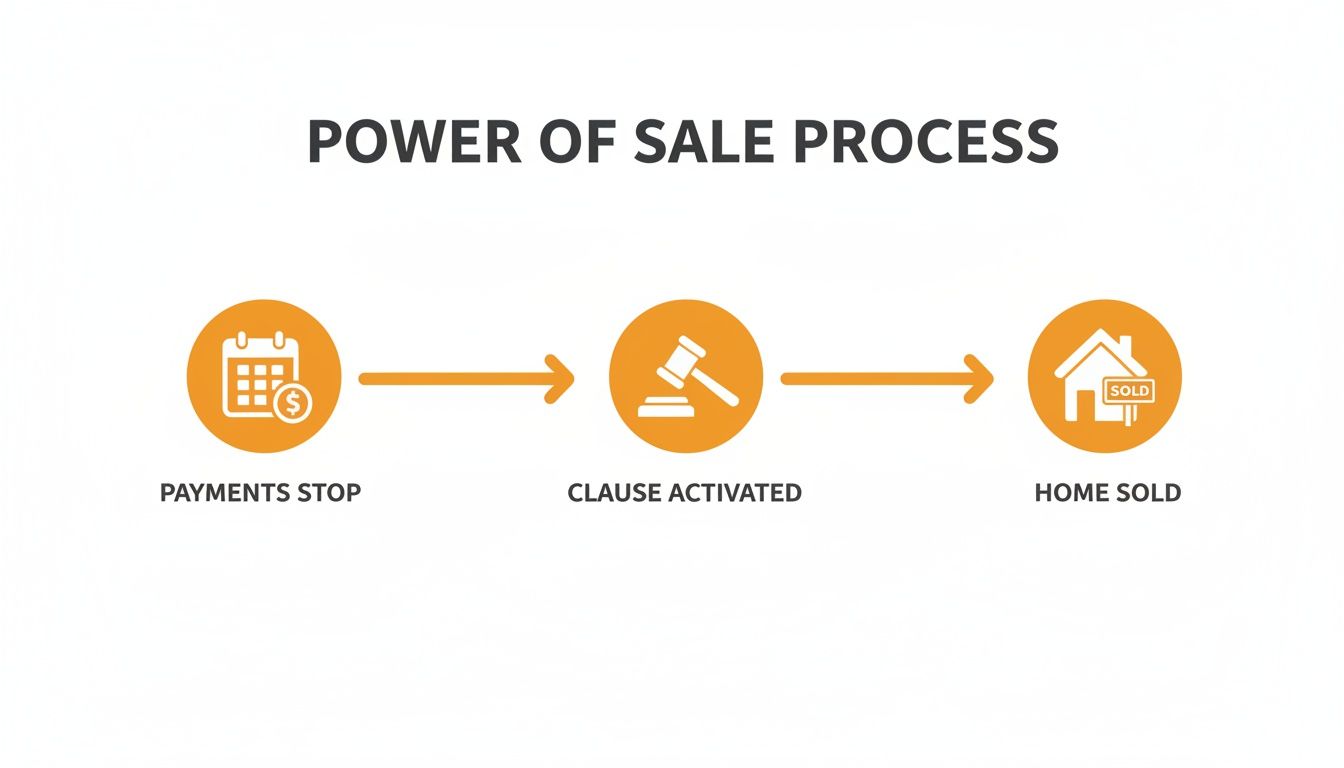
As you can see, the process moves from a private issue (missed payments) to a formal legal action (activating the clause) that ultimately results in a public sale of your home. It shows just how quickly things can escalate.
After The Redemption Period Expires
If that 35-day redemption period comes and goes and the mortgage is still in default, the lender is now legally cleared to take the next steps to sell your home. This is the point where the process picks up speed and your options start to narrow considerably.
The lender’s next move is usually to issue a Statement of Claim. This is a court document that officially kicks off the legal action for the lender to get possession of your property so they can put it on the market. It’s vital to understand that a Statement of Claim is a serious lawsuit. Ignoring it can lead to severe consequences, like a default judgment being entered against you. The timelines involved in legal actions can be tricky; you can learn more about how deadlines work by reviewing the statute of limitations in Canada, which outlines the time limits for taking legal action.
The Sale And Possession Process
Once the lender gets a court order for possession (or if you move out voluntarily), they take control of the property. Their job is to get it ready for sale. This might involve changing the locks, making some minor repairs to make it more appealing, and hiring a real estate agent.
From there, it looks a lot like a regular home sale, but with the lender in the driver’s seat:
- Listing the Property: The home is put on the market, typically with a realtor who has experience with power of sale properties.
- Appraisal and Pricing: The lender has to get the property appraised. They have a legal duty to you to act in a commercially reasonable way, which means they must try to get a fair market price for the home. They can’t just sell it for a lowball price to get it off their books.
- Accepting an Offer: The lender will field offers from potential buyers and ultimately accept one.
- Closing the Sale: When the sale closes, the new buyer gets ownership, and the title is transferred out of your name. The sale proceeds are used to pay off the mortgage debt, legal fees, and other costs. If there’s any money left over—a surplus—that money legally belongs to you.
The entire timeline, from that first missed payment to the day the house is sold, can vary but often takes several months. Every single step is loaded with its own legal rights and obligations, which is why getting professional advice as early as possible is so important.
Why a Power of Sale Isn’t a Foreclosure
It’s a common mistake to use the terms “power of sale” and “foreclosure” interchangeably. Here in Ontario, they are two completely different legal processes with drastically different results for a homeowner. Getting this right isn’t just about semantics—it’s critical for protecting your home and your financial well-being.
Both are tools a lender can use when a mortgage falls into default, but that’s where the similarities end. Foreclosure is a full-blown lawsuit where the lender goes to court to take ownership of your home. While more common in other provinces, it is rarely used in Ontario. If they succeed, they get the title, the house is theirs, and every dollar of equity you’ve built up vanishes.
A power of sale, on the other hand, is a contractual right written into your mortgage agreement. It gives the lender permission to sell your property to pay back the debt, all without having to sue you for the title first. This is exactly why it’s the go-to method for nearly every lender in Ontario; it’s faster, cheaper, and far more straightforward.
The Critical Difference: Ownership and Equity
The single biggest distinction between a power of sale and a foreclosure boils down to two things: ownership and equity. This is the fork in the road where the financial outcomes for a homeowner change dramatically.
Under a power of sale, you are still the legal owner of your property right up until the sale closes with a new buyer. The lender is simply acting on the “power” you gave them in the mortgage contract to sell it on your behalf.
And because you’re still the owner, you get to keep any extra money left over.
The Surplus Rule: If your home sells for more than what you owe—that’s the mortgage balance plus all the legal fees, realtor commissions, and other costs—that surplus cash is legally yours. The lender has no right to it.
This is the complete opposite of what happens in a foreclosure.
How Foreclosure Can Erase Your Equity
In a foreclosure, the lender’s one and only goal is to become the new owner. They ask a judge to transfer the property title directly to them, which wipes out your ownership rights completely.
Once the lender owns the home, they can do whatever they want with it. And here’s the kicker: if they turn around and sell it for a huge profit, they keep every penny. All that equity you worked for years to build is just gone.
Let’s break it down side-by-side:
| Feature | Power of Sale (The Ontario Standard) | Foreclosure (Rare in Ontario) |
|---|---|---|
| Property Title | Stays with you (the homeowner) until sold. | Transferred to the lender by the court. |
| Court Process | Generally handled outside of the courts. | Requires a full, often lengthy, court process. |
| Surplus Funds | Any profit after debts are paid goes back to you. | Any profit from a later sale is kept by the lender. |
| Your Debt | If the sale doesn’t cover the debt, you could still owe the difference (a “deficiency”). | The debt is typically cancelled once the lender takes the property. |
In a foreclosure, the small silver lining is that your debt is usually wiped clean, but the cost is losing everything. With a power of sale, you might face a shortfall if the sale price is low, but you also have the chance to walk away with your hard-earned equity. A key part of navigating this is understanding the timeline to stop foreclosure, as it sheds light on the different windows of opportunity in each process. Recognizing why lenders in Ontario almost always choose power of sale is the first step in figuring out your own best move.
Knowing Your Rights as a Homeowner

Getting a Notice of Sale is a gut-wrenching moment for any homeowner. It’s easy to feel like the fight is already over, but that’s simply not true. Ontario law actually gives you significant rights designed to ensure the process is fair and to give you a chance to set things right.
The most important thing to remember is this: you are still the legal owner of your home, even after the power of sale process begins. This simple fact gives you more control than you might realize. The lender has a right to sell the property, yes, but they have to play by a strict set of rules—rules that are there to protect you.
Understanding these rights is your best defence. It’s what allows you to hold your lender accountable and make sure you’re treated fairly every step of the way.
Your Powerful Right to Redeem the Mortgage
Your most powerful tool is the right to redeem. Think of it as an emergency stop button on the entire power of sale process.
Exercising this right means paying the full amount you’re behind on your mortgage—the arrears—plus any legal and administrative costs the lender has racked up so far. If you can manage that, the mortgage is officially back in good standing, and the power of sale action has to stop, period.
This right doesn’t last forever, but it extends right up until the lender signs a binding Agreement of Purchase and Sale with a new buyer. It’s a critical window of opportunity that provides a clear path to saving your home if you can pull the funds together.
The Lender’s Duty to Act Responsibly
When a lender starts a power of sale, they don’t get a blank cheque to do whatever they want. In Ontario, the law holds them to a standard known as the duty to act in a commercially reasonable manner. In plain English, this means they have to be careful and act in a way that protects your financial interests, not just their own.
At its core, this duty boils down to one key obligation: selling your property for fair market value.
A lender can’t just accept the first lowball offer that comes in to get the property off their books. They have a legal duty to make a genuine effort to sell the home for the best price they can reasonably get.
This legal responsibility has real-world consequences for how the lender must conduct the sale:
- Proper Marketing: They need to list the property on the open market, which almost always means hiring a qualified real estate agent and putting it on the MLS.
- Accurate Appraisal: They should get an independent appraisal done to figure out what your home is actually worth.
- Reasonable Efforts: They’re expected to advertise the property, arrange viewings for potential buyers, and negotiate offers in good faith—just like any other homeowner would.
If a lender drops the ball on this—say, by selling the house to a friend for a suspiciously low price or not even listing it properly—you may have a legal case to challenge the sale. When things get complicated with lender misconduct or disagreements over the sale, you need an expert in your corner. This is where a skilled civil litigation lawyer in Burlington can provide the critical guidance and advocacy needed to protect your interests.
Your Right to Any Surplus Funds
Another crucial right is your claim to any leftover money from the sale. This goes back to the fact that you remain the legal owner of the property right up until the title is transferred to a new buyer.
Once your home is sold, the money is used to pay off debts in a specific order:
- The lender’s reasonable costs from the sale (legal fees, real estate commissions, etc.).
- The outstanding principal and interest on your mortgage.
- Any other debts registered against the property, like a second mortgage or liens.
If there’s any cash left after all those bills are paid, that surplus belongs 100% to you. The lender must provide a full accounting of all the funds and pay you that difference. This is exactly why their duty to get fair market value is so important—it directly impacts your chances of walking away with the equity you’ve worked so hard to build.
Your Action Plan to Stop a Power of Sale
Knowing your rights is one thing, but taking decisive action is what will actually protect your home. When that Notice of Sale arrives, it’s natural to feel overwhelmed, but this is precisely the moment you need a clear-headed strategy. The good news? You have real, powerful options in Ontario to stop a power of sale and get back in the driver’s seat.
This is not a battle you should fight alone. Your very first move, without a doubt, should be to get legal advice immediately. The timelines are unforgiving, and one wrong step can have devastating consequences. A lawyer who knows this area inside and out can break down the details of your specific situation and map out the best path forward.
Explore Your Immediate Strategic Options
With a legal expert in your corner, you can start looking at concrete ways to stop the process cold. Each option has its own pros and cons, and the right one for you will hinge on your unique financial picture.
Here are the main strategies we see work for homeowners:
- Negotiate With Your Lender: Remember, the bank wants its money, not your house. They are often open to negotiating a new payment plan, sometimes called a forbearance agreement, to help you catch up. This is usually the fastest and simplest solution.
- Refinance With a New Lender: If your credit is still in decent shape, you may be able to get a new mortgage from another bank or credit union. This new loan pays off everything you owe your current lender—the mortgage balance, the arrears, and all their fees—which brings the power of sale to an immediate halt.
- Secure a Private Mortgage: For those whose credit score has taken a hit, a private mortgage can be a real lifeline. These are typically short-term, interest-only loans from private individuals or companies. They’re designed to clear the existing mortgage debt, giving you the time and space you need to fix your finances or prepare the property for sale on your own terms.
The most important thing is to act fast. Every day that passes adds more legal costs to the bill, making it more expensive to save your mortgage and limiting your options.
Take Control by Selling on Your Terms
What if catching up on payments or refinancing just isn’t in the cards? You still have a powerful move left that’s far better than letting the bank sell your home from under you. You can take charge by listing and selling the property yourself.
This approach gives you two huge advantages over a sale run by the lender.
First, you are in control. You get to pick the real estate agent, set an asking price that works for you, and manage the timing. Taking this proactive role almost always results in a better sale price because you’re motivated to get top dollar for your home in a way the lender simply isn’t.
Second, selling it yourself protects your equity. A lender’s sale is designed to do one thing: cover the debt. Your sale is focused on getting the highest price the market will bear. This ensures that after the mortgage and all costs are paid, the money left over—your hard-earned equity—is as much as possible. It can mean a world of difference for your financial future.
Building Your Strategy
No two power of sale situations are ever the same, which is why a cookie-cutter solution won’t work. You need a personalized plan. Our firm is based in Burlington, but we serve clients across all of Ontario, including the entire GTA. An experienced legal team can properly assess your case, walk you through the pros and cons of every option, and handle the negotiations with your lender.
Taking swift, informed action is the absolute best way to stop a power of sale. To start building your customized action plan, get in touch with our team at UL Lawyers (https://www.ullaw.ca/connect) for a confidential consultation.
When You Need an Experienced Lawyer on Your Side

Trying to navigate a power of sale on your own can feel like you’re lost in a legal maze. It’s an incredibly stressful and complicated process. While it’s tempting to handle it yourself, especially when money is tight, some situations absolutely demand professional legal guidance. Knowing when to make that call is one of the most important steps you can take to protect your home and your financial stability.
So, when’s the right time? The simple answer is this: the moment a Notice of Sale arrives. That document officially starts a very strict legal countdown. Bringing in an experienced lawyer right away gives you the most room to manoeuvre. They can immediately get to work reviewing your mortgage contract, double-checking the lender’s math, and building a strategy before critical deadlines fly by and your options start to shrink.
Key Moments for Legal Intervention
Even if you’ve missed that initial window, several other red flags signal it’s time to get an expert in your corner. Remember, you aren’t powerless in this situation. A good lawyer is your champion, making sure your rights are front and centre.
You should reach out to a lawyer immediately if:
- You feel the lender isn’t playing fair. Lenders have a duty to act in a “commercially reasonable manner.” This means they must try to sell your property for its actual market value. If you suspect they’re about to accept a lowball offer or are barely even trying to market it, a lawyer can step in and challenge them.
- You need someone to talk to the bank for you. A lawyer speaks the same language as the lender’s legal department. This alone adds a ton of credibility to your case. They can often negotiate things like a forbearance agreement or a new payment schedule on your behalf.
- You need to understand all your real options. Is refinancing a possibility? What about a private mortgage, or even selling the home yourself to keep your equity? A lawyer can clearly lay out the pros and cons of every path, helping you pick the one that makes the most sense for you.
Think about it this way: going through a power of sale alone means you’re up against the lender’s entire legal team. An experienced lawyer doesn’t just give you advice; they level the playing field.
Your Lawyer Is Your Advocate
Ultimately, a lawyer’s job is to be your partner through one of the toughest financial hurdles you might ever face. They offer clear, unbiased advice and can take over the stressful communications with the lender.
By handling the complex paperwork and legal deadlines, they free you up to focus on finding a real solution. Every move they make is calculated to get you the strong outcome, ensuring you never have to face the pressure by yourself.
Your Top Questions About Power of Sale Answered
When you’re facing a power of sale, a thousand questions probably start racing through your mind. It’s a stressful situation, and you need clear, straightforward answers. Let’s tackle some of the most common concerns we hear from homeowners in Ontario.
Can I Stop a Power of Sale Once It Starts?
Yes, you can—but time is of the essence. Your strongest right is the right to redeem. This means you can stop the entire process cold by paying the full mortgage arrears, plus any legal costs the lender has racked up so far.
You hold this power right up until the moment a binding Agreement of Purchase and Sale is signed with a new buyer. Beyond that, you might be able to negotiate a new payment schedule or even refinance your mortgage. The key is to act decisively before your options (and time) run out.
How Long Does a Power of Sale Take in Ontario?
It moves a lot quicker than you might think, and certainly faster than a traditional foreclosure. The clock officially starts ticking the moment you get a Notice of Sale from the lender.
From that day, you have a legally mandated 35-day redemption period to get your mortgage back in good standing. If you can’t, the lender can then move on to listing and selling your home, which could take a few more months depending on the market.
Does the Lender Keep All the Money From the Sale?
Absolutely not. This is a common and costly misconception. In a power of sale, the lender is only legally entitled to what they are owed: the outstanding mortgage principal, interest, and their reasonable legal and real estate fees. Nothing more.
If your home sells for more than the total debt, that extra money is called surplus equity. By law, that surplus belongs to you. The lender must give you a detailed statement and pay you the difference.
Am I Responsible if the House Sells for Less Than I Owe?
Unfortunately, yes. This is the other side of the coin. If the sale price isn’t enough to cover the mortgage debt and all the lender’s costs, you are on the hook for the rest.
This shortfall is known as a deficiency, and the lender has the right to come after you for that remaining balance.
Have more questions? We’ve answered many more on our firm’s frequently asked questions section.
Navigating a power of sale is complex and high-stakes. You need an expert legal guide to protect your home and your financial future. Contact UL Lawyers today to talk about your situation and start building a strategy for the strong outcome.