
A safety board report can help families understand what happened, but in Ontario, legal liability is a separate question decided on all the evidence. Families should know that the two-year limitation clock usually keeps running while they wait for answers.
The Transportation Safety Board of Canada (TSB) released a report on Thursday with new details about the July 18, 2025, float plane crash on Lake Scugog. The crash killed a 16-year-old boy who was standing on a boat dock near the community of Caesarea in Durham Region. For readers following legal developments in Ontario, the report gives the most detailed account so far of the moments before the crash. It also raises questions about how safety findings relate to legal rights.
According to the TSB, the aircraft was an Ultravia Pelican Sport 600 fitted with amphibious floats. Two people were on board: the pilot and a passenger who was interested in buying the plane. The report notes that the pilot was demonstrating manoeuvres to this prospective buyer at the time. The TSB found that the pilot lost control while attempting to land.
The TSB's findings lay out the sequence of events. The plane touched down about 202 feet from shore and bounced off the water at least twice. The pilot then applied full power to attempt a go-around, which means abandoning the landing and climbing away to try again. The aircraft then veered sharply to the left and struck a first dock. It kept moving into a second dock, where the boy was standing, and he was killed. The plane then flipped upside down onto a pontoon boat moored at the dock. The pilot and the passenger were taken to hospital with minor injuries. Durham police were investigating after the crash.
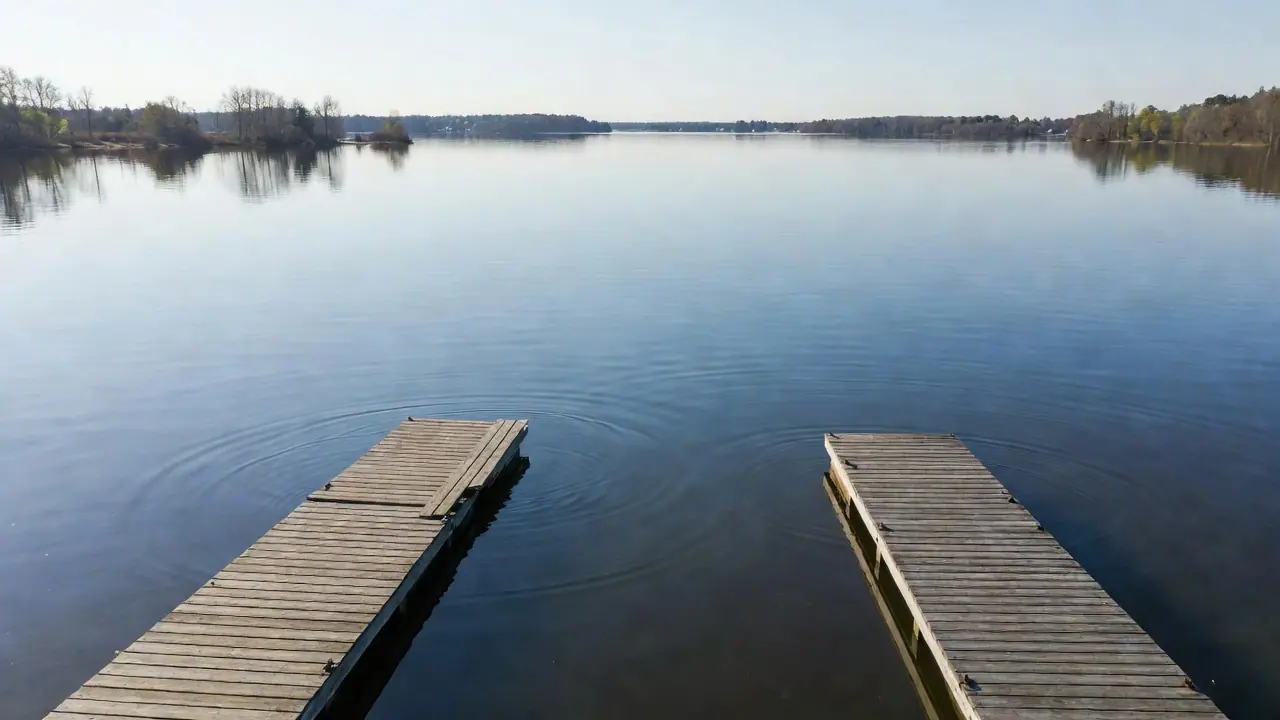
The report also describes the water conditions. The lake was "glassy," with no visible ripples. The pilot approached parallel to the shoreline and close to it, which the report says is a recommended technique in those conditions. Investigators could not determine the exact sequence of the pilot's actions right after touchdown. The TSB said landing on glassy water is a significant safety hazard for seaplanes. Transport Canada's Aeronautical Information Manual warns that pilots in these conditions cannot judge their height above the water accurately. As a result, a plane may stall well above the surface or fly into the water nose-first.
The agency explained that glassy water often pushes pilots to fly near shorelines so they can judge their height. It cautioned that doing this near docks, boats and people can shrink safety margins. The TSB added that even when a landing is technically possible, pilots should ask themselves whether they can keep adequate safety margins or whether another landing area would be safer.
The TSB is an independent safety agency. Its role is to identify safety lessons. It does not assign fault or determine civil or criminal liability, so its report does not decide any legal questions arising from the crash.
Key Takeaways
The TSB found the pilot lost control while attempting to land on glassy water in Lake Scugog near Caesarea on July 18, 2025
The float plane bounced at least twice, veered left during a go-around, struck two docks and killed a 16-year-old boy standing on the second dock
The pilot and a prospective buyer on board were taken to hospital with minor injuries
The TSB warned that landing near docks, boats and people in glassy conditions can reduce safety margins
The TSB does not assign fault or determine civil or criminal liability; those questions are decided separately
UL Lawyers Insight
A TSB report explains what happened from a safety perspective, but it is not a legal ruling. Under federal law, the board's findings do not assign fault and are not binding on parties in legal proceedings. In Ontario, any questions about civil liability after an incident like this would be decided separately, usually through the courts and based on all the available evidence.
When someone dies in an incident that may involve negligence, Ontario's Family Law Act allows certain close family members, including parents and siblings, to seek compensation for losses. These can include funeral expenses and the loss of guidance, care and companionship. People who were injured, or whose property such as docks or boats was damaged, may have their own separate claims. Experienced civil litigation lawyers can explain how these claims work, who they may be brought against, and what evidence matters.
For general information on claims and deadlines, our legal resource library is a helpful place to start.
Action Checklist
What You Should Do
Note the date of the incident and calculate the two-year deadlineUrgent
Ontario's Limitations Act, 2002 generally gives two years to start a civil claim, and waiting for reports can use up that time
Keep a copy of the TSB report and related news coverage
These documents describe the sequence of events and conditions, even though they do not assign fault
Preserve photos, videos and witness contact details from the waterfrontUrgent
Images of docks, boats and the shoreline, and the names of people who saw what happened, can be hard to recover later
Keep receipts for funeral, medical and repair expenses
Family Law Act and property damage claims rely on clear records of costs
Avoid signing insurance releases or statements before getting adviceUrgent
Early settlements or recorded statements may limit your options later
Ask a lawyer about requesting police and other official records
Police and other records may help clarify what happened
Consult a litigation lawyer about potential claims
A lawyer can explain who may be able to bring a claim, against whom, and what evidence will matter
Your Rights and Options
If a family member is killed in an incident like the Lake Scugog crash, Ontario's Family Law Act (section 61) may allow parents, siblings, grandparents and other close relatives to bring a claim. Such claims can cover funeral costs, loss of care and companionship, and other losses, where another party is found to be legally at fault. Anyone injured, and owners of damaged docks or boats, may also have claims of their own.
Timing matters. Under Ontario's Limitations Act, 2002, most civil claims must be started within two years of when the claim was discovered, which in many fatal cases means two years from the date of death. A TSB report can come out more than a year after an incident, so it is wise not to wait for it before getting advice. Speaking with a lawyer early can help you protect your options.
Common Questions Answered
How UL Lawyers Can Help
Losing a loved one suddenly, or being hurt in a frightening accident, can leave you overwhelmed and unsure where to turn. You should not have to sort through safety reports, insurance letters and legal deadlines on your own. At UL Lawyers, we listen first. We then explain your rights in plain language and help you understand whether a claim may be available and who it might involve. We can also handle communication with insurers so you can focus on your family. If you have questions about a situation like this, we offer a free, no-pressure consultation to talk through your options.
If your family is coping with a sudden loss or injury and you are unsure what your legal options are, we are happy to talk it through with you in a free consultation.
Ontario Road Report
One email a week with the road and collision stories we covered in your city and across Ontario.
About this article:
Summary prepared with AI assistance from the linked source's reporting. Edited by UL Lawyers for Ontario context.
Accompanying images are AI-generated illustrations, not photographs of actual events or persons.
Important Legal Disclaimer
This page provides general information about a Transportation Safety Board of Canada report on the July 18, 2025, Lake Scugog float plane crash and related Ontario legal concepts. It is not legal advice and does not comment on whether any person or party is at fault. Every situation involving a fatality, injury or property damage is different, and limitation periods may apply. Please consult a lawyer about your specific circumstances.
Source: CP24
Named in this article? Request content removal