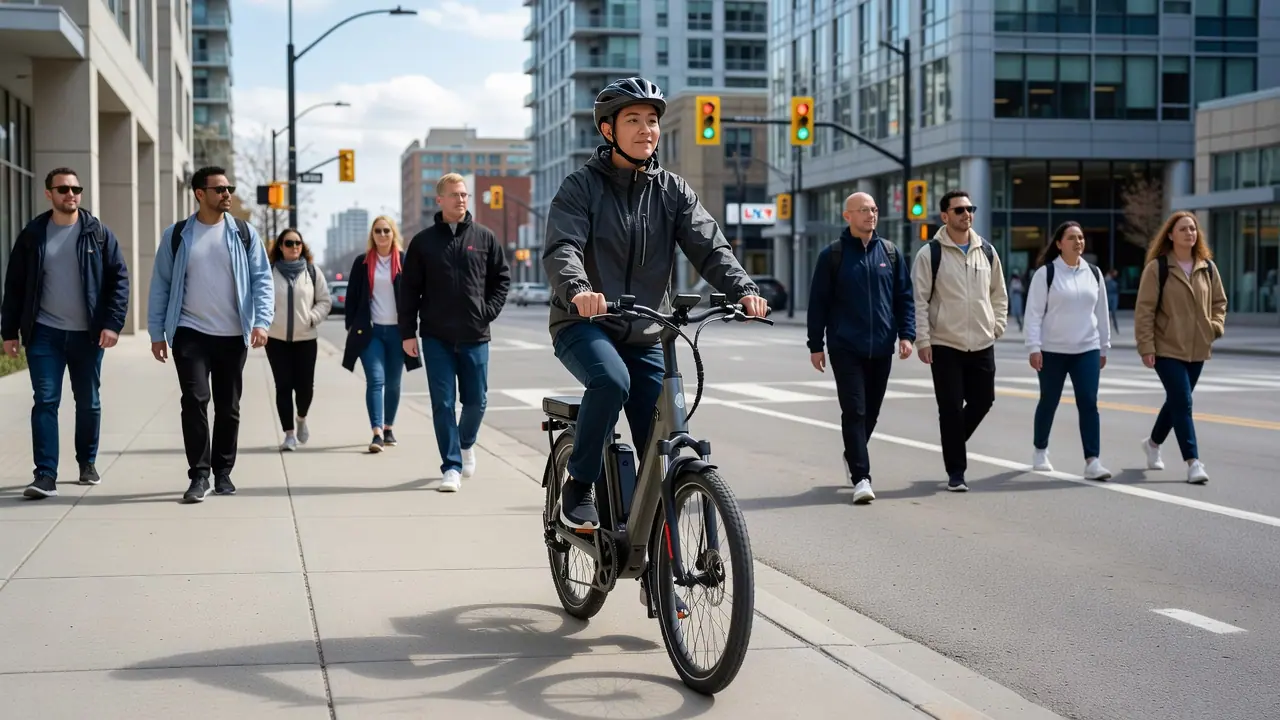

When the law changes how a vehicle is classified, it can also change which insurance applies and what rights riders, drivers and pedestrians have after a collision. Checking whether your e-bike meets the new definition before the rules take effect is a simple step that can prevent bigger problems later.
Ontario is tightening its rules for e-bikes, and some riders will soon need a driver's licence, vehicle registration and insurance to stay on the road. The provincial government says tougher regulations will take effect next spring. They target e-bikes that work more like motorcycles or motor scooters than bicycles. Starting May 1, any e-bike that does not meet the updated criteria will not be allowed on Ontario roads without a driver's licence, vehicle registration or insurance. For riders in Mississauga, Brampton, Toronto and across the GTA, it is worth understanding how these new Ontario legal developments could affect daily travel.
Ontario Transportation Minister Prabmeet Sarkaria announced the changes at a news conference at Queen's Park on Thursday. He said a qualifying e-bike will need an exposed, bicycle-style frame, pedals that fully work, and motor assistance that stops at 32 kilometres per hour, along with other requirements. He also said that electric bikes built in the style of motorcycles or motor scooters will not be able to pass as ordinary e-bikes.
Under the new regulations, a vehicle must meet three core standards to be treated as an e-bike: an exposed bicycle-style frame, a maximum power output of 500 watts, and a maximum motor-assisted speed of 32 km/h. Electric vehicles that operate as dirt bikes, or that are styled as motorcycles or motor scooters, will not count as e-bikes. Every e-bike must also meet a list of other requirements. These include a bicycle-style riding position, a white or amber light facing forward, a bell or horn, and a red rear light or red reflector. It must also have pedals or hand cranks that the province describes as "meaningfully capable" of moving the vehicle.
The rules also set requirements for riders. E-bike operators must be at least 16 years old, must wear a helmet, and must follow the same rules of the road as regular cyclists. Riders whose e-bikes meet the criteria will not need a driver's licence, vehicle registration or vehicle insurance. The province notes that vehicles that do not qualify as e-bikes are not allowed in spaces set aside for bicycles, such as bike lanes.
The update comes after police forces around the Greater Toronto Area said there is not enough regulation for the fast-growing variety of motorized vehicles on local roads. Sarkaria said Ontario's e-bike rules have not been updated since 2009. He added that road vehicle technology has changed a great deal since then, and that the province's rules need to keep pace with the vehicles now on the road.
The minister said the months before May 1 will be used to educate the public about the new rules. After that date, riders who break the rules could face fines of up to $2,500 and have their vehicles impounded.
Key Takeaways
Starting May 1, e-bikes that do not meet Ontario's new criteria will need a driver's licence, registration and insurance to be on the road
Qualifying e-bikes must have an exposed bicycle-style frame, a maximum 500-watt motor and a 32 km/h maximum motor-assisted speed
Motorcycle-style, scooter-style and dirt-bike-style electric vehicles will not count as e-bikes
All e-bikes need a bicycle-style riding position, front white or amber light, bell or horn, rear red light or reflector, and usable pedals or hand cranks
Riders must be at least 16, wear a helmet and follow the same road rules as cyclists
Non-qualifying vehicles are not allowed in bike lanes, and after May 1 riders could face fines up to $2,500 and impoundment
UL Lawyers Insight
For many GTA commuters and delivery riders, the key question is simple: does your vehicle still count as an e-bike? If it has an exposed bicycle-style frame, working pedals, a motor of 500 watts or less and assistance that stops at 32 km/h, the province says you can keep riding without a licence, registration or insurance, as long as you are 16 or older, wear a helmet and follow cycling rules. If your vehicle looks or performs more like a scooter or motorcycle, you will need a driver's licence, registration and insurance starting May 1, and you will not be allowed in bike lanes.
The change also matters if something goes wrong on the road. Whether a vehicle is classified as an e-bike or as a motor vehicle can affect which insurance applies and what options people have after a crash. If you are hurt in a collision involving an e-bike, scooter or car, speaking with experienced motor vehicle accident lawyers can help you understand how these classifications may apply to your situation. You can also find plain-language guides in our legal resource library.
Action Checklist
What You Should Do
Check your e-bike's motor power and top assisted speedUrgent
Confirm it is 500 watts or less and that motor assistance stops at 32 km/h before the May 1 start date
Confirm your e-bike has the required equipmentUrgent
Look for a bicycle-style frame and riding position, front white or amber light, bell or horn, rear red light or reflector, and working pedals or hand cranks
Arrange a licence, registration and insurance if your vehicle does not qualifyUrgent
Non-qualifying vehicles will need all three after May 1, or riders could face fines up to $2,500 and impoundment
Keep out of bike lanes if your vehicle is not an e-bike under the new rules
The province says non-qualifying vehicles are not allowed in spaces reserved for bicycles
Make sure every rider is at least 16 and wears a helmet
These rider requirements apply to all e-bike operators, along with following cycling rules of the road
Keep your purchase records and product specifications
Documents showing wattage, speed and design can help show your vehicle meets the e-bike definition
Ask your insurer how the changes affect your household policies
Understanding your coverage ahead of time can help if you are ever involved in a collision
Your Rights and Options
If your e-bike meets the new provincial criteria, you keep the right to ride it without a licence, registration or insurance, much like a regular cyclist. If it does not, you have until May 1 to bring yourself into compliance, which the province is treating as an education period. Checking your vehicle's specifications now can help you avoid a fine of up to $2,500 or having your vehicle impounded.
If you are injured in a collision involving an e-bike or another vehicle, you may have legal options. Depending on the circumstances, these could include accident benefits under Ontario's Statutory Accident Benefits Schedule (SABS), or a claim through the Motor Vehicle Accident Claims Fund if an uninsured vehicle was involved. Most injury lawsuits in Ontario must be started within two years under the Limitations Act, 2002. If you are unsure where you stand, you can request a free consultation to talk through your situation.
Common Questions Answered
How UL Lawyers Can Help
New road rules can feel confusing, especially when you rely on your e-bike to get to work, school or appointments. If you have been hurt in a collision involving an e-bike, scooter or car, you may be dealing with pain, missed work and unanswered questions from insurers all at once. At UL Lawyers, we take time to listen to your story and explain your rights in plain language. We can help you figure out which insurance may apply, what benefits you may be able to claim, and what deadlines matter. A free consultation is a simple, no-pressure way to get answers.
Not sure how the new e-bike rules affect you, or were you hurt in a crash involving an e-bike or scooter? Our team is happy to walk you through your options in a free consultation.
Ontario Road Report
One email a week with the road and collision stories we covered in your city and across Ontario.
About this article:
Summary prepared with AI assistance from the linked source's reporting. Edited by UL Lawyers for Ontario context.
Accompanying images are AI-generated illustrations, not photographs of actual events or persons.
Important Legal Disclaimer
This page provides general information about Ontario's announced e-bike regulations based on public reporting and is not legal advice. The rules, their enforcement and their effect on insurance or injury claims may depend on your specific vehicle and circumstances. Please consult a lawyer about your situation, especially if you have been involved in a collision.
Source: CTVToronto
Named in this article? Request content removal