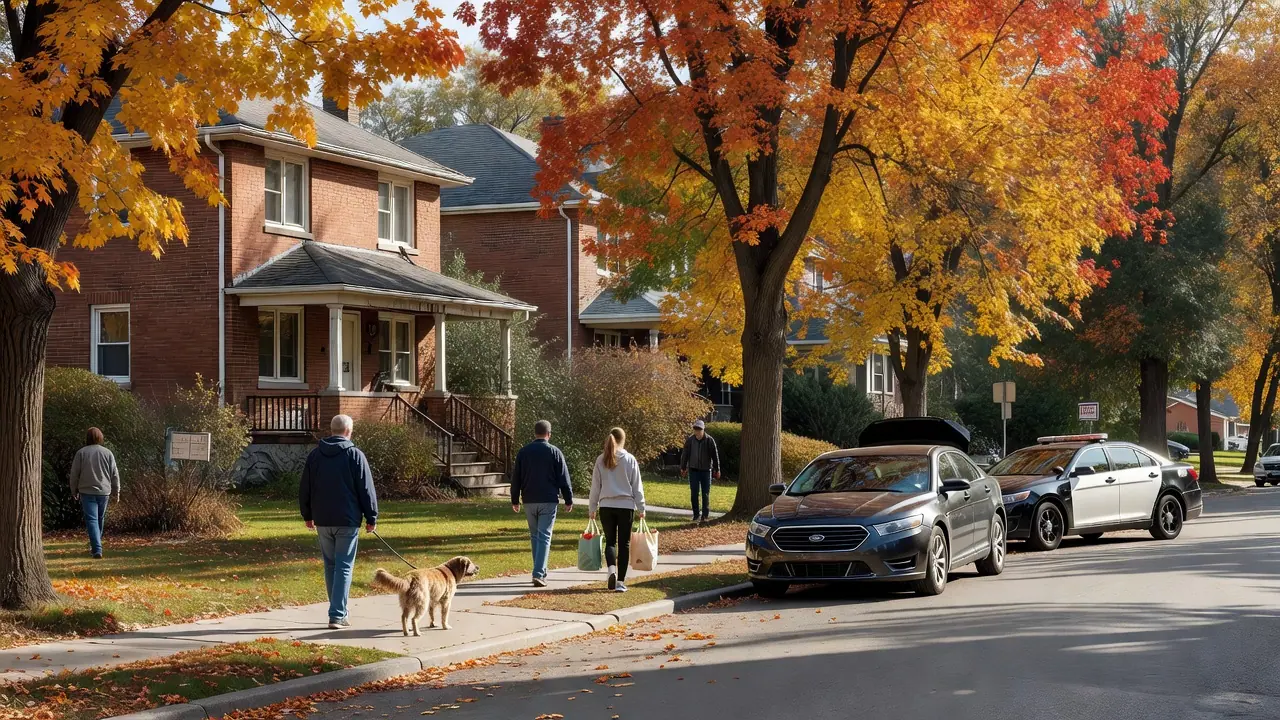

When a young person is charged in Ontario, the criminal case and any civil claim by a homeowner follow separate paths, and people affected by a break-in often have more options than they realize, from restitution requests to claims for property loss.
A 13-year-old boy is facing a long list of criminal charges after what Toronto police describe as a home invasion in Scarborough. According to police, the boy broke into a home, threatened the homeowner with a knife and ran off with stolen belongings. The case has drawn attention because of the suspect's young age and the seriousness of the alleged offences.
Officers were called shortly after 1:30 p.m. on Tuesday to reports of a break-and-enter in the area of Kingston Road and Danforth Avenue in Scarborough. Police allege the boy got inside a residence and started gathering personal belongings when the homeowner came upon him and confronted him.
According to a Toronto Police Service news release, the suspect then allegedly tried to strike the homeowner with a knife and threatened to use a noxious substance against them. Police said the boy ran from the scene, pouring out the substance as he left. Officers found and arrested him a short time later. Police allege he was carrying a number of knives and other belongings when he was taken into custody.
The youth faces several charges. Police say they include break and enter to commit an indictable offence, robbery with an offensive weapon, disguise with intent, assault with a weapon, possession of property obtained by crime, and two counts of possession of a weapon for a dangerous purpose.
None of the charges have been tested in court, and the accused is presumed innocent. Because he is 13, the boy's identity cannot be released under the Youth Criminal Justice Act, the federal law that governs how young people aged 12 to 17 are charged and prosecuted in Canada. The incident was reported by CTV News Toronto on November 18, 2026.
For people living in Scarborough and across the GTA, a story like this can be unsettling, especially for homeowners who wonder what they would do if someone entered their home. Below, our Ontario legal team explains how youth criminal cases work and what rights and options people who experience a break-in may have, both in the criminal process and in civil court.
Key Takeaways
Toronto police say a 13-year-old boy broke into a home near Kingston Road and Danforth Avenue in Scarborough shortly after 1:30 p.m. on Tuesday
Police allege he tried to strike the homeowner with a knife, threatened to use a noxious substance, and fled before being arrested a short time later
Charges include robbery with an offensive weapon, assault with a weapon, disguise with intent and two counts of possession of a weapon for a dangerous purpose
The allegations have not been tested in court, and the youth cannot be named under the Youth Criminal Justice Act
Homeowners affected by a break-in may have options beyond the criminal case, including insurance claims and civil claims for property loss
UL Lawyers Insight
When a young person is charged in Ontario, the case goes through youth justice court under the Youth Criminal Justice Act. That law focuses on accountability and rehabilitation, and it strictly limits who can learn the young person's identity. The criminal case is run by the Crown, not the homeowner, so people affected by a break-in often feel left out of the process. They still have rights, though, including the right to information and to ask for restitution under the Canadian Victims Bill of Rights.
A criminal case is also separate from any civil claim. A homeowner who loses property in a break-in may be able to seek compensation through their home insurance, or in some cases through a civil claim. Ontario's Parental Responsibility Act, 2000 allows property owners to sue the parents of a minor in Small Claims Court for property that was intentionally taken or damaged, unless the parents show they supervised reasonably. Our civil litigation lawyers can explain whether these options make sense in a particular situation.
Action Checklist
What You Should Do
Report the break-in to police and keep the occurrence numberUrgent
Insurers, victim support programs and courts will usually ask for the police report number
Make a detailed list of stolen or damaged itemsUrgent
Include photos, receipts and serial numbers where possible to support insurance or restitution claims
Notify your home insurance company promptlyUrgent
Most policies require quick notice of theft or break-ins to keep coverage in place
Contact Victim Services Toronto about support programsUrgent
Programs such as the Victim Quick Response Program+ have application timelines
Secure your home and replace locks if neededUrgent
Keep receipts for repairs and security upgrades, since these costs may be recoverable
Ask the Crown about restitution and victim impact statements
You can request case updates and ask that restitution for your losses be considered
Track the two-year limitation period for civil claims
The Limitations Act, 2002 generally gives you two years to start a lawsuit for losses
Get legal advice before signing any insurance release
A lawyer can review settlement offers and explain other options, such as a Parental Responsibility Act claim
Your Rights and Options
If your home is broken into and belongings are taken, as police allege happened near Kingston Road and Danforth Avenue, you have rights as a victim. Under the Canadian Victims Bill of Rights, you can ask for updates on the case, share a victim impact statement if there is a finding of guilt, and ask the court to order restitution for property losses. In Ontario, the Victim Quick Response Program+ may also offer short-term support to people affected by violent crime.
You may also have civil options. The Parental Responsibility Act, 2000 lets property owners claim against the parents of a young person in Small Claims Court for property loss or damage. Ontario's Limitations Act, 2002 generally gives you two years to start a civil claim. To understand which options fit your circumstances, you can request a free consultation with our team.
Common Questions Answered
How UL Lawyers Can Help
Having your home entered and your sense of safety shaken can leave you anxious, angry and unsure where to turn. You may be dealing with police, an insurance adjuster and a criminal process you never asked to be part of, all at once. At UL Lawyers, we take the time to listen and explain your options in plain language. We can help you understand your rights as a victim, review insurance issues, and assess whether a civil claim for losses or injuries is worth pursuing. If you are unsure what to do next, we invite you to reach out for a free, no-pressure consultation.
If a break-in has left you dealing with losses, insurance questions or worries about your rights, we're here to help. Reach out for a free consultation and we'll walk you through your options.
Ontario Road Report
One email a week with the road and collision stories we covered in your city and across Ontario.
About this article:
Summary prepared with AI assistance from the linked source's reporting. Edited by UL Lawyers for Ontario context.
Accompanying images are AI-generated illustrations, not photographs of actual events or persons.
Important Legal Disclaimer
This page provides general information about a reported youth criminal case in Scarborough and the rights of people affected by break-ins in Ontario. It is not legal advice. The charges described have not been tested in court, and the accused is presumed innocent. Laws on victim rights, restitution, parental responsibility and limitation periods can apply differently depending on the facts. Please speak with a qualified Ontario lawyer about your specific situation before taking action.
Source: CTVToronto
Named in this article? Request content removal